

International relations specialist Luís Andrade considers it unlikely that the Trump administration would seek to take control of the Azores, but he cautions that we are living in unpredictable times.
“I think only Mr. Trump himself could answer that with any certainty. Still, in light of what happened a few days ago in Venezuela—and given what he has said about Greenland, and previously about Canada, Nigeria, and Iran—it is, at the very least, deeply troubling,” he told DI yesterday. From Andrade’s perspective, “this U.S. foreign policy under the current administration is utterly unbelievable,” and the international order, at this moment, is “completely shattered.”
“The Machiavellian framework has always been applied in the analysis of international relations. Regardless of the means employed by states, what mattered most was the preservation of power. With Mr. Trump in the presidency of the United States, what it seems to me is that we have moved from a Machiavellian framework to a Hobbesian one,” he reflected.
“Hobbes was an English philosopher who published a profoundly important work, Leviathan. And what does he argue? That in the state of nature, which increasingly appears to be the condition we are now living in, given what Mr. Trump has done and threatens to do, something extremely serious—it is a war of all against all. Unfortunately, it seems to me that we are moving toward a constant struggle between Mr. Trump and many countries around the world,” he continued.
As for the Azores, Andrade noted that “there is, of course, a Cooperation and Defense Agreement,” but that “some caution is required,” adding that Portugal should have made it clear that “what the United States did in Venezuela is unacceptable.”
In the early hours of Saturday morning, the United States launched a military operation against strategic targets in Caracas. It announced the capture of President Nicolás Maduro, who now faces charges of drug trafficking and narco-terrorism. At the same time, U.S. President Donald Trump stated that the United States would be “very strongly involved” in Venezuela’s oil industry, through major American companies. Venezuela is now living in a state of political uncertainty, although Vice President Delcy Rodríguez has been recognized as interim president.
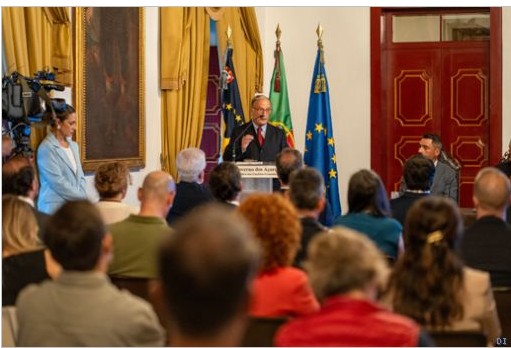
“What we are witnessing right now is a return to 1823, to the Monroe Doctrine. The United States of America is, so to speak, the owner of the Western Hemisphere—and they are the ones who give the orders,” Andrade observed.
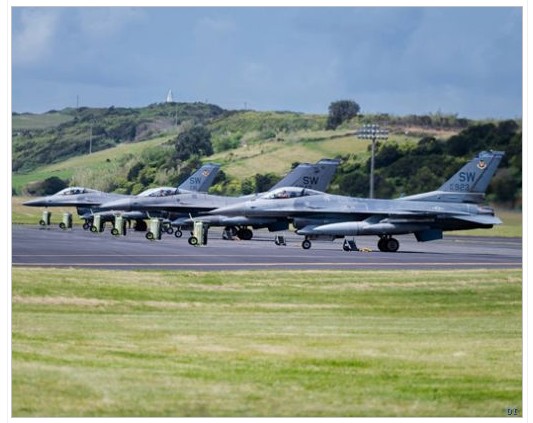
In that scenario, the international relations expert stressed, the Azores—home to the Lajes Air Base—constitute one of America’s defensive frontiers. “Unfortunately, the European Union has still not managed to truly implement its common security and defense policy. It has not done so clearly. This allows the Azores to remain on the easternmost line of defense of the United States,” he emphasized. “Frankly, I do not believe that this (the annexation of the Azores) could happen. Still, Mr. Trump is highly unpredictable. Business and power are what matter,” he lamented, adding that “this is a madman in the White House, which can have—as it already has—extremely grave international consequences.”
Also on Saturday, the Portuguese government announced that it is “continuously monitoring, since the outset, the situation in Venezuela, in close collaboration with the President of the Republic.”
“It is doing so through Portugal’s Embassy in Caracas and its consular network in the country, as well as through intense contacts with European partners, European Union institutions, and countries in the region,” the statement underscored.
“The absolute priority is the safety and well-being of the Portuguese community in Venezuela, which is doing well and remains calm, though naturally expectant,” added the government of Luís Montenegro, recalling that it did not recognize the 2024 electoral results in Venezuela.
“Portugal calls for a reduction in tensions, respect for international law and the United Nations Charter, as well as the promotion of public security and tranquility,” the same communiqué continued. That same day, Foreign Minister Paulo Rangel argued that Edmundo González, the opposition candidate to Nicolás Maduro, should assume power in Venezuela once the situation stabilizes.
“For Portugal—and almost certainly for the European Union—the solution, as quickly as possible, to restoring democratic legitimacy is not to return Maduro to power, but precisely to install in the presidency the candidate who won the elections,” Rangel said.
These developments are also raising concern in Greenland, the self-governing Danish territory that has been the subject of Trump’s interest. “Enough insinuations. Enough fantasies of annexation. We are open to dialogue and discussion. But this must be done through the appropriate channels and in accordance with international law,” Greenland’s leader, Jens-Frederik Nielsen, said yesterday.
In Diário Insular-José Lourenço, director.
Translated into English as a community outreach program by the Portuguese Beyond Borders Institute (PBBI) and the Modern and Classical Languages and Literatures Department (MCLL), in collaboration with Bruma Publication and ADMA (Azores-Diaspora Media Alliance) at California State University, Fresno. PBBI thanks Luso Financial for sponsoring NOVIDADES.

 Novidades - The Islands and the Diaspora