

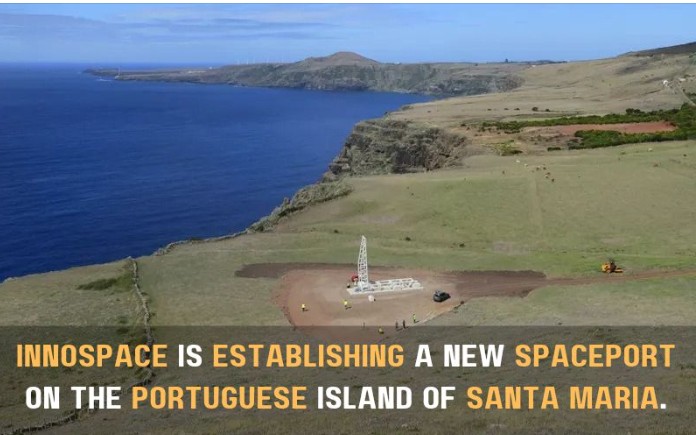
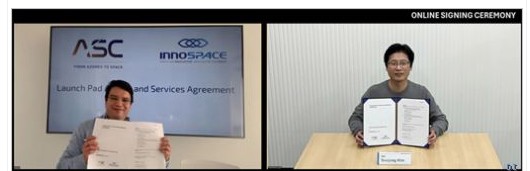
South Korean company Innospace will launch rockets from Santa Maria Island. The contract signed with the AtlanticSpaceport Consortium is valid until 2030, and the first orbital flight is scheduled to take place at the end of this year.
“This contract is in line with the AtlanticSpaceport Consortium’s vision for an open spaceport, and we are grateful to Innospace for their trust,” said Bruno Carvalho, director of the AtlanticSpaceport Consortium, in a statement.
“The Malbusca spaceport will thrive in the coming years, and Innospace will certainly lead the way to orbit from Santa Maria,” he added.
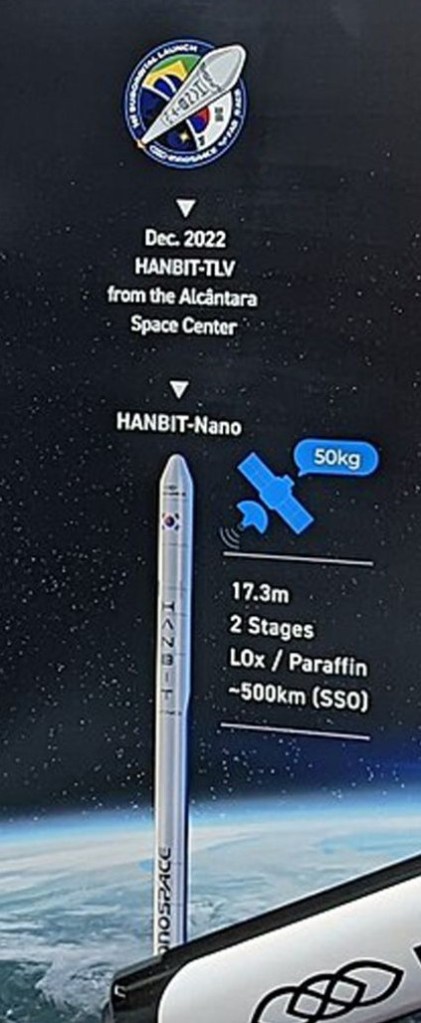
In addition to Santa Maria, the South Korean company already had launch sites in Brazil and Australia. The company created the HANBIT family of launchers, a new generation of hybrid rockets with payload capacities between 90 and 1,300 kilograms, promising to offer regular, low-cost launches from several continents.
“This agreement represents a significant milestone for Innospace, as it establishes our first launch site in Europe, after Brazil and Australia, expanding our global launch network to the European region,” said Soojong Kim, founder and director of the company. “By connecting launch sites in South America, Oceania, and Europe, we have built a global launch operations structure that allows customers to flexibly select launch sites and orbital trajectories tailored to their mission requirements,” he emphasized.
Ricardo Conde, president of the Portuguese Space Agency, added that “Innospace’s decision to launch from Santa Maria is a strong sign of international confidence in Portugal’s space ambitions.”
“This agreement contributes to accelerating the development of safe, sustainable, and regulated orbital launch services from the Azores, creating opportunities for high-value activities in the region,” he stressed.
In August 2025, the AtlanticSpaceport Consortium obtained a license to operate in Santa Maria, the first in Portugal.
The island will host the future Space Technology Center (SpaceHub Azores), a €15 million investment under European Space Agency programs, including €3 million from the Regional Government. Santa Maria was also chosen as the landing site for SpaceRider, ESA’s reusable orbital vehicle, whose first flight is scheduled for 2028.
In Diário Insular-José Lourenço, director
Translated into English as a community outreach program by the Portuguese Beyond Borders Institute (PBBI) and the Modern and Classical Languages and Literatures Department (MCLL), in collaboration with Bruma Publication and ADMA (Azores-Diaspora Media Alliance) at California State University, Fresno. PBBI thanks Luso Financial for sponsoring NOVIDADES.

 Novidades - The Islands and the Diaspora