

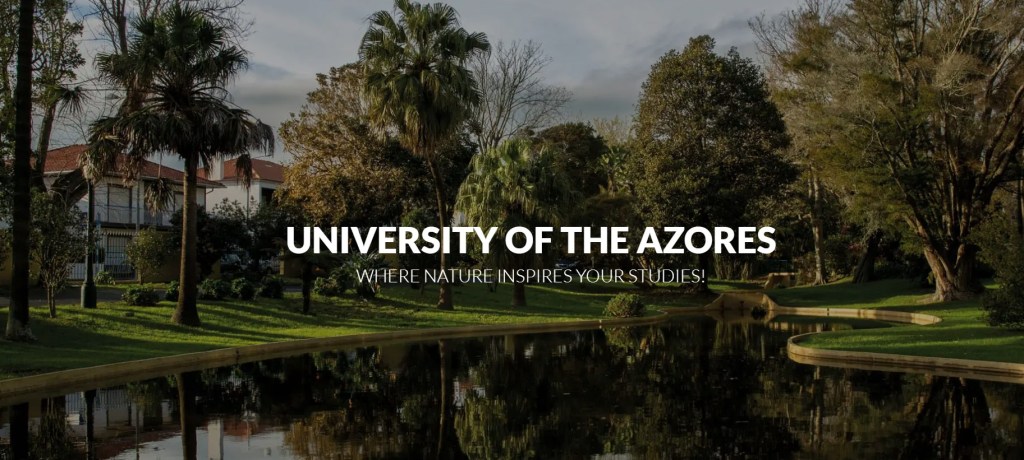
The University of the Azores today marks half a century of existence, with a ceremony scheduled for the afternoon in the Aula Magna.
The date recalls the founding act of public higher education in the archipelago: Decree-Law No. 5/76 of January 9, which created the University Institute of the Azores and defined its purposes as the promotion of higher education, scientific research, and service to the community.
In the aftermath of the April 25 Revolution, the idea of establishing a university in the Azores was propelled by the Regional Junta of the Azores, which pressed the Government of the Republic to bring the project to fruition.
By 1978, the institution consisted of a single department, devoted to teacher training—an explicit effort to meet the Region’s professional needs at a time when Azorean constitutional autonomy itself was still in an embryonic phase. Within a short period, the University reached an enrollment of 1,000 students.
Four years later, Decree-Law No. 252/80 of July 25 formally redesignated the Institute as the University of the Azores, framing its mission within the specific realities of an insular and archipelagic territory.
Until 1980, the Institute was under the exclusive authority of the Government of the Republic. From that point forward, the University came under dual oversight, shared between the Government of the Republic and the Regional Government of the Azores. This arrangement remained in place until 1994, when the University once again became solely dependent on the national government—a status that continues today.
The tripolar model remains a defining structural feature. The statutes establish the University’s headquarters in Ponta Delgada and recognize three campuses: Ponta Delgada, Angra do Heroísmo, and Horta. Governance and daily operations reflect this distribution, with delegated authority vested in vice-rectors for the campuses of Angra do Heroísmo and Horta.
Between 1976 and 1982, the University of the Azores was led by Rector José Enes Pereira Cardoso, followed by António Manuel Bettencourt Machado Pires (1982–1995); Vasco Verdasca da Silva Garcia (1995–2003); Avelino de Freitas de Meneses (2003–2011); Jorge Manuel Rosa de Medeiros (2011–2014); and João Luís Roque Baptista Gaspar (2014–2022). The current Rector, Susana Mira Leal, assumed office in 2022.
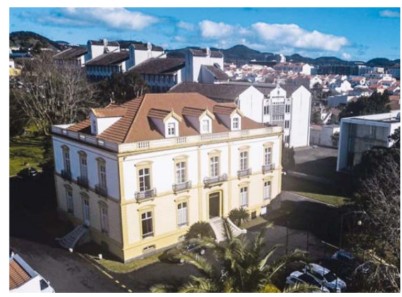
The Fiftieth Anniversary Celebrations
The commemorations extend well beyond the anniversary date itself. At the opening of the celebratory cycle, during the 49th anniversary ceremony, Rector Susana Mira Leal unveiled the visual identity of the fiftieth anniversary and announced a program unfolding over time. It includes seminars and conferences, a science fair, exhibitions, cultural festivals, and a study on the University’s impact on the archipelago. The 2025 session was held in the Aula Magna on the Ponta Delgada campus, with live transmission to Angra do Heroísmo and Horta.
Among the initiatives already associated with the fiftieth anniversary, the Carlos Machado Museum inaugurated a commemorative installation, now on display at the Santo André nucleus and open to the public today, the day the University turns fifty.
On the official anniversary portal, the University emphasizes its status as the only institution of higher education in the Region. It highlights its three campuses and presents an institutional portrait marking the milestone: an academic community of approximately 3,000 students and more than 200 faculty members and researchers.
In Diário dos Açores-Paulo Viveiros, director.
Translated into English as a community outreach program by the Portuguese Beyond Borders Institute (PBBI) and the Modern and Classical Languages and Literatures Department (MCLL), in collaboration with Bruma Publication and ADMA (Azores-Diaspora Media Alliance) at California State University, Fresno. PBBI thanks Luso Financial for sponsoring NOVIDADES.

 Novidades - The Islands and the Diaspora