

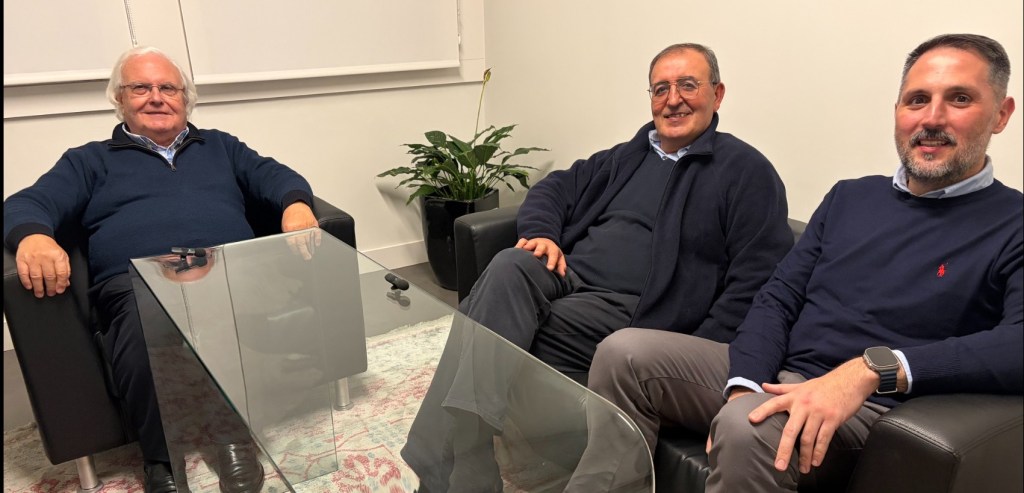
On the sidelines of the National Meeting on Synodality—“From Listening to Mission: Synodal Spirituality and Pastoral Implications”—held in Fátima, Monsignor José Constância, Father José Júlio Rocha, and Francisco Almeida Medeiros spoke with Igreja Açores about the Church’s current synodal moment and their expectations for the near future.
The conversation opened with a central question: “After nearly five years of listening, how do we now move to action so that synodality truly takes shape in the life and work of the Church?”
For Monsignor José Constância, the period of gathering contributions has been “fruitful,” but the present moment calls for concrete decisions at every level of ecclesial life—from parishes and deaneries to pastoral councils and central services.
“Listening has already taken place; now we need to practice synodality,” he said, arguing for formation that is not merely theoretical, but above all practical.
Father José Júlio Rocha recalled that several measures have already been implemented by the diocesan bishop, including the mandatory establishment of pastoral councils, the revision of statutes, and the creation of a service to support popular piety. He cautioned, however, that synodality is neither a passing trend nor a situational whim:
“Only those who think this is something new grow tired of synodality. The Church has been synodal from the beginning. Pope Francis has simply reclaimed that essence.”
The priest, now coordinator of the Diocesan Synodal Team, emphasized that the Church “is neither a democracy nor a dictatorship—it is communion,” and that hierarchy exists in service of synodality:
“Synodality is more fundamental than the hierarchical dimension itself.”
For Francisco Almeida Medeiros, a member of both parish and diocesan pastoral councils, difficulties of understanding and engagement persist among both laity and clergy.
“It seems to me that neither group is fully clear about what synodality is,” he said. Among the laity, confusion remains: some imagine a parliamentary system; others fear it will be merely “a nice conversation that leads nowhere.” Among priests, he noted anxieties about loss of authority and the weight of pastoral fatigue:
“They are not opposed to the path, but they have yet to see concrete steps or visible fruits.”
Resistance, Monsignor José Constância added, has deep roots:
“We struggle to build a Church that truly lives as community, and that leads us to resist.”
Having already served on the first diocesan synodal commission, created during the episcopate of Bishop João Lavrador, the presbyter acknowledged that the repeated focus on the theme over recent years—from earlier synods to the preparation of the current process—has also generated fatigue. Still, he believes the greatest obstacle is not doctrinal, but practical:
“We talk so much about synodality because it has not yet fully happened.”
One of the new elements highlighted in the discussion was the role the synodal team will play in preparing the bishop’s upcoming pastoral visits, giving them a genuinely communal dimension.
Pastoral visits, Father José Júlio explained, “should be moments of communion and discernment, in which the bishop comes to know the reality on the ground and walks a shared path with the communities.” To that end, sessions of “conversation in the Spirit” are planned—both to reflect on visits already carried out (on the islands of Flores, São Jorge, Santa Maria, and Graciosa) and to prepare communities that will receive the bishop this year in Vila Franca do Campo, Fenais da Vera Cruz, and Capelas.
“This is a journey that demands active patience, a change of mindset, and a shared effort between clergy and laity,” the priest added.
“The Church must continue to move forward with a logic of communion, discernment, and shared mission,” Monsignor Constância affirmed.
According to Francisco Medeiros, communities are likely to be receptive, but it is essential that encounters be simple and replicable:
“We are not going to evaluate anyone; we are going to listen and discern. Decisions are never the sum of individual opinions, but the discovery of a new path.” He also stressed that lay participation requires clarity of method:
“If synodality is understood as more meetings and more paperwork, then we are starting off on the wrong foot.”
Looking to the broader horizon, Monsignor José Constância insists on responding “with witness” to resistance and skepticism. Father José Júlio hopes that by summer all parishes, deaneries, and pastoral units will have active pastoral councils, enriched with new members—including people not necessarily drawn from the Church’s usual structures. For Francisco Medeiros, the essential point is that the diocese internalize a guiding principle:
“The way of being Church is co-responsibility. It begins in the heart, but it must be translated into the way we decide and the way we serve.”
The Second National Synodal Meeting is taking place this Saturday in Fátima. The opening session was led by Bishop José Ornelas, followed by a reflection from the Bishop of Coimbra on synodal spirituality and the pastoral implications of synodality. Later in the morning, diocesan experiences will be shared, and the afternoon will be dedicated to group work.
In Igreja Açores
You can read and listen to conversation in Portuguese here:
Translated into English as a community outreach program by the Portuguese Beyond Borders Institute (PBBI) and the Modern and Classical Languages and Literatures Department (MCLL), in collaboration with Bruma Publication and ADMA (Azores-Diaspora Media Alliance) at California State University, Fresno. PBBI thanks Luso Financial for sponsoring NOVIDADES.

 Novidades - The Islands and the Diaspora