

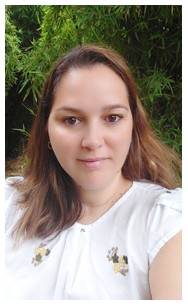
The research project “HOT – Thermal Water: The Secrets of Volcanic Waters” is part of the work carried out by the Medical Geology Unit of the Institute for Volcanology and Risk Assessment at the University of the Azores. The project aims to “explore the virtues of thermalism as a natural resource” in the archipelago. Diana Linhares, the lead researcher, told Correio dos Açores that the goal is to scientifically prove the therapeutic benefits of Azorean thermal waters. At the same time, it transforms this natural resource into a range of health and wellness products and experiences for both residents and the tourism sector.
Correio dos Açores – How did the idea for the project “HOT – Thermal Water: The Secrets of Volcanic Waters” come about?
Diana Linhares (Lead Researcher) – The idea had been in development for some time, at least in its general outline. At the Medical Geology Unit of the Institute for Volcanology and Risk Assessment Research at the University of the Azores, we have been continuously working on the potential of the region’s volcanic islands and the natural resources they offer. Thermal waters thus emerged as a natural resource of significant interest, which we sought to explore in greater depth to understand their impact on health, well-being, and therapeutic capacity, using a rigorous technical approach. However, we lacked the right opportunity to submit this initiative to a competition where we believed it would have a real chance of funding, which eventually occurred with the last application wesubmitted.
What is the main objective of “HOT”?
The main purpose of “HOT” is to explore the virtue of thermalism as an essential natural resource, highlighting its therapeutic benefits and its contribution to physical and mental comfort.
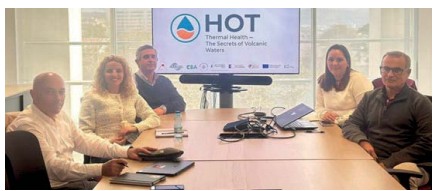
The aim is to create a portfolio of certified geothermal products with scientifically validated benefits and to develop partnerships to build a proven health and wellness tourism offering that is globally competitive in the Azores. To this end, the properties of water will be studied, and its sustainable integration into the sector will be promoted, bringing together experts from diverse scientific fields.
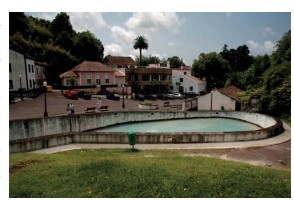
This action is co-financed by the European Regional Development Fund (ERDF), through the 2030 program, and by the Autonomous Region of the Azores, through the Regional Directorate for Science, Innovation, and Development, under the PROSCIENTIA Incentive System, with the collaboration of the company Verde Similar Termas, concessionaire of the Termas das Caldeiras da Ribeira Grande.
What are the major challenges that the research may face?
As with any research, there are associated risks, some predictable and others more unpredictable. However, these challenges were considered from the outset, and strategies to mitigate them are anticipated. We have a highly qualified, multidisciplinary team of specialists in the relevant areas and techniques, as well as a strongly engaged partner company, both of which are important assets. In addition, funding has been secured, enabling us to meet the defined objectives. At this stage, no significant obstacles to implementing the program are anticipated. The necessary conditions for its success are in place, and if unforeseen events arise, the group has the capacity to respond effectively.
What research methods will be used to implement this initiative?
The idea is grounded in a clearly multidisciplinary approach that brings together researchers and specialists from different fields of knowledge. Cutting-edge research technologies and methodologies, widely recognized by the international scientific community, will be used. The adoption of these tools is essential to ensure robust, reliable, and scientifically valid results that can be replicated in other contexts and regions worldwide.
The methods employed will be diverse and tailored to different objectives, including laboratory analyses, time-series monitoring, and applied studies.
Do the thermal waters of the Azores have unique characteristics when compared to other volcanic areas in the world? If so, what are they?
We believe so. The archipelago’s water resources arise from a distinct volcanic context, with geological and geochemical characteristics that differ from those observed elsewhere in the world. This specific setting indicates that they likely have distinct attributes relative to other areas. What we want is precisely to understand, based on solid scientific evidence, how we differ from other volcanic contexts. We know that there are differences, but we want to identify them clearly, characterize them rigorously, and understand how they can be valued.
The ultimate goal is to optimize existing procedures and enhance the thermal offering, turning these specificities into a tangible benefit for the territory andthe type of product it can offer.
How do you plan to apply the results in a practical way? Will it be possible to certify thermal products or develop health and wellness therapies?
We want to create a portfolio of certified thermal products. Although we do not own any thermal facilities, our role is research, so we will provide our partner company with all the information it needs to develop proven and reliable products. The intention is for tourists and residents to clearly identify the specific benefits of each thermal water. Each type will be characterized and associated with specific effects or recommendations, enabling safe, effective use. In short, we intend to establish a robust scientific foundation to enhance the value of the Azores’ thermal waters and translate this knowledge into certified products and experiences.
In addition to creating visibility for the Azores archipelago, how does “HOT” contribute? Will it contribute to sustainability, for example?
Today, it is impossible to conduct technical research without prioritizing sustainability, especially when it comes to managing natural resources, so this is one of our flagship areas. HOT is also based on circular economy principles and aims to align with health-sector practices. In mainland Portugal, clinical recommendations for thermal baths are common, but in the archipelago, they are not yet routine. By highlighting the quality of our thermal resources, we can promote sustainable and responsible use, benefiting both public health and the region’s economic and tourism development in an integrated and lasting way.
What results do you hope to achieve by the end of 2028?
Our primary motivation is to characterize this resource in detail on São Miguel, thereby enabling a full understanding of its impact. By 2028, we aim to have developed a comprehensive scientific profile of the thermal waters, clearly identifying their principal therapeutic benefits and most appropriate applications.
In addition, we intend to provide this information to our partners, supporting them not only in promoting the product at its source, but also in developing new products and experiences. The company we collaborate with already has a cosmetics line based on preliminary results from other research, and we hope that, with the final data from this research, we can leverage it to create new products and solutions that integrate thermalism as a resource for people’s well-being.
Diogo Simões Pires is a journalist for Correio dos Açores-Natalino Viveiros, director.
Translated into English as a community outreach program by the Portuguese Beyond Borders Institute (PBBI) and the Modern and Classical Languages and Literatures Department (MCLL), in collaboration with Bruma Publication and ADMA (Azores-Diaspora Media Alliance) at California State University, Fresno. PBBI thanks Luso Financial for sponsoring NOVIDADES.

 Novidades - The Islands and the Diaspora