

2026 began with a military operation—the euphemism chosen to sugarcoat a terrorist attack carried out by a Western country, draped in the costume of freedom and global sovereignty. It began with an invasion and the bombing of territories inhabited by innocents, all beneath the mantle of justice and the so-called liberation of peoples. It began with an act of war—an international crime that exceeds any dystopian scenario imaginable just two decades ago. I write these lines on the harsh morning of Saturday, January 3. By the time they are published, much will likely have changed. But in good conscience, I cannot refrain from writing about what happened, even if only as a brief note—a cry dampened by the tears I shed for a world that has crossed a point of no return.
What unfolded in Venezuela is merely the continuation of a policy of impunity that the United States has promoted for over a century. Perhaps it has always done so. The celebration of that country’s 250th anniversary approaches, and only the soulless seem able to celebrate alongside it. I will not waste time on comparisons. I have written no lines in defense of Nicolás Maduro’s regime. And I will not accept moral lectures from those who defend scoundrels—especially when Javier Milei is seated right beside them, building his own dictatorship with the backing of those who cheer the fall of Venezuela.
So I will not waste time explaining the motives behind what happened. They are well known. Shame is absent. Hypocrisy is the casus belli. The cheerleaders revel in the tears of leftists. No one cares about those who are dying, or those who will die in the years to come. The woman who won the Nobel Peace Prize celebrates the bombs raining down on her city. The world has lost its way.
And that is how things stand—over there, with the support of those over here. And I am not speaking only of those who blindly follow the fourth little shepherd. Portuguese politics, like politics everywhere else, is poisoned. If voices still existed on the Right—voices other than Chicão’s—perhaps there might be hope. But we have lost the Right in Portugal. What remains is a collection of opportunists licking the boots of big businessmen and professional consultants. People who only know what social democracy means because they asked an artificial-intelligence chatbot.
Consider the case of Mr. Cotrim, or his friend Rui Rocha, whose presidential campaign I acknowledge has been tactically effective. He appears everywhere—having drinks, no tie, top buttons undone. He smiles beside elderly women and adopts a firm, paternal tone with the young. Everything he does is carefully engineered by a cadre of liberal marketing minds constructing a stage on which his very existence is sold as a viable alternative to the fascism of his parliamentary colleagues.
But there are moments when the real Cotrim surfaces, even when he would rather remain unseen. I have little affection for this new model of political interviews—where candidates go on Goucha pretending to be victims, or on Geirinhas to crack jokes and appear trendy. Still, these settings are useful, because every so often the mask slips. That was the case in his conversation with Guilherme Geirinhas, when Cotrim revealed an inability to take criticism that should alarm any young voter tempted by liberalism. In the clips already circulating, there are several moments when the “cool guy” vanishes, replaced by a chilling ill temper. And when confronted with a choice between December 25 and April 25, he did not hesitate—twice—to choose Christmas, before grumbling about political purity tests. Speaking of purity, let us not forget his friend Rocha, who once placed Messi and Milei above Pope Francis in the pantheon of decent people. Everyone, everyone, everyone—so long as they have money.
Riding that same wave of liberal far-right ideology is Montenegro, with the two dismal Christmas and New Year messages he addressed to the country. Most people lacked the patience to listen to the chief consultant of the Spinumviva government and confined themselves to the football soundbites—which were bad enough on their own. But a more careful reading of those two addresses by Coelho’s disciple reveals the government’s underlying philosophy with perfect clarity: fend for yourselves—we’re already fending for ourselves. Those who cannot fend for themselves? Too bad.
This was made painfully clear on January 2, when the same people who privatized the postal service ordered the tap shut on reimbursements for the social mobility subsidy, indefinitely. Of course, amid public outrage, one hopes the measure will be short-lived. After all, a liberal government only reacts when business owners revolt—and ours are already calling for the heads of the Spinumvivas. So it is likely the issue will be resolved by the time this article is published. That does not diminish the gravity of what happened. It was a flexing of muscle by Lisbon at the very start of a year meant to mark fifty years of Autonomy—though it feels more like we are preparing to celebrate the lashes dealt out by Master Luís.
Montenegro holds up Cristiano Ronaldo as the embodiment of the Portuguese spirit: a poor young man from Madeira who set out to conquer the world. It is a wretched attempt at a Christ-like parable that conveniently ignores a reality filled with allegations of rape, financial scandals, and once-in-a-lifetime success built with the backing of the great forces of international fascism. Ronaldo is anything but a role model, as his recent childish antics on and off the field have once again demonstrated. To the liberal far right, he is a success story because he kisses the boots of oil barons and the White House. To anyone with two functioning brain cells, Ronaldo is the mirror image of the Spinumviva country: a poor man who gained too much power and now wants to trample those who remained behind.
This is how our world runs—from Trump to Cotrim, from Ronaldo to Montenegro. A torrent of compounded errors, fueled by disinformation and by an embittered electorate that has turned its anger inward. In Luís’s country, what lies ahead is not a world of CR7s, but of careers crossed out to zero. Have you already forgotten labor reform? They haven’t. Until we learn to vote differently, this is what we deserve.
Happy 2026! (?)
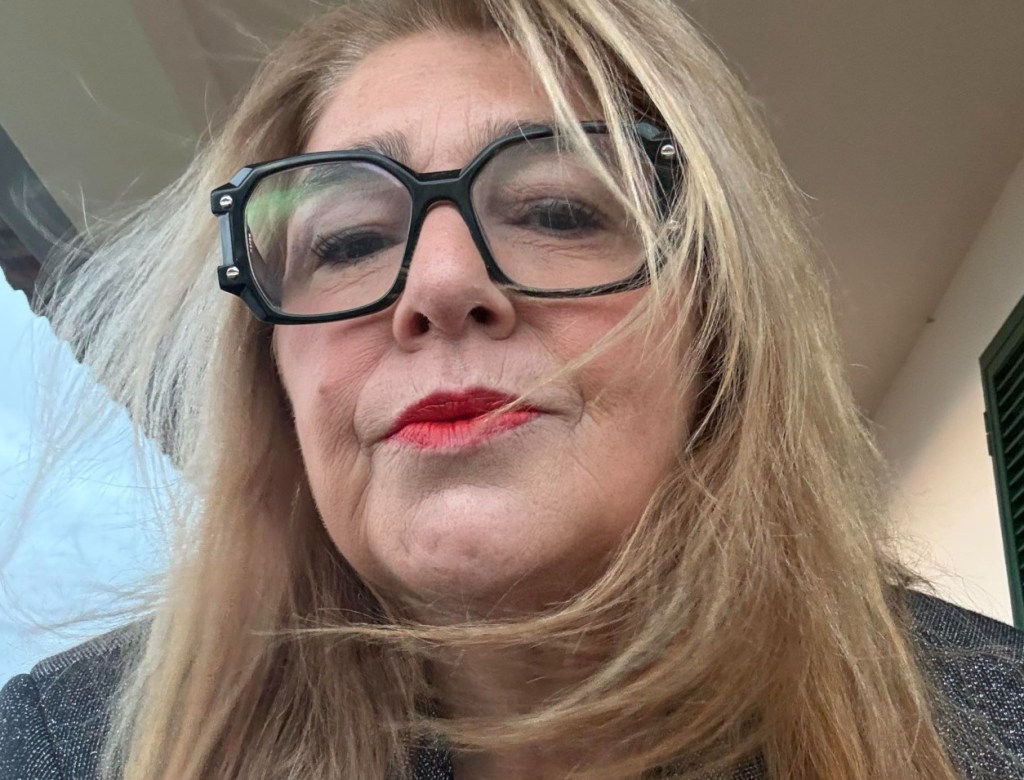
Alexandra Manes is from Flores Island but lives on Terceira Island in the Azores. She is a regular contributor to several Azorean newspapers, a political and cultural activist, and has served in the Azorean Parliament.
NOVIDADES will feature occasional opinion pieces from leading thinkers and writers in the Azores, providing the diaspora and those interested in the current state of the Azores with a sense of the significant perspectives on some of the archipelago’s issues.
Translated to English as a community outreach program from the Portuguese Beyond Borders Institute (PBBI) and the Modern and Classical Languages and Literatures Department (MCLL).
 Novidades - The Islands and the Diaspora