

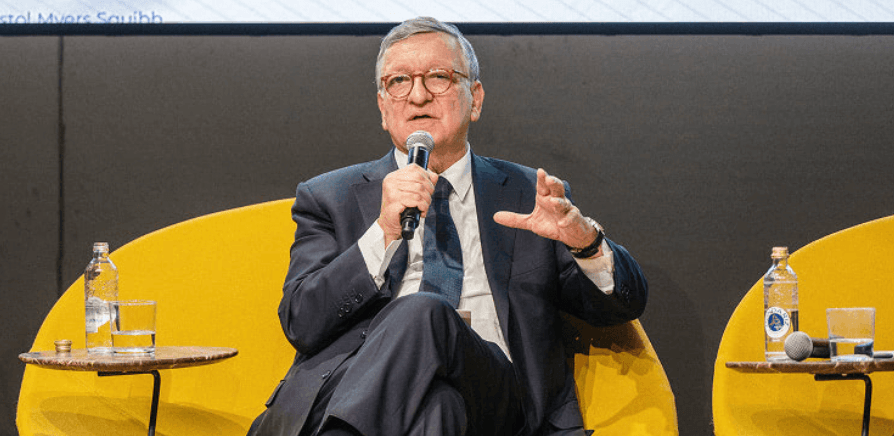
According to Portuguese news sources, José Manuel Durão Barroso, former Portuguese prime minister and former president of the European Commission, has been appointed president of the Fundação Luso-Americana para o Desenvolvimento (FLAD), a key institution for strengthening ties between Portugal and the United States. He replaces Nuno Morais Sarmento, who stepped down for health reasons. Morais Sarmento visited California last year, meeting with a range of organizations, including participating in the 6th-anniversary commemoration of PBBI at Fresno State.
According to the Portuguese Press, the appointment was formalized through an executive order signed on Monday by Portuguese Prime Minister Luís Montenegro. Durão Barroso will assume his new role starting Thursday. At 69, he will serve as both chair of FLAD’s board of directors and president of its executive council. The appointment takes effect January 15.
Founded to promote cooperation in education, science, culture, and civil society between Portugal and the United States, FLAD has long played a central role in supporting academic exchanges, research initiatives, and diaspora-focused cultural programs. Durão Barroso’s appointment places one of Portugal’s most internationally experienced political figures at the helm of an institution with deep relevance for Portuguese-American communities across the U.S.
Durão Barroso served as president of the European Commission for a decade, from 2004 to 2014, after serving as Portugal’s prime minister between April 2002 and July 2004. Appointed to the Commission presidency in 2004 at age 57, he became the first Portuguese national—and the 11th overall—to hold the post. He was reappointed in 2009 for a second term that concluded on October 31, 2014.
For many in the diaspora, his European leadership years coincided with a period of increased Portuguese visibility on the global stage, as well as significant moments of economic and political transition affecting migration, mobility, and transatlantic relations.
According to the Portuguese Press, he is a university professor by training. Durão Barroso later served as non-executive chairman of Goldman Sachs International after leaving Brussels. He currently holds several positions connected to global Portuguese networks, including president of the General Assembly of the Portuguese Diaspora Council and chairman of its EurAfrican Forum.
Born in Lisbon on March 23, 1956, Durão Barroso has often been described as politically “cool, calculating, formal, and rational.” He has said the defining moment that drew him into public life occurred on April 25, 1974—the day of Portugal’s Carnation Revolution—which he witnessed in Lisbon’s Largo do Carmo and later described as the most important day of his life.
The newspapers in Portugal report that as a law student, he was briefly involved with the far-left Portuguese Revolutionary Movement of the Proletariat (MRPP), gaining attention for fiery speeches and radical activism during the turbulent post-revolutionary years. He broke decisively with that period in 1977, following his father’s death, and moved to Geneva and Washington, where he continued his studies—an early transatlantic chapter in a career that would later unfold on a global stage.
In December 1980, he joined Portugal’s Social Democratic Party (PSD). Returning to Portugal during the governments of Aníbal Cavaco Silva, he served in several senior roles, including deputy secretary of state for internal administration, secretary of state for foreign affairs and cooperation, and later as foreign minister.
Durão Barroso became leader of the PSD in 1999. After the Socialist Party’s defeat in the 2001 local elections prompted Prime Minister António Guterres to resign, President Jorge Sampaio called early elections. On March 17, 2002, the PSD won the parliamentary vote. Although short of an absolute majority, Durão Barroso formed a governing coalition with the CDS–People’s Party, led by Paulo Portas.
After just over two years as prime minister, Durão Barroso—fluent in French and English—was appointed president of the European Commission, beginning his first term in November 2004. His tenure included the rejection of the EU Constitutional Treaty in 2005, later replaced by the Lisbon Treaty in 2007, negotiations over two multiannual EU budgets (2007–2013 and 2014–2020), and, particularly during his second term, the global economic and financial crisis.
For Portuguese-American communities, his new role at FLAD is of particular interest, as the foundation continues to shape educational exchanges, cultural dialogue, and civic engagement across the Atlantic—linking Portugal not only to Washington and academic institutions, but also to the lived experiences of the diaspora in California, New England, Hawaii, and beyond.
For full disclosure, FLAD has been a sponsoring organization of PBBI-Fresno State since its inception in 2019.
From news reports in Expresso, SAPO, Público and RTP.
 Novidades - The Islands and the Diaspora