

The PS/Azores Parliamentary Group has called on the Regional Government to account for the mounting debts of the Regional Health Service to contracted healthcare professionals, warning that the system’s growing dependence on temporary providers has become a structural response to chronic shortages rather than an exceptional measure.
According to the Socialists, hospitals across the Azores increasingly rely on service providers and short-term contractors to absorb surges in demand, ensure the presence of specialists in key areas, and compensate for the lack of permanent staff. The stated aim, they argue, is not optional but essential: to preserve continuity of care, fill persistent gaps in coverage, and curb ever-lengthening waiting lists and delays.
In a formal inquiry submitted to the Legislative Assembly of the Autonomous Region of the Azores (ALRA) on September 24 of last year, the PS/Azores sought a detailed accounting of the health system’s human resources. They requested figures on the total number of doctors, nurses, and other healthcare professionals—broken down by specialty, hospital, and Island Health Unit (USI)—as well as the number working under task-based or service-provision contracts. The party also pressed the Government to disclose the amounts owed to, and paid to, doctors and nurses operating under these arrangements.
The Regional Government’s response, released on January 9, laid bare the scale of the system’s reliance on contracted labor. At the Azores Oncology Center (COA), ten professionals are currently working under such regimes.
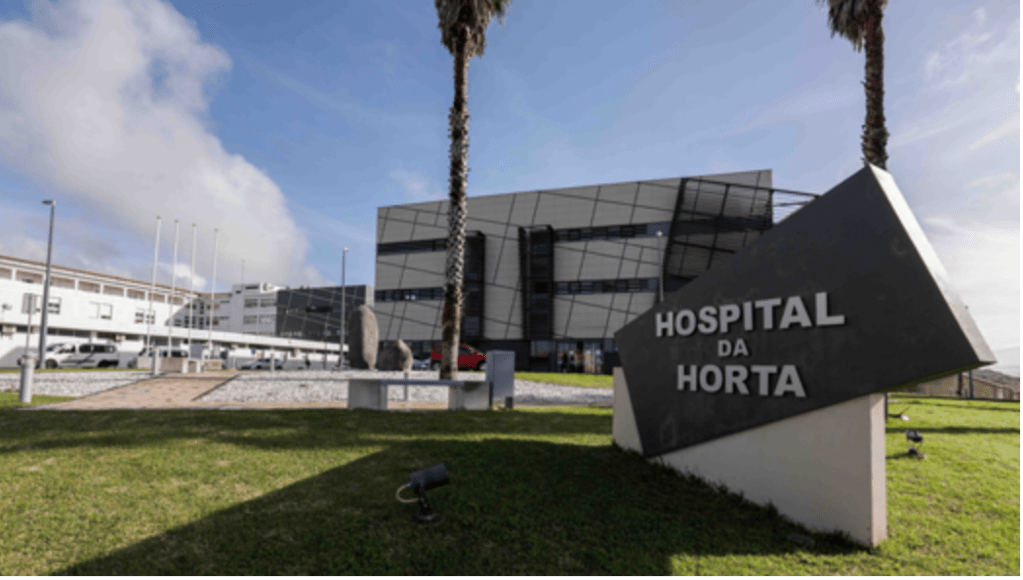
At Hospital Divino Espírito Santo (HDES), the largest hospital in the Region, the numbers are particularly striking: 115 doctors and 90 nurses are engaged as service providers or task-based professionals. Hospital da Horta (HH) reports 102 doctors and 4 nurses in the same situation, while Hospital de Santo Espírito da Ilha Terceira (HSEIT) relies on 60 doctors and 42 nurses working outside permanent contracts.
Certain specialties stand out for their heavy dependence on contracted professionals. Pathological anatomy leads the list, with 27 specialists at Hospital da Horta. General emergency services follow, with 16 professionals at HSEIT and 13 at HDES. Nephrology at HH accounts for 12 specialists, while neurology and urology at HDES each count 11. Pediatric emergency services at HSEIT rely on 10 contracted professionals.
Across the Island Health Units, the picture varies by geography but reveals a consistent pattern of fragility. São Miguel registers the highest number of doctors working under these arrangements, with 17—14 of them without a specialty. São Jorge follows with six specialist physicians and one nurse. Santa Maria has one nurse and three doctors.
Terceira records four contracted physicians. Graciosa and Flores each rely on three doctors, while Faial and Pico have just two each. On Corvo, the Region’s smallest and most isolated island, healthcare provision depends on a single nurse and a single physician.
The Government also disclosed the outstanding debts owed specifically to doctors. At HDES, unpaid amounts total €68,047.00; at Hospital da Horta, €72,484.62; and at the Pico Island Health Unit, €2,250.00.
Hourly pay rates reveal further disparities. At the Oncology Center, remuneration varies according to the number of contracted medical procedures performed. At HDES, physicians earn between €20.00 and €95.00 per hour, while nurses receive between €10.86 and €21.73. At Hospital da Horta, doctors are paid between €25.00 and €50.00 per hour, with nurses earning €11.00. At HSEIT, nurses receive €10.11 per hour, while doctors are paid between €35.00 and €60.00.
In the Island Health Units, doctors’ hourly rates range from €35.99 to €39.90 in Flores, €35.00 in Faial, €35.00 to €40.00 in Graciosa, €35.00 to €60.00 in Pico, €25.00 to €33.50 in Terceira, and €35.00 to €43.24 in São Miguel. In these islands, no payments were made to nursing staff working under similar arrangements.
On Corvo, doctors earn between €29.16 and €45.29 per hour, while nurses receive between €7.85 and €15.63. In São Jorge, doctors are paid between €38.00 and €50.00, with nurses earning €15.00. On Santa Maria, doctors receive between €56.00 and €60.00 per hour, while nurses are paid just €6.35.
Together, the figures sketch a healthcare system sustained by improvisation, uneven compensation, and the quiet labor of professionals who move between islands and institutions to keep care from collapsing. Behind the numbers lies a broader question—one the Socialists insist cannot be postponed indefinitely: whether a public health system built on temporary solutions can continue to guarantee dignity, equity, and stability for both patients and those who care for them.
Diogo Simões Pires is a journalist for Correio dos Açores, under the direction of Natalino Viveiros.
Translated into English as a community outreach program by the Portuguese Beyond Borders Institute (PBBI) and the Modern and Classical Languages and Literatures Department (MCLL), in collaboration with Bruma Publication and ADMA (Azores-Diaspora Media Alliance) at California State University, Fresno. PBBI thanks Luso Financial for sponsoring NOVIDADES.

 Novidades - The Islands and the Diaspora