

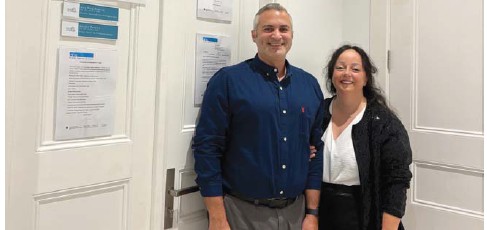
Founded by Helder Pereira and Ana Pereira, Sleep HAIbeat is a startup born on the island of Flores with a clear mission: to help the community take better care of its heart and sleep. The project combines specialized expertise in cardiology and sleep medicine, guided by the conviction that caring for sleep is caring for the heart—and that meaningful innovation can emerge even from a small island.
In an interview with Correio dos Açores, the founders say they hope to bring “greater visibility to the health sector,” while placing their professional experience at the service of local development. Looking ahead, the project is also expected to expand into tourism, with the opening of its first lodging.
Correio dos Açores: Who are the founders of Sleep HAIbeat, and what is your story?
Helder Pereira and Ana Pereira: Sleep HAIbeat was born from a very particular mix of longing, courage, and a vision for the future. For years, we lived an intense life in London—demanding, fast-paced, full of opportunity, but distant from what mattered most to us.
With a young child and highly specialized jobs that consumed most of our time, we began asking the question that changes everything: What if it were possible to return home?
That question led us to take a risk, to become digital nomads, and to return to the Azores. The idea of “home” became concrete and grounded on Flores Island. We chose it not only out of affection, but also because we clearly saw a lack of specialized labor and believed there was a real opportunity to create, innovate, and invest in areas we already knew and loved.
Even our name tells a story. Sleep represents Ana’s specialty—sleep medicine, rest, balance, the quiet foundation of health and well-being. Beat reflects Helder’s field of cardiology—rhythm, movement, life itself. HAIbeat brings these together with the idea of inhabiting: living, welcoming, and creating purposeful spaces connected to tourism and the way one resides in a place. HAI is, at its core, what unites us: Helder, Ana, and Isaac.
Our son is our greatest source of inspiration, strength, and resilience—the reason we chose to slow down, return, and build something with meaning, impact, and a future.
What does the project involve, and what is its main goal?
Both: At its core, the project allows us, through freelancing, to continue offering our specialized knowledge as diagnostic and therapeutic technicians to international companies, working digitally in the sectors we know best. At the same time, we are investing—drawing on that background—in local and rural tourism on Flores.
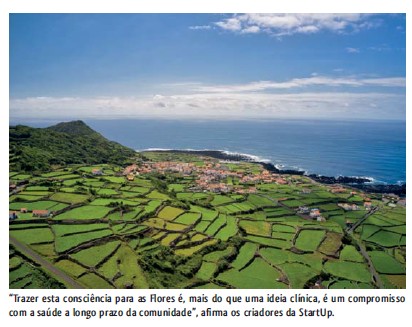
What motivated you to create a company like this in the Azores, especially on Flores?
Ana Pereira: As a co-founder and a native of Flores, I always dreamed of returning one day. With a young child full of energy, I wanted him to experience the freedom of growing up without the risks of a big city. The opportunity also came from my parents, who donated a property in ruins. Since childhood, I had imagined living there and restoring those volcanic-stone barns. Doing that from afar would have been nearly impossible. I’m deeply grateful to them. What initially seemed like a plan for our permanent home became, as a couple, a decision to give the island two years—and little by little, we’re settling in.
Helder Pereira: My story is deeply intertwined with this place. Today I’m Isaac’s father, Ana’s husband, and Honorato do Talho’s son-in-law—but before that, I was Palmira’s son, from Faial, where my parents rented out rooms. Many people don’t know this, but it was thanks to people from Flores who traveled to Faial for medical appointments and treatments that my parents were able to help pay for my studies.
That quiet movement of solidarity—the coming and going of people who trusted, believed, and needed help—made my path possible. I’ve always felt a special affection for this region. I believe deeply in the law of return: when you give, life finds a way to give back. My way of repaying is simple—putting my clinical skills at the service of people, helping whenever I can.
Here I found something rare: a genuine sense of community, spontaneous smiles, availability for one another, and a humanity I haven’t felt anywhere else. Returning isn’t just a life project; it’s an act of gratitude.
How has the community responded so far?
Both: People are curious about us and about the company, but most of our work has been international, so there hasn’t been much local visibility yet. As they say, discretion is part of the art of business.
What impact do you hope this initiative will have in the Azores and on the island?
Both: We hope that as our initiative and investments grow, we can bring greater visibility to the health sector. We feel the territory has been neglected in this area. Despite dedicated professionals at the local health center, there is a lack of a forward-looking governmental vision aligned with technological development. We lag behind in even basic diagnostic and monitoring capabilities.
How do you assess the sleep quality of Azoreans?
Both: Azoreans—and Portuguese in general—are known for going to bed late and not prioritizing rest as a pillar of health. We’re tired and we sleep poorly. We’re glued to our phones, scrolling through social media right before bed, absorbing huge amounts of information. Our sleep environment has a major impact on how well we fall asleep. We’re overstimulated by technology, affected by summer heat, snoring partners, and environments not conducive to good sleep hygiene.
We also see the direct impact—or lack of it—on the heart. Poor sleep isn’t just about fatigue; it’s associated with heart rhythm disturbances, high blood pressure, increased risk of arrhythmias, heart attacks, strokes, and worsening cardiovascular disease. The heart needs restorative rest to recover and function properly. That’s where our specialties intersect.
Too often, we treat symptoms—palpitations, hypertension, persistent fatigue—without addressing the cause, which in many cases begins at night. Sleep should be the moment when the nervous system slows down and the body repairs itself. When that doesn’t happen, the heart stays in a constant state of alert.
Raising awareness of this connection on Flores is not just a clinical idea—it’s a long-term commitment to community health: helping people sleep better so they can live better.

What advice do you give to those who want to improve their sleep habits?
Both: Establishing relaxing, regular routines is one of the simplest and most powerful steps we can take. Teaching from infancy that sleep is a priority is an investment in future health.
Avoid excessive caffeine—especially after the morning—and don’t exercise too close to bedtime. Respecting our natural rhythms is ultimately about respecting our bodies. When we sleep well, energy increases, stress decreases, and quality of life improves. Caring for sleep is caring for the heart—and caring for the heart is caring for life.
What are the most common sleep-related problems?
Both: Insomnia and sleep apnea are the most common. Both significantly affect individuals and their partners. Many “sleep divorces,” where couples sleep in separate rooms, result from snoring or fear during long apnea episodes. Insomnia—lying awake and tossing in bed—can be deeply distressing. Both conditions require specialized clinical evaluation.
Who are your most common clients?
Both: At the moment, we mainly work with international healthcare companies that hire us as freelancers, allowing us to stay connected to demanding clinical environments and international standards. In parallel, we’re preparing to open our first tourism accommodation—designed with the same care and human focus that guides everything we do.
What are your biggest challenges today?
Both: Turning ideas into reality. In a small, isolated place, finding available contractors and transporting goods is difficult. Shipping delays, weather conditions, bureaucracy, and disconnected digital systems are constant challenges. Still, each obstacle strengthens our resilience and creativity. Entrepreneurship here isn’t easy—but it’s deeply rewarding.
How large is the Sleep HAIbeat team?
Both: It’s just the two of us. Helder leads tourism development and freelances in cardiology for the UK and France. Ana freelances in sleep medicine for the UK and other EU countries.

What does it mean to be ranked among the top 5% of Portuguese SMEs?
Both: It’s more than a statistic—it’s validation of a choice made with heart, courage, and hard work. We took risks, changed our lives overnight, and believed in a vision. Seeing that effort recognized gives us renewed energy. And if all else fails—well, London is always there.
What are your future plans?
Both: We’d love to see the Azores take a decisive step toward the future through structured telemedicine solutions in sleep medicine and cardiology. Technology can bring care closer, reduce inequality, and transform health—even from an island. Caring at a distance doesn’t mean being distant; often, it’s the closest and fairest way to care.
What message would you like to leave the community?
Both: First, our deep gratitude to our family for welcoming us back with open arms. To the community, our admiration for continuing to demand better healthcare and quality of life. As Helder often says, “From the sky, only rain and wind fall.” Everything else is built with effort, unity, and persistence. That collective strength inspires us every day—and reminds us why it’s worth being here.
Diogo Simões Pires is a journalist for Correio dos Açores, Natalino Viveiros-director
Translated into English as a community outreach program by the Portuguese Beyond Borders Institute (PBBI) and the Modern and Classical Languages and Literatures Department (MCLL), in collaboration with Bruma Publication and ADMA (Azores-Diaspora Media Alliance) at California State University, Fresno. PBBI thanks Luso Financial for sponsoring NOVIDADES.

 Novidades - The Islands and the Diaspora