

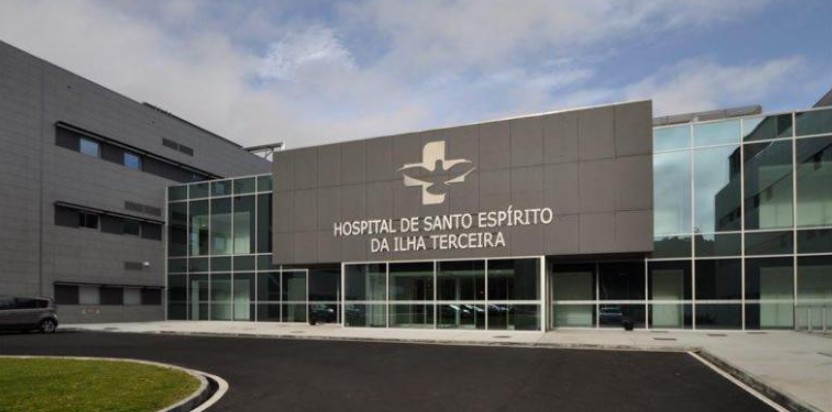
The Hospital de Santo Espírito da Ilha Terceira has reopened its cardiac intermediate care unit—an initial step toward establishing a hemodynamics unit that would enable advanced cardiovascular procedures, according to the hospital’s director of cardiology.
“We have the obvious and natural expectation—already announced last year—that we will soon be able to perform primary angioplasty here,” said João Paisana Lopes, speaking to reporters. “That requires a dedicated catheterization suite—a hemodynamics room—that will serve multiple specialties.”
Once a hemodynamics unit is in place at the Terceira hospital, artery blockages in the event of a heart attack could be treated “within the first hours,” Lopes explained, avoiding helicopter transfers and follow-up procedures at the Hospital do Divino Espírito Santo on São Miguel. The hospital has already launched a procurement process to acquire an angiography system using funds from Portugal’s Plano de Recuperação e Resiliência (PRR). At present, however, the cardiology service has just four cardiologists, none of whom are certified to perform coronary angiography.
“We will bring in senior, experienced interventional cardiologists to work with us,” Lopes said. “Naturally—and in my view—they should be the first to be invited—our colleagues currently working on São Miguel.” Lopes said he believes the hemodynamics unit could open sometime in 2026, possibly “sooner than expected.” Even so, he stressed that the reopening of the cardiac intermediate care unit already “represents a major leap forward” in improving services and reducing both mortality and morbidity.
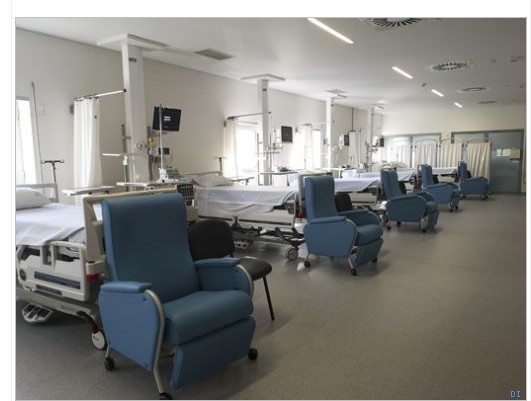
The unit had operated at the former Santo Espírito Hospital but was discontinued when the hospital relocated to its current building in 2012. “It was, in fact, a step backward,” Lopes said, noting the loss of specialized cardiology nurses who had accumulated extensive experience working alongside cardiologists. Named after Coelho Gil, who helped establish Terceira’s first coronary care unit, the new facility includes seven beds and allows for round-the-clock patient monitoring. Lopes said the upgrade could also help attract and retain cardiologists.
“It’s not easy to recruit cardiologists or cardiology residents to come to—or stay on—Terceira,” he said. “Knowing that this is a first step toward a promising future, where they can practice not only clinical care but also advanced diagnostic procedures that reduce patient mortality, makes a real difference.”
Complementarity Within the Health System
The regional secretary for Health and Social Security, Mónica Seidi, echoed the need to invest in specialization to draw cardiologists to the hospital.
“Without a coronary care unit, we cannot even think about a hemodynamics suite or other advanced procedures,” she said. “This is the first step. The hospital has its goals, which will be discussed with the Regional Government, always with an eye toward complementarity among all institutions within the Regional Health Service.”
According to Seidi, the reopened unit could significantly reduce patient transfers off Terceira. “Based on historical data, we expect to avoid around 20 medical evacuations per year outside the region,” she said, noting that many coronary patients currently travel to Ponta Delgada for procedures unavailable on Terceira. In cases requiring invasive interventions, patients will still be transferred.
The angiography system for the future hemodynamics suite is among the equipment slated for purchase under the PRR in 2026, as part of a total investment of three million euros at the Terceira hospital.
In Diário Insular, José Lourenço-director.
Translated into English as a community outreach program by the Portuguese Beyond Borders Institute (PBBI) and the Modern and Classical Languages and Literatures Department (MCLL), in collaboration with Bruma Publication and ADMA (Azores-Diaspora Media Alliance) at California State University, Fresno. PBBI thanks Luso Financial for sponsoring NOVIDADES.

 Novidades - The Islands and the Diaspora