


Professor João Luís Gaspar, professor at the Institute for Research in Volcanology and Risk Assessment (IVAR) of the University of the Azores, says that despite an apparent slowdown in seismic activity centered on the Santa Bárbara Volcano, the crisis is far from over.
“The seismo-volcanic crisis developing at the Santa Bárbara Volcano and in adjacent active systems has shown a pattern marked by periods of reduced seismicity followed by phases of greater energy release,” Gaspar told DI. “That was the case, for example, after the activity peaks recorded in September and December 2024, with the most recent period of heightened seismicity occurring last November.”
Gaspar, who also coordinates the Crisis Office of the Azores Seismovolcanic Information and Surveillance Center (CIVISA), added that “we are currently once again experiencing a period of lower seismic activity, but the crisis continues and requires the same level of scientific attention.”
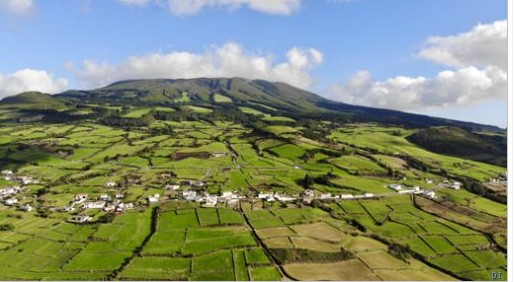
Asked what might explain the current deceleration within an active seismo-volcanic context, the researcher said that “the reduction in seismicity—whether in the number of recorded events or in their magnitude—is linked to a phase of greater system relaxation, which is natural after the intense seismicity recorded in November.”
“However,” he cautioned, “we cannot yet say that the system is moving toward equilibrium. In crises of this kind, a longer observation period is necessary before drawing conclusions, because we are dealing with a phenomenon dominated by tectonic and magmatic stresses.”
While Gaspar does not rule out a future lowering of the alert level, he stresses that any such change may be temporary. “Surveillance, monitoring, and communication levels will remain as they are, with the Crisis Office closely tracking developments in order to continuously adjust alert levels to the systems’ state of activity. The downward trend currently observed at Santa Bárbara Volcano could even lead to a reduction in the alert level—but always with the understanding that, until equilibrium is reached, it could rise again. That is what happened at the end of last year.”
As for the message to the public at this stage, Gaspar notes that “in around 80 percent of cases, seismo-volcanic crises eventually fade without any eruption, because magma remains stalled at depth.”
“Nevertheless,” he emphasized, “on the island of Terceira, as on most other islands in the archipelago, that possibility cannot be ruled out. We must therefore continue to work on prevention and on mitigating seismic and volcanic risks. And if that is important for the archipelago as a whole, it is all the more critical in the case of Terceira.”
In Diário Insular-José Lourenço, director
Translated into English as a community outreach program by the Portuguese Beyond Borders Institute (PBBI) and the Modern and Classical Languages and Literatures Department (MCLL), in collaboration with Bruma Publication and ADMA (Azores-Diaspora Media Alliance) at California State University, Fresno. PBBI thanks Luso Financial for sponsoring NOVIDADES.

 Novidades - The Islands and the Diaspora