

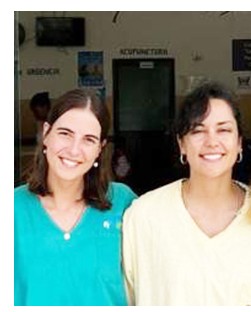
What begins as simple curiosity—sparked by a three-day conference visit to the island of Pico—evolves into lived experience: first as a month-long residency for a physician in training in General and Family Medicine at the Madalena Health Center, and later as daily clinical practice. Along this path, a distinct reality is revealed—one in which health care moves to the rhythm of insularity: demanding, intimate, and profoundly human.
How does insularity shape disease patterns and the clinical practice of family medicine?
Insularity is not merely a geographic condition; it is a determinant of health. Living on an island shapes epidemiological profiles, constrains access to care, and requires family physicians to practice medicine that is broader in scope, more resilient, and deeply adapted to context. On Pico Island—as in other insular or rural settings on the mainland—General and Family Medicine becomes even more community-centered, inseparable from territory and available resources.
Insularity leads naturally to the idea of the community as an extension of the consultation, where:
- Physical and social proximity allows early detection of family vulnerability, conflict, isolation, or lack of support networks.
- The physician becomes a recognizable presence in everyday life, earning a trust that is clinical but also communal.
- Preventive intervention becomes more effective because the physician knows the lived realities—vineyards, the sea, steep slopes, access roads, housing conditions, and work rhythms.
Insularity also reshapes the prevalence and impact of disease through several mechanisms: a higher incidence of musculoskeletal disorders, accidents, and trauma linked to physically demanding work in fishing, agriculture, livestock farming, and construction; increased mental health concerns associated with social isolation, such as depression, anxiety, and alcohol misuse; reduced exposure to medical subspecialties, requiring local management of a wider range of conditions; and frequent constraints on access to diagnostic testing, which can delay diagnosis or demand more judicious use of available exams.
As a result, insularity expands the scope of clinical practice. More procedures are performed at the health center—from minor surgeries to joint injections and diagnostic exams. Physicians manage complex multimorbidity that elsewhere would be followed by hospital specialists. Family doctors often work in close proximity to emergency services and are frequently the first—and sometimes the only—qualified medical response on the island.
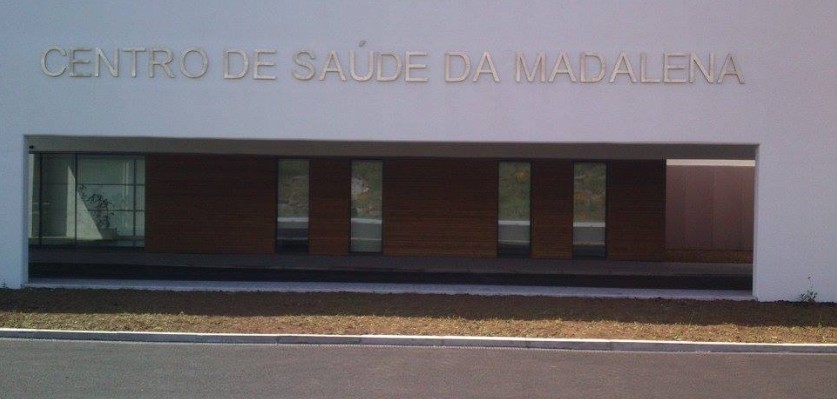
Madalena Health Center: a large polyclinic or a small hospital?
With approximately 13,600 residents and no hospital of its own, Pico Island depends on three health centers—Madalena, São Roque, and Lajes—for nearly all health care services. The nearest referral hospital is the Horta Hospital on the neighboring island of Faial, a 30-minute boat trip away. That stretch of sea defines many of the challenges shaping local clinical practice.
The Madalena Health Center (CSM), the island’s largest, stands out for concentrating an unusually wide range of services in a single building: 24-hour basic emergency care, short-stay inpatient beds, General and Family Medicine, Physical Therapy, Psychology, Nutrition, Dental Medicine, and decentralized hospital specialty clinics, including Gynecology, Pulmonology, Cardiology, Internal Medicine, and Psychiatry. This physical proximity fosters close professional collaboration, enabling faster diagnoses and more coordinated care.
Which resources matter most?
In some respects, the CSM mirrors mainland Family Health Units (USFs), with family care teams and organized clinics dedicated to diabetes, hypertension, adult health, family planning, maternal health, and child and adolescent care.
Yet certain organizational choices make a decisive difference. One such feature is the mandatory nursing consultation prior to all scheduled medical visits. This proves to be a powerful facilitating resource and a significant time-saver: patients have space to clarify concerns and deepen their understanding of health and prevention, while physicians benefit from shorter consultations and increased appointment availability—improving overall access to care.
Because private clinics are scarce on Pico, most residents are enrolled with a family physician. Those who are not typically include emigrants residing temporarily on the island.
The absence of a local hospital, however, strongly influences clinical decision-making. Referrals to Horta Hospital are earlier and more frequent—not due to lack of competence, but because many situations require diagnostic tools or specialties unavailable on the island. For example: a positive fecal occult blood test in colorectal cancer screening necessitates referral for colonoscopy; abnormal electrocardiograms require cardiology evaluation and echocardiography at Horta; all pregnant women are referred for obstetric ultrasounds and combined screening, and from 37 weeks onward must travel to Faial to await delivery. Physical distance and limited local resources demand careful organization and management. What appears far becomes, paradoxically, near—centralization, in this context, has been a strategy for ensuring equity of access.

What is most difficult to manage in an insular setting?
On the mainland, emergencies benefit from layered response systems and triage through SNS 24. On Pico, reality is different. Family physicians provide 24-hour coverage without immediate hospital backup, sometimes requiring patient evacuation by sea or air to neighboring islands. The boundary between medicine and logistics is always thin.
These constraints demand adaptation. Physicians develop enhanced skills in basic emergency care, minor surgery, and complex patient management. Equally important is the close relationship between CSM professionals and their counterparts at Horta Hospital. Communication is swift and informal—often a phone call facilitated by the CSM operator—to discuss cases, assess transfer needs, or coordinate care. This ease of contact extends to scheduled consultations. In one instance, the identification of suicidal ideation with a structured plan led to immediate coordination with psychiatry and same-day transfer for emergency evaluation.
What does a physician take away from Pico: clinical lessons or a new understanding of humanized care?
Despite its limitations, island medicine offers singular rewards: genuine continuity of care grounded in deep knowledge of individuals and families; the development of broad, versatile clinical skills; a strong sense of belonging that reinforces the human value of medical practice; and fertile ground for preventive medicine within small, cohesive, mobilizable communities.
From these experiences emerges a reflection: one must learn to know, to listen, to be bold, creative, and perceptive—valuing all resources, physical and human, through careful and optimized management that avoids unnecessary duplication.
On Pico Island, caring is always more than treating. It is learning that even when surrounded by sea, health care can serve the population efficiently—not by dispersing efforts or endlessly creating “new” structures, but by centralizing and optimizing what already exists.
António Pedro Costa, Correio dos Açores-Natalino Viveiros, director
Translated into English as a community outreach program by the Portuguese Beyond Borders Institute (PBBI) and the Modern and Classical Languages and Literatures Department (MCLL), in collaboration with Bruma Publication and ADMA (Azores-Diaspora Media Alliance) at California State University, Fresno. PBBI thanks Luso Financial for sponsoring NOVIDADES.

 Novidades - The Islands and the Diaspora