

Portugal’s presidential election on Sunday delivered a result without precedent in four decades: no candidate secured an outright majority, forcing a second-round runoff between a center-left veteran and the leader of a rising far-right movement.
With most votes counted, António José Seguro, backed by the Socialist Party, emerged in first place with just over 31% of the vote. He will face André Ventura, the founder and leader of the hard-right Chega party, who placed second with roughly 24%, depending on the final tally. The runoff is scheduled for February 8.
It is the first time since the mid-1980s that Portugal’s presidential contest has required a second round, underscoring a period of political fragmentation and volatility in a country long known for centrist stability. Nine candidates competed in the first round, but none came close to the 50% threshold required for a first-round victory.
A symbolic office with real leverage
Portugal’s presidency is largely non-executive, but the role carries significant institutional weight. The head of state is expected to act above party politics, serving as a mediator during crises and a guardian of constitutional order. At the same time, the president can veto legislation, refer laws to the Constitutional Court, and — in extreme circumstances — dissolve parliament and call early elections, a power often described in Portuguese political jargon as the system’s “atomic bomb.”
The next president will succeed Marcelo Rebelo de Sousa, who is completing his second and final five-year term.
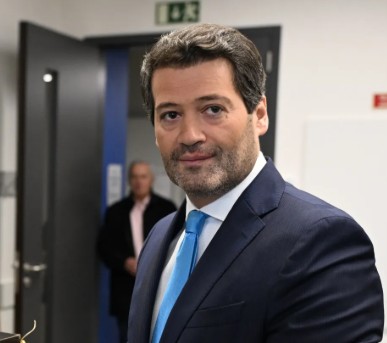
Ventura’s rise marks a political rupture
Ventura’s strong showing represents a watershed moment in modern Portuguese politics. Founded less than seven years ago, Chega has rapidly transformed from a fringe movement into a major political force, becoming the second-largest party in parliament last year. Its growth mirrors the broader advance of nationalist and populist parties across Europe, from France and Germany to Italy and Spain.
Central to Ventura’s campaign was a hardline message on immigration. His billboards — declaring “This isn’t Bangladesh” and insisting that immigrants should not receive welfare — sparked widespread condemnation. Such rhetoric, openly xenophobic in tone, would have been unthinkable in Portugal’s mainstream political discourse only a few years ago.
While Ventura has tried to make immigration the defining issue of the campaign, surveys suggest many voters remain more concerned about soaring housing costs, inflation, and declining purchasing power.
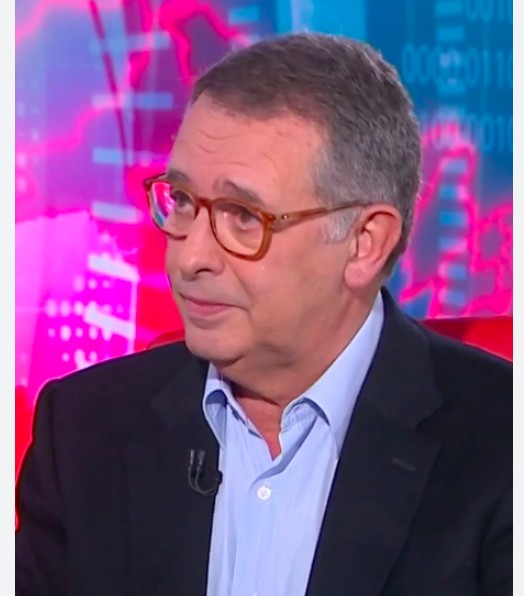
Seguro and the battle for the center
Seguro, a former Socialist leader with deep roots in Portugal’s democratic institutions, now faces the challenge of consolidating support across the political center and left. Exit polls consistently placed him in the low-to-mid 30% range, reflecting both his broad acceptability and the fragmentation of the electorate.
Fifth place went to Luís Marques Mendes of the center-right Social Democratic Party, whose weaker-than-expected result highlighted voter fatigue with the traditional parties that have alternated in power for the past half-century.
What’s at stake
Beyond the symbolism of the presidency itself, the runoff comes at a sensitive moment. Portugal has held three general elections in as many years, its worst bout of political instability in decades. The next president will likely have to manage tense relations between parties, oversee contentious legislation — including a long-delayed euthanasia law — and act as a stabilizing figure in a polarized climate.
Portugal’s influence within the European Union remains limited: its economy accounts for roughly 1.6% of EU GDP, and its military footprint is modest. Still, the February 8 runoff will be closely watched across Europe as another test of whether the continent’s far-right surge can translate into success at the highest levels of state authority.
For now, Sunday’s vote has redrawn Portugal’s political map — and set the stage for a decisive confrontation between two sharply different visions of the country’s future.
Adopted from various reports
 Novidades - The Islands and the Diaspora