

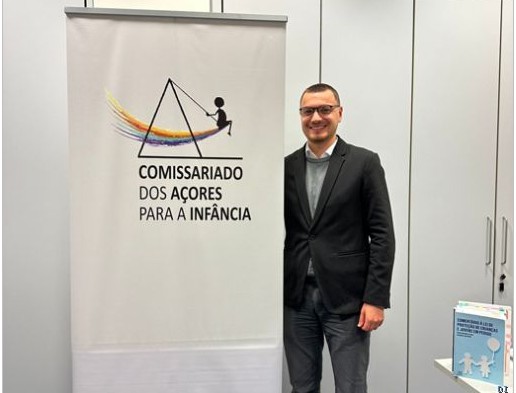
EMANUEL AREIAS, PRESIDENT OF THE AZORES COMMISSION FOR CHILDHOOD
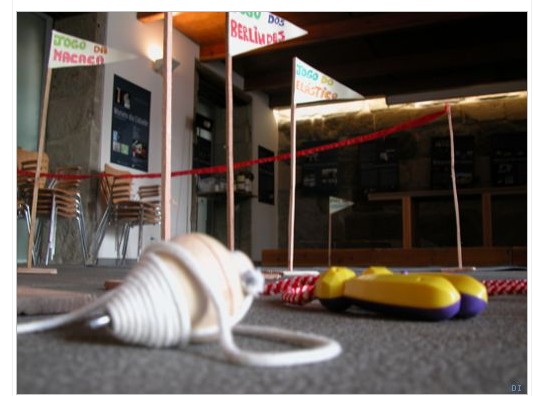
The Azores Commission for Childhood wants to encourage children to play outdoors again and spend less time in front of screens. One of the activities planned for 2026 is the Traditional Games Festival, where older generations will teach children from daycare centers and after-school programs the games they played in their own childhoods.
“We want children to return to the streets and to what was traditional, so they can have a healthier childhood, with their emotional well-being protected—in short, a happier childhood,” said Emanuel Areias, president of the commission, in statements to DI newspaper.
One initiative in the commission’s 2026 activity plan is the Traditional Games Festival, designed to promote intergenerational encounters. According to Areias, the first phase will be an intergenerational roundtable bringing together young people, children, and seniors, during which older participants will share memories of their childhoods and explain the games they used to play.
In a second phase, children will be invited to recreate those traditional games, trying activities such as tag, spinning tops, blind man’s buff, jump rope, musical chairs, the handkerchief game, “Chinese jump rope,” hide-and-seek, marbles, and dodgeball, among others.
“It is essential to establish a day dedicated to traditional play, because it is at risk of extinction, given a childhood increasingly focused on screens, bedrooms, home environments, and online games,” the commission president argued.
The commission intends for the Traditional Games Festival, aimed at children up to age 12, to take place every year in connection with Grandparents’ Day (July 26), involving kindergartens and after-school programs run by IPSS organizations and Misericórdias. This year, because Grandparents’ Day falls on a Sunday, the initiative is expected to take place during the preceding week.
“Our goal is for these organizations to be able to organize the festival locally as they see fit. There will be no fixed rules,” Emanuel Areias explained.
In addition to encouraging children to spend less time glued to screens, the initiative also aims to “strengthen relationships between younger and older generations” and prevent the loss of traditional games as cultural heritage.
“What we want is to send a clear signal that these games and traditional forms of play cannot be lost. This is a first step—a demonstration that this issue matters to the commission,” Areias emphasized.
In 2026, the Azores Commission for Childhood wants to focus on children’s right to play. “Alongside this festival, at the end of February, the commission will organize a webinar on the right to play in the community,” he said. The event will bring together two specialists from the fields of Education and Health to discuss the impact of screens—whether or not they limit children’s play—as well as the importance of children playing, being outdoors, scraping their knees, running, jumping, and engaging in regular physical activity.
In Diário Insular-José Lourenço, director.
Translated into English as a community outreach program by the Portuguese Beyond Borders Institute (PBBI) and the Modern and Classical Languages and Literatures Department (MCLL), in collaboration with Bruma Publication and ADMA (Azores-Diaspora Media Alliance) at California State University, Fresno. PBBI thanks Luso Financial for sponsoring NOVIDADES.

 Novidades - The Islands and the Diaspora