

The results of the first round of Portugal’s presidential elections place the country before an unavoidable choice. André Ventura, the self-proclaimed new leader of the Portuguese “right,” has seen his prominence in national politics reinforced—even if, for now, he has not expanded his share of the vote. What is curious, and deeply revealing, is that the title Ventura assigns himself is anything but accurate. Ventura—regretfully, for the celebration—is not right-wing.
The political divide between right and left dates back to the French Revolution, when deputies in the National Assembly sat either to the right, monarchist and conservative, or to the left, progressive and revolutionary. The right thus emerged associated with the preservation of the existing order, the defense of institutions, and the continuity of the regime. Ventura is not conservative. He has no interest in conserving the status quo; his project is to detonate the very foundations of democratic rule.
Behind a carefully staged façade of Catholic virtue and family values, Ventura reveals himself as a demagogic populist whose politics thrive on division and a radical redefinition of the state’s role—not as a guarantor of rights, but as an instrument of punishment. Beneath the much-touted slogan “Clean Up Portugal” lies a vision of justice that strips away fundamental guarantees and dangerously expands the discretionary powers of the state. Life imprisonment, chemical castration, expanded police authority, xenophobic rhetoric, and an openly declared goal of constitutional revision make Chega not a conservative party or a representative of the traditional right, but a nationalist force of the far right, with unmistakable fascist inspirations, akin to several of its European counterparts.
In this context, the choice no longer lies between left and right. The choice is between the Constitution, democracy, and the rule of law on one side, and their enemies on the other. It is here that the posture adopted by leaders of the Social Democratic Party becomes especially jarring: like Humpty Dumpty in Through the Looking-Glass, they have chosen to sit comfortably atop a wall, convinced that the fall is something that happens only to others.
Humpty Dumpty is not merely a figure of naïve indecision. He is the emblem of false neutrality—the arrogance of those who believe they can master the rules of the game and redefine words to suit their convenience. Perched on the wall, he imagines himself above the conflict. But the wall is not neutral; it is unstable. And the fall is not an accident. It is the inevitable consequence of that carefully cultivated equidistance.
This washing of hands by Luís Montenegro and José Manuel Bolieiro, at a moment when Chega’s growth is particularly alarming—especially on the island of São Miguel—is neither prudence nor statesmanship. It is passive complicity. Today’s PSD appears willing to gamble with democracy’s preservation in exchange for short-term strategic gains and a few more months in power. By refusing to choose, they choose to legitimize. And, as in the book, when the fall finally comes, there will be no armies left capable of putting back together what has shattered.
By contrast, António José Seguro emerges as the candidate of reason and an uncompromising defender of the essential principles ofdemocratic rule of law. This is a moment that allows no doubt, no ambiguity, no tactical distance. The second round will be fought over the values of freedom, equality, and democracy—now with the clear knowledge that a significant portion of the democratic right has chosen not to take part in that struggle.
The Café Royal turned one hundred.
A century measured not merely in dates, but in endurance, resistance, and encounter—a living memory of the city itself. Like the cafés that once helped Europe think itself into being, it was and remains a place of ideas, debate, and community. Many voices have passed through its doors, from ordinary citizens to elites, from artists to autonomists. A grateful embrace to Mr. José Maria and his team for keeping alive, day after day, the identity and the soul of Ponta Delgada.
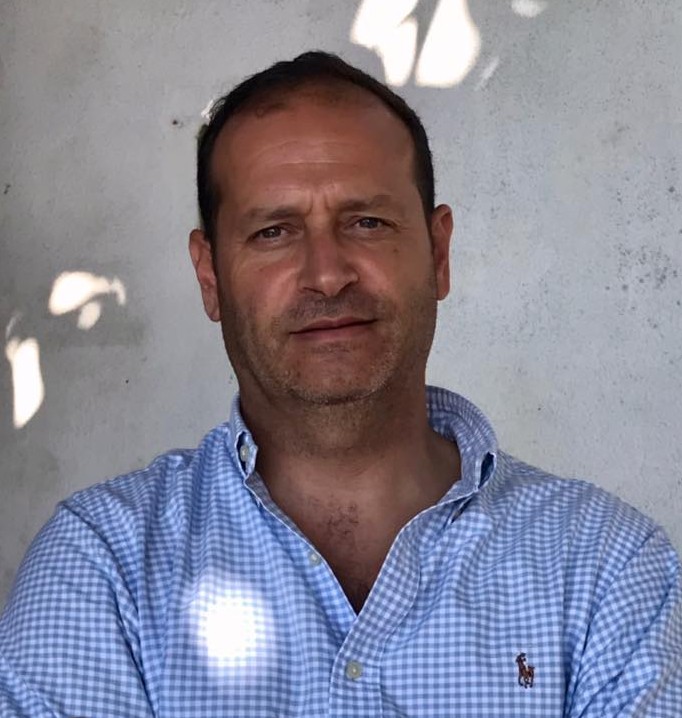
Pedro Arruda is a regular contributor to Azorean newspapers. We are thankful that he agreed to have his op-ed translated and available to our readers.
NOVIDADES will feature occasional opinion pieces from leading thinkers and writers in the Azores, providing the diaspora and those interested in the current state of the Azores with a sense of the significant perspectives on some of the archipelago’s issues.
Translated to English as a community outreach program from the Portuguese Beyond Borders Institute (PBBI) and the Modern and Classical Languages and Literatures Department (MCLL).
You can follow his writings in Portuguese online on: https://azoreansplendor.blogspot.com/
 Novidades - The Islands and the Diaspora