

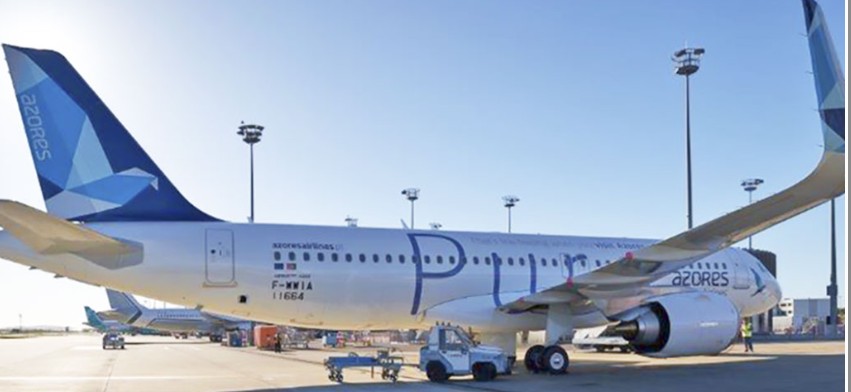
The Parliamentary Group of the Partido Socialista/Açores has warned that instability in air access is undermining the regional economy, the tourism sector, and the mobility of Azoreans during the low season, calling it unacceptable that the Regional Government has failed to provide information, strategy, or concrete action in a sector that is absolutely vital to the Region.
These concerns were raised following a meeting between the Socialist parliamentary group and the Azores branch of the Portuguese Hotel Association, where participants examined what they described as “clear signs of a slowdown in tourism-related economic activity during the low season, and the direct effects of current weaknesses in air connections to the Region.”
According to Socialist MP Sandra Costa Dias, seasonality continues to be felt acutely, and the situation has worsened in recent months. She noted that while the Regional Secretary for Tourism has announced three new airlines operating in the Azores during the upcoming high season, Ryanair has maintained its intention to leave the Region, with no progress reported so far in negotiations between the Regional Government and the airline—despite its planned departure in March.
“The Regional Government continues to provide no clarification about ongoing negotiations, alternatives under consideration, or concrete measures to mitigate this impact,” Costa Dias added.
At the same time, she said, easyJet—which has expressed interest in flying to Ponta Delgada—has not begun operations because the Regional Government insists that the carrier also serve other islands. “It is unacceptable that internal disputes within the Government are harming São Miguel’s economy, wasting an important opportunity to strengthen air links during the low season,” she argued.
To this situation, Costa Dias added the ongoing instability at SATA and the privatization process currently underway, which continue to generate uncertainty and seriously weaken the mobility of Azoreans. “This is not only about tourism,” she stressed, “but about the basic right of people to travel within and beyond the Region, at a time when the social mobility subsidy itself is already facing limitations imposed by the national government.”
The effects of this lack of direction, she said, are being felt across the entire tourism sector, affecting hotels, local lodging, car-rental companies, restaurants, and a wide range of businesses that depend directly on tourist flows. “When there is no confidence in air access, the entire regional economy slows down—and it is Azorean businesses and families who end up paying the price,” the MP added.
For the Socialist Party, the Regional Government’s silence and inaction are particularly troubling at a moment that calls for leadership, transparency, and negotiating capacity. “The Government does not inform, does not clarify, and does not present solutions, when what the Region needs are swift responses and a clear strategy to defend the interests of the Azores,” Sandra Costa Dias concluded.
In Diário dso Açores-Paulo Viveiros, director
Translated into English as a community outreach program by the Portuguese Beyond Borders Institute (PBBI) and the Modern and Classical Languages and Literatures Department (MCLL), in collaboration with Bruma Publication and ADMA (Azores-Diaspora Media Alliance) at California State University, Fresno. PBBI thanks Luso Financial for sponsoring NOVIDADES.


 Novidades - The Islands and the Diaspora