

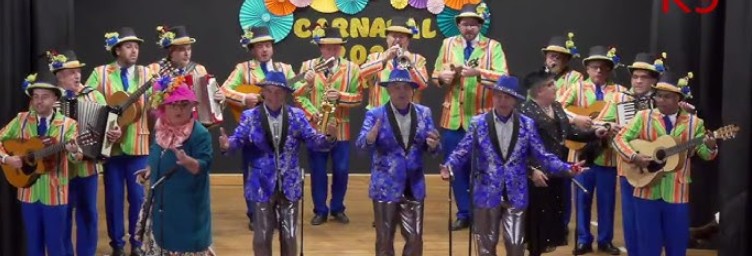
This year’s Terceira Carnaval will once again feature around 60 bailinhos and danças, including two groups from the United States.
According to João Costa, photographer responsible for Foto Íris magazine, which records the participating groups, this number has remained stable in recent years.
“I was expecting that increases in transportation and other costs, as well as other difficulties, would lead to a decline, but that hasn’t happened,” he told DI yesterday.
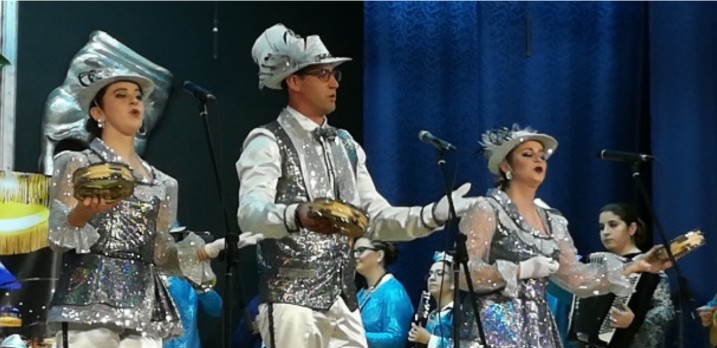
Three sword dances- danças de espada (from the United States/Casa dos Açores de Hilmar, Sé, and Lajes) and six tambourine dances will be performed on stages across the island, with the remaining groups performing small dances.
Lajes and Santa Cruz have the most danças and bailinhos.
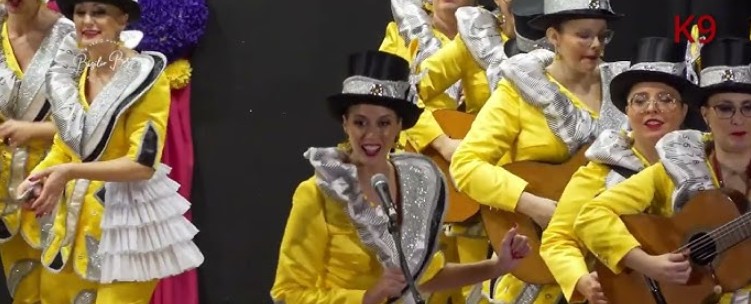
When it comes to plots, João Costa points out that there are authors who write on various subjects, such as José Esteves and Ricardo Martins, but that many groups choose to develop their own themes.
There are also 12 senior citizen bailinhos, which will be performing in the island’s dance halls this weekend and also on January 31 and February 1, and February 7 and 8.
João Mendonça, author of dances and a regular figure on the Carnival stage, admits that the total number of groups may slightly exceed the 57 on the island and the two in the US put forward by João Costa, due to last-minute participation.
This year, however, he is not participating in a dance, but will be observing “the other side” of Carnival. He expects the same themes as always: “Social criticism, everyday life on the island, and stories and clips from the internet,” he summarizes.
And he leaves a provocation: one day, the plots may be written by artificial intelligence. “Try it out. Go to Chat GPT and say you want to write a Carnaval skit. With a few adjustments, it may be possible,” he says.
Maintaining tradition
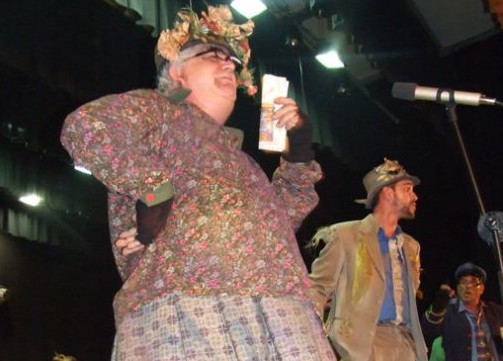
Popular Carnaval theater in Terceira has deep roots. The website of the Hélio Costa Carnival Museum of Terceira Island, in the village of Lajes, notes that “Carnaval bailinhos and danças are a hybrid cultural form, combining dance with drama, and are an evolution of the medieval plays of Iberian tradition.”
In a few weeks, this tradition will come back to life. In an interview with DI (Diário Insular) last year, dance and plot author José Esteves emphasized the importance of involving younger generations.
“I think one of the biggest challenges facing Carnaval today is the need to cultivate it among children and teenagers in today’s society, who have increasing access to a wide variety of sources of information and entertainment, so that this population will grow and nurture this dream, as happened with me and many other young people, of actively participating in Carnaval,” he stressed.
In Diário Insular-José Lourenço-director
Translated into English as a community outreach program by the Portuguese Beyond Borders Institute (PBBI) and the Modern and Classical Languages and Literatures Department (MCLL), in collaboration with Bruma Publication and ADMA (Azores-Diaspora Media Alliance) at California State University, Fresno. PBBI thanks Luso Financial for sponsoring NOVIDADES.

 Novidades - The Islands and the Diaspora