

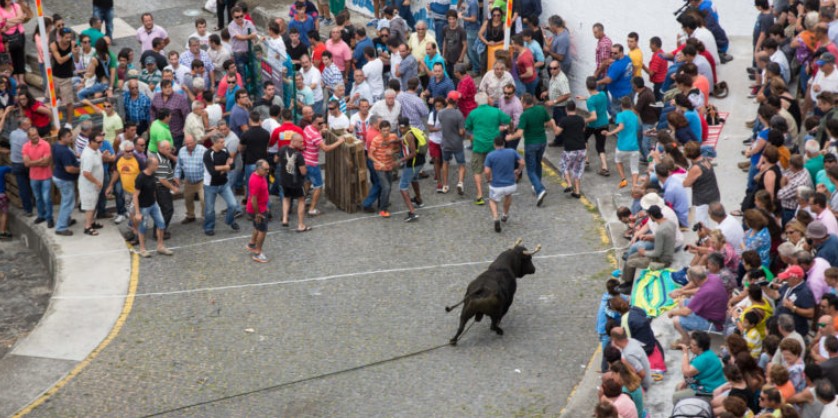
Bullfighting venues may have fewer police officers and civilians controlling traffic on some streets. The idea is being discussed internally in the Angra do Heroísmo division, but the Independent Union of Police Officers (SIAP) considers it illegal.
“For us, it is illegal and even a crime, because it is an usurpation of functions. It is a function intended only for the security forces,” said José Brisa of SIAP, in statements to DI.
Currently, the routes of the bull runs, which are closed to traffic while the bull is on the street, are controlled by PSP officers, not only on the main road, but on all roads where there is car traffic.
This service is provided outside the officers’ normal working hours.
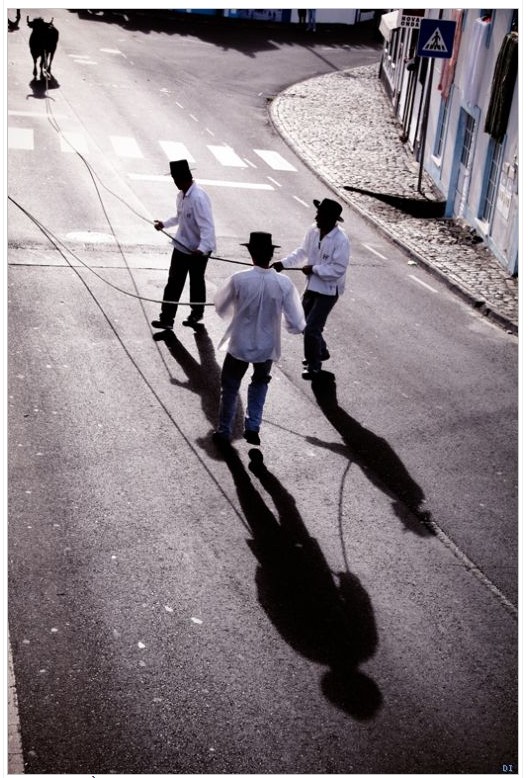
The idea, according to the SIAP official, is to ensure only one chief and two PSP officers per bullfight (three in larger bullfights), placing civilians, identified by vests, to control the remaining roads, putting up and removing barriers.
“That doesn’t cross anyone’s mind. How do they control a bullfight in Corpo Santo, which has about 10 points? Even if a chief and three officers go, there are 10 points,” questioned José Brisa.
The possibility of PSP officers going to the festivities an hour and a half before the bullfight to check that everything is in order during their working hours is still being considered.
“We are diverting officers who are serving the population to a private event during working hours so that the committees don’t have so many expenses. For us, this is not right,” said the SIAP official.
The reason for this proposal is a lack of personnel. José Brisa understands the argument, but proposes that, instead of reducing the number of officers per bullfight, the number of bullfights allowed per day should be reduced from three to two in each municipality.
“The police officers who go to the bullfight don’t just cut off traffic, they also organize parking in case an emergency vehicle needs to enter.
And if a driver does not comply with what the civilian is saying and enters the festival grounds with the bull out, who will be held responsible?” he asked.
For the head of SIAP, if this measure goes ahead, it could set a precedent and also be applied to municipal and parish festivals or even private construction sites.
Translated into English as a community outreach program by the Portuguese Beyond Borders Institute (PBBI) and the Modern and Classical Languages and Literatures Department (MCLL), in collaboration with Bruma Publication and ADMA (Azores-Diaspora Media Alliance) at California State University, Fresno. PBBI thanks Luso Financial for sponsoring NOVIDADES.

 Novidades - The Islands and the Diaspora