

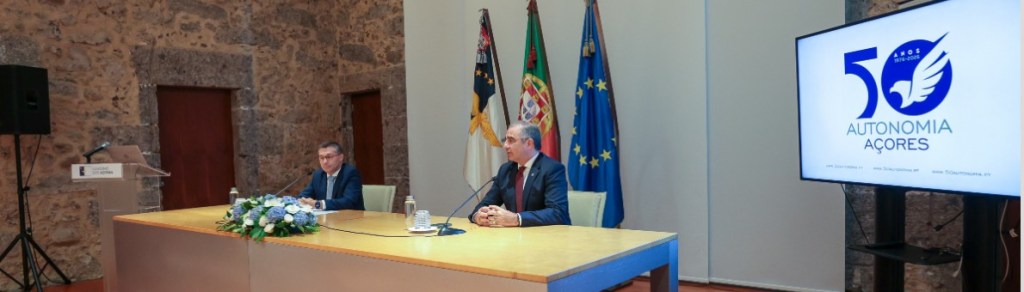
The official program commemorating the 50th anniversary of the Constitutional Autonomy of the Azores was presented yesterday at the Palácio da Conceição, in Ponta Delgada, during a joint press conference held by the President of the Legislative Assembly of the Autonomous Region of the Azores (ALRAA), Luís Garcia, and the President of the Regional Government, José Manuel Bolieiro.
On the occasion, the members of the Organizing Committee for the Commemorations were also introduced. The committee is composed of Ricardo Madruga da Costa, Pedro Gomes, Emanuel Areias, Teresa Brito e Melo, Susana Goulart Costa, and Rute Lacerda, who are responsible for coordinating and energizing the set of initiatives marking this historic milestone.
During the session, the official visual identity of the commemorations was unveiled, along with the website that will centralize all information related to the program, providing access to the calendar of events, public content, and institutional information.
The program will run throughout 2026 and includes activities spread across several islands of the archipelago, such as conferences, formal ceremonies, exhibitions, book launches, intergenerational encounters, concerts, and initiatives recalling the historical and political evolution of the Azorean autonomy project, as detailed on the official commemorations website.
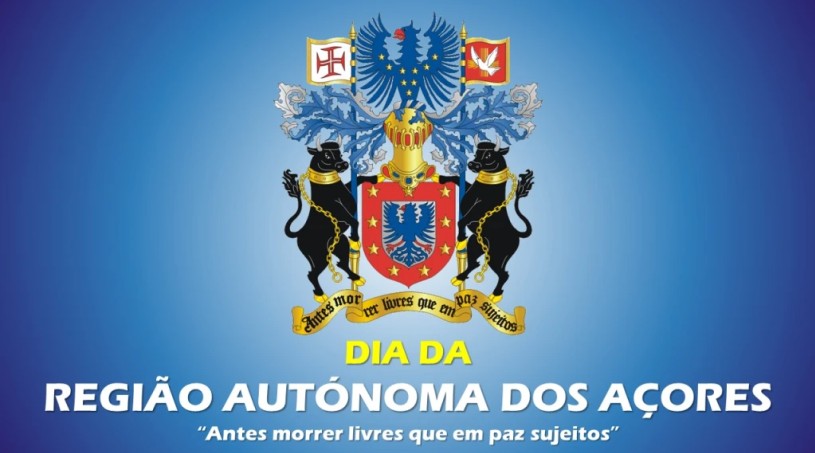
“Half a Century of Political, Institutional, and Democratic Consolidation”
In his remarks, the President of the Legislative Assembly of the Autonomous Region of the Azores stated that the celebrations of the 50th anniversary of Constitutional Autonomy mark “half a century of political, institutional, and democratic consolidation of the Autonomous Region of the Azores.” He further emphasized that fifty years “are much more than a historical milestone: they represent the affirmation of a collective path, built with vision, political courage, and democratic commitment.”
Luís Garcia reinforced that autonomy “was and continues to be an achievement that belongs to all Azoreans, regardless of the island they live on, the generation they belong to, or their political choices.”
“It is precisely because we recognize this collective and transversal dimension of autonomy that these commemorations are being designed through a broad, strong, and decentralized program, involving all our islands and, perhaps, other generations as well,” he explained.
Among the main objectives of the commemorations are the enhancement of the historical memory of autonomy, the promotion of reflection on its present and future, and the engagement of different generations and audiences in the planned initiatives.
The program will focus particularly on moments considered foundational to the autonomy process: “We want to mark the approval of the Portuguese Constitution, which established regional autonomy; the first regional elections, held on June 27, 1976; and we want to highlight the installation of the governing bodies, both for the Assembly and for the Regional Government.”
The President of the ALRAA also stressed the open and participatory nature of the program, stating that “we want this program to be enriched, to be participatory, and to remain under construction—just like autonomy itself,” extending an invitation to Azoreans to offer “contributions and suggestions to enrich this program.”
When asked about the main challenges facing autonomy over the next fifty years, Luís Garcia highlighted the importance of historical knowledge, noting that no one values what they do not know, and that it is essential for younger generations to understand the path that led to the achievement of autonomy.
“These celebrations also serve that purpose: to explain it to them, to involve them as well in shaping the autonomy they want. Autonomy will be what future generations want it to be,” he emphasized.
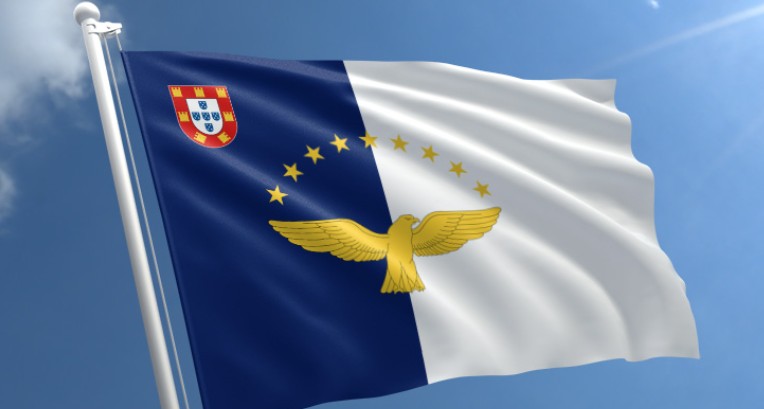
“The Primary Interlocutor: the People”
For his part, the President of the Regional Government emphasized that 2026 “has the people as its primary interlocutor.”
“It was the Portuguese people and the Azorean people who, after the revolution, transformed a vision of how the rule of law should function, through the introduction of political autonomy and the creation of autonomous regions,” said José Manuel Bolieiro.
The President of the Azores Government further argued that Autonomy represented a “transformative achievement,” one that is always “in progress” and constitutes a “constant challenge for present and future generations.”
“It is the people who must celebrate their own achievement. We want the people to be involved in their own conquest,” he stressed.
Calling for the participation of all sectors of society—municipalities, schools, political parties, and citizens—José Manuel Bolieiro added that while the program will include “institutional moments,” it seeks above all to affirm itself as a milestone in valuing the “legacy of democracy and political autonomy in the Azores.”
The role of the media, as a promoter of “formative information shaping mediated public opinion on these matters,” was also highlighted by the regional leader.
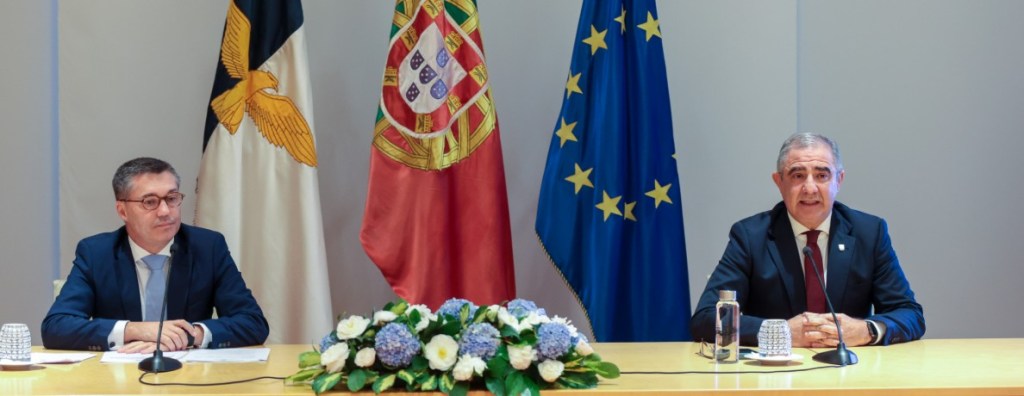
DSP/JHA– journalists for Correio dos Açores-Natalno Viveiros-director.
Translated into English as a community outreach program by the Portuguese Beyond Borders Institute (PBBI) and the Modern and Classical Languages and Literatures Department (MCLL), in collaboration with Bruma Publication and ADMA (Azores-Diaspora Media Alliance) at California State University, Fresno. PBBI thanks Luso Financial for sponsoring NOVIDADES.

 Novidades - The Islands and the Diaspora