

The screening of the documentary Ocean, narrated by David Attenborough, is one of the latest initiatives promoted by the Blue Azores program. The film aims to “raise awareness and empower the public to understand the fundamental importance of the ocean, to create an emotional connection with marine life, and to clearly expose existing threats, while highlighting the ocean’s resilience.”
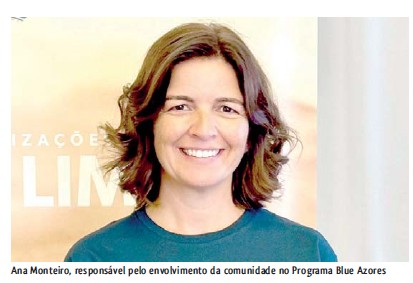
In an interview with Correio dos Açores, Ana Monteiro, a member of the Blue Azores team, explains that the initiative seeks to introduce the community to the work being carried out to protect the Azorean sea, strengthen ocean literacy, and involve citizens in building collective solutions.
How did the idea of screening Ocean with David Attenborough in the Azores come about?
Ana Monteiro (Community Engagement Lead, Blue Azores):
The screening of this documentary is part of Blue Azores’ community engagement plan. Our main objectives are to promote ocean literacy, showcase the work being done in the region to protect and enhance our marine environment, and translate knowledge into sustainable actions and more informed attitudes.
On January 1st, the new legal framework for the Parque Marinho dos Açores came into force, establishing the largest network of marine protected areas in the North Atlantic. This moment coincides with just over halfway through the UN Decade of Ocean Science, and we felt that screening this documentary was a special way to celebrate the ocean and raise awareness about the urgent need to protect it.
The well-known saying “a picture is worth a thousand words” fully applies here. David Attenborough is arguably the greatest storyteller of our time, capable of capturing attention and conveying messages in a deeply emotional way that few others can match.
What are the main goals behind this initiative?
The documentary showcases some of the planet’s most spectacular marine habitats—many of them still unknown to most people. We believe strongly that “we only protect what we know.” The film is an effective tool for raising awareness, empowering audiences to understand the ocean’s fundamental role, building an emotional connection with marine life, and clearly presenting threats such as climate change, destructive fishing practices, and pollution—while contrasting them with the ocean’s remarkable resilience.
We try to relate these global challenges to the specific reality of the Azores, which fortunately differs in important ways from some of the situations depicted in the film. This helps reinforce the idea that our sea is truly special—and that because it is special, it deserves protection.
The screening serves as a starting point for discussing the marine conservation work carried out in the Azores over recent decades, particularly the Azores Marine Park—its objectives, its importance, and the benefits it brings to a sustainable future for all Azoreans.
We also take the opportunity to highlight documentaries filmed in Azorean waters, such as The Island of the Giants.
In a time of growing global threats to the planet, we want to bring David Attenborough’s message of hope to as many people as possible—showing that ocean recovery is possible and that marine protected areas are a fundamental tool for conservation.
What kind of reactions have you received from audiences?
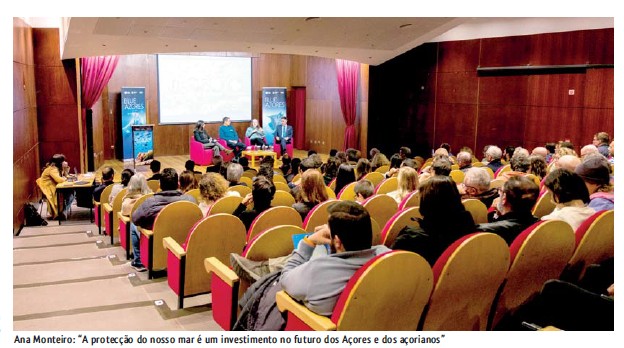
Attendance has been excellent. Screenings held in Ponta Delgada, Ribeira Grande, and Vila Franca do Campo attracted around 320 participants. Reactions have been overwhelmingly positive. At 99 years old, David Attenborough continues to move audiences with his voice and his passion for nature. His curiosity is contagious, and people leave eager to learn more about the Azores Sea and the work Blue Azores is doing.
These reactions confirm the importance of continuing to promote initiatives that are close to people and rooted in local communities.
How do these sessions contribute to ocean literacy in the Region?
They allow us to deepen understanding, communicate complex scientific concepts in an accessible language, and encourage action. Reaching different audiences is essential—stimulating community engagement and reinforcing the message that we all depend on the ocean and that everyone can play a role in protecting it.
Does the entry into force of the Azores Marine Park make these initiatives even more relevant?
Absolutely. The Marine Park’s entry into force on January 1st marks the transition from intention to concrete implementation. Initiatives such as the screening of Ocean and the accompanying information sessions help contextualize the Marine Park—explaining why these measures are necessary and how they fit into a broader vision of ocean protection based on science, transparency, and public participation.
Ocean protection must be taken seriously, but for that to happen, people need to understand its benefits. As David Attenborough has said: “The goals of fishers and conservationists are the same—more fish, greater abundance, and a healthy ocean.”
Ocean literacy initiatives help introduce people to the Azorean Sea, explain new regulations, clarify doubts, and gather contributions from different segments of society. The success of the Marine Park depends on community involvement. We hope these sessions foster a sense of belonging and pride in the Azorean Sea—and that this pride translates into concrete conservation actions.
How does the Marine Park balance conservation with the social and economic realities of fishing communities?
The Azores Marine Park was designed precisely to align ecosystem protection with the social and economic realities of fishing communities. Its multi-level protection approach allows fishing to continue sustainably in appropriate zones. By safeguarding essential habitats and vulnerable marine ecosystems, the Marine Park contributes to resource recovery—benefiting fishers in the medium and long term, strengthening community resilience, and ensuring the continuity of ocean-based economic activity.
How do you view the recent amendments to the Marine Park regulations?
I see them positively. They preserve the ambition of protection and safeguard the Azores’ international reputation as a leader in marine conservation, while formally incorporating fishing support measures that were already being developed. Clarifying the rules is essential to reduce uncertainty, facilitate compliance, and build trust among all stakeholders. This process demonstrates that it is possible to protect the ocean based on science without ignoring the realities of communities that depend on it.
What challenges remain in raising public awareness about ocean protection?
There are many: the complexity of the issues—pollution, climate change, overfishing—the perceived distance from everyday life, resistance to change, varying levels of basic literacy, misinformation, skepticism, denialism, and environmental policy setbacks seen globally.
In the Azores, geographic fragmentation adds another layer of difficulty. But rather than focusing on challenges, we focus on opportunities—on successful examples with extraordinary results that prove the ocean can recover if given time and space. Protecting our sea is an investment in the future of the Azores and its people.
What community engagement projects does Blue Azores have planned for 2026?
In 2026, Blue Azores will continue to promote initiatives that improve understanding of the Azorean Sea and Marine Protected Areas among diverse audiences, fostering an integrated vision of ocean stewardship and sustainable use.
We will continue to support capacity-building for civil society organizations and to engage people and institutions from all islands in annual volunteer coastal clean-up campaigns. We will also raise awareness about the importance of reporting data for marine litter monitoring programs under the Azores Marine Litter Action Plan.
José Henrique Andrade is a journalist for Correio dos Açores-Natalino Viveiros, director
Translated into English as a community outreach program by the Portuguese Beyond Borders Institute (PBBI) and the Modern and Classical Languages and Literatures Department (MCLL), in collaboration with Bruma Publication and ADMA (Azores-Diaspora Media Alliance) at California State University, Fresno. PBBI thanks Luso Financial for sponsoring NOVIDADES.

 Novidades - The Islands and the Diaspora