

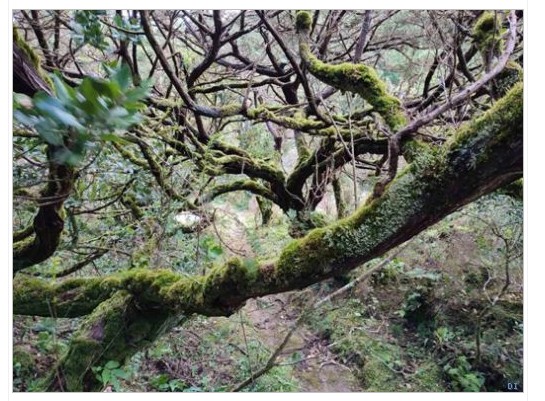
The Azores recorded a significant increase in reforestation efforts across both public and private land, with nearly half a million plants distributed last year, according to the Regional Secretariat for Agriculture and Food.
In 2025, a total of 493,568 plants were made available, covering an estimated 141.5 hectares of newly forested land—an increase of 16.8 percent compared to 2024, the Secretariat said. Officials describe the trend as one of “stability and continuity” in the recovery and active management of the archipelago’s forest ecosystems.
Most of the work focused on reforesting previously logged areas, accounting for about 106.5 hectares. Another 5.6 hectares involved converting pastureland into forest, while 17 hectares were dedicated to the installation of hedgerows and windbreaks. Landscaping and garden projects represented an additional 12.5 hectares.
Regional Secretary for Agriculture and Food António Ventura said the expansion of reforested areas in 2025 underscores the Regional Government’s firm commitment to restoring and enhancing the Azores’ forest heritage.

“This confirms that we are consolidating a path of active forest management that strengthens both environmental resilience and the economic value of our forests,” Ventura said.
He added that the reforestation push is part of a broader strategy to adapt to climate change, protect soils, and regulate water resources. That strategy also includes careful species selection—ranging from cryptomeria in commercial forestry areas to native species used for habitat conservation and restoration, as well as ornamental species for landscape improvement.
The approach, Ventura said, reflects “an unequivocal commitment to preserving Azorean biodiversity and to building a more balanced, diversified landscape, better prepared for the climate challenges of the future.”
Private companies and individual landowners were responsible for reforesting about 73.7 hectares, “even during a transition year between European Union funding frameworks, when forestry measures under the PEPAC [Strategic Plan for the Common Agricultural Policy] were not yet available,” the Secretariat noted.
With PEPAC incentives expected to take effect in the coming years, officials anticipate a significant increase in privately led reforestation, particularly through the conversion of marginal pastureland. That expansion is expected to boost the archipelago’s forest cover, which currently stands at about 31 percent.
The Regional Government itself intervened on roughly 60 hectares in 2025, using its own resources and partnerships. Most of those projects involved the management of public forest perimeters or the implementation of EU-backed initiatives, including projects co-financed by the LIFE program. Municipalities, associations, and community groups contributed an additional 7.8 hectares.
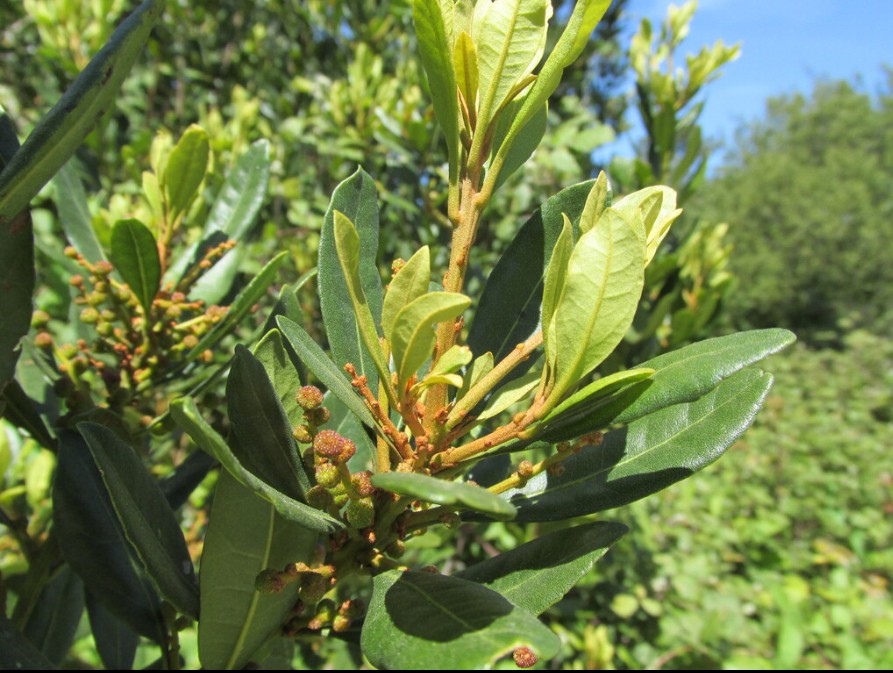
Species selection varies according to the goals of each intervention. Cryptomeria remains dominant in production forests, while conservation areas rely primarily on native species such as cedar (cedro-do-mato), laurel, sour cherry (ginja), and holly.
Hedgerows and windbreaks also feature the endemic faia-da-terra, while ornamental plantings—particularly in public spaces—make use of species such as oaks, cedars, and camellias.
in Diário Insular-José Lourenço-director
Translated into English as a community outreach program by the Portuguese Beyond Borders Institute (PBBI) and the Modern and Classical Languages and Literatures Department (MCLL), in collaboration with Bruma Publication and ADMA (Azores-Diaspora Media Alliance) at California State University, Fresno. PBBI thanks Luso Financial for sponsoring NOVIDADES.

 Novidades - The Islands and the Diaspora