

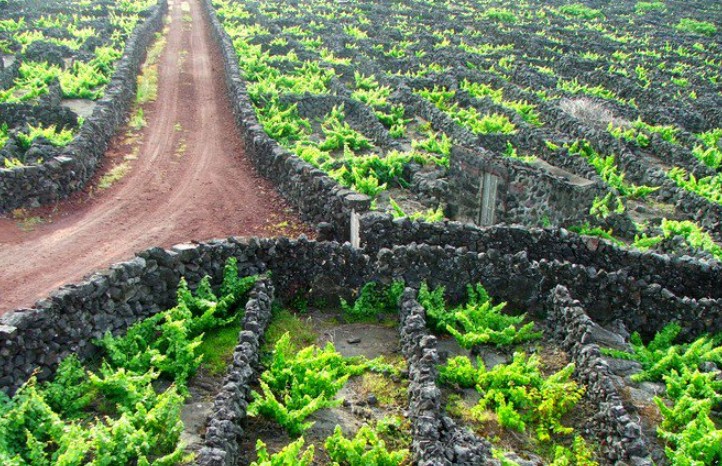
The creation of the Azores Vine and Wine Institute (IVVA) is a natural response to the momentum and maturity achieved by the regional wine sector, Azorean Government President José Manuel Bolieiro said during the swearing-in ceremony of the institute’s leadership.
Speaking on Pico Island, Bolieiro подчеркed the deep historical connection between viticulture and Azorean identity, recalling that the region’s wine heritage spans more than 500 years. In recent decades, he said, that legacy has gained renewed strength thanks to the effort, persistence, and quality of work carried out on the ground—what he described as “a path of valorization that honors the Azores and projects the Region outward.”
According to the head of the Azorean executive, the Instituto da Vinha e do Vinho dos Açores represents a clear strategic and political boost for the regional wine sector, emphasizing that the new institution exists “first and foremost to serve those who produce and transform wine in the Azores.”
During the ceremony, Cláudio Lopes was sworn in as president of the IVVA, marking the beginning of a new cycle in which coordination, regulation, and implementation of public policies for the wine sector will be concentrated in a single body, according to a statement published on the Azorean Government’s official portal.
Bolieiro highlighted the path begun in the 1990s with the creation of the Designations of Origin and the Regional Wine Commission of the Azores, acknowledging the decisive role that structure played in qualifying, certifying, and promoting Azorean wines. That process, he said, made it possible to “raise the quality, visibility, and affirmation of Azorean wines” in regional, national, and international markets.
The establishment of the IVVA, he added, is a natural outcome of the sector’s evolution, allowing for a more modern, integrated, and effective public intervention. The goal is to ensure “greater coherence, rigor, and responsiveness,” while safeguarding the quality, authenticity, and genuineness of Azorean wines.
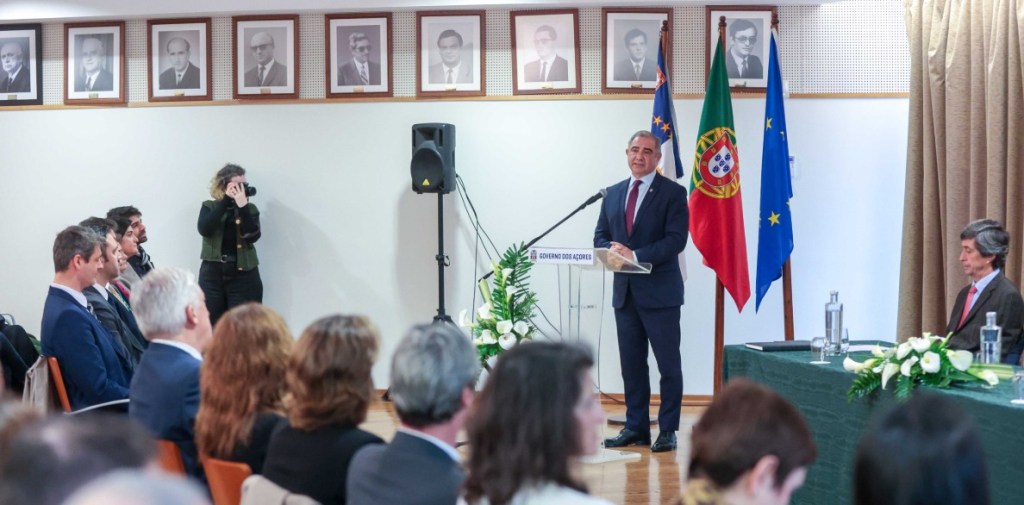
Bolieiro also placed this trajectory within the broader context of the Azores’ archipelagic and ultra-peripheral condition, acknowledging that geography alone does not always facilitate the rapid creation of wealth. Even so, he expressed deep pride in the Azorean people, highlighting their resilience and their ability to turn challenges into opportunities, and underscoring what he called “the strength of character” that drives Azoreans to live, invest, and build their future in the islands.
The Azorean leader further emphasized the importance of a balanced relationship between geography and human action, pointing to the Paisagem da Cultura da Vinha da Ilha do Pico, classified as a UNESCO World Heritage Site, as a prime example of that harmony. The landscape, he noted, was shaped by human hands without distorting nature, demonstrating that “environmental sustainability is not an obstacle, but an opportunity.”
On the development front, Bolieiro announced a commitment between the Azorean Government and local municipalities to create a working group aimed at identifying solutions to mitigate air accessibility constraints on Pico Island. Among the options under consideration is the expansion of the Pico Airport runway, through a shared, gradual, and realistic strategy supported by European Union funds.
The working group will include representatives from the IVVA, the Association of Municipalities of Pico Island, and SATA, with a clear mandate to safeguard the vineyard landscape and existing heritage values—ensuring, as Bolieiro stressed, that “development does not mortgage identity.”
Also in attendance were Regional Secretary for Agriculture and Food António Ventura, Regional Secretary for Finance, Planning, and Public Administration Duarte Freitas, Madalena do Pico Deputy Mayor Paulo Marcos, Lajes do Pico Mayor Ana Brum, São Roque do Pico Mayor Luís Silva, and Francisco Toscano Rico, President of the Vine and Wine Institute.
In Correio dos Açores-Natalino Viveiros, director
Translated into English as a community outreach program by the Portuguese Beyond Borders Institute (PBBI) and the Modern and Classical Languages and Literatures Department (MCLL), in collaboration with Bruma Publication and ADMA (Azores-Diaspora Media Alliance) at California State University, Fresno. PBBI thanks Luso Financial for sponsoring NOVIDADES.

 Novidades - The Islands and the Diaspora