

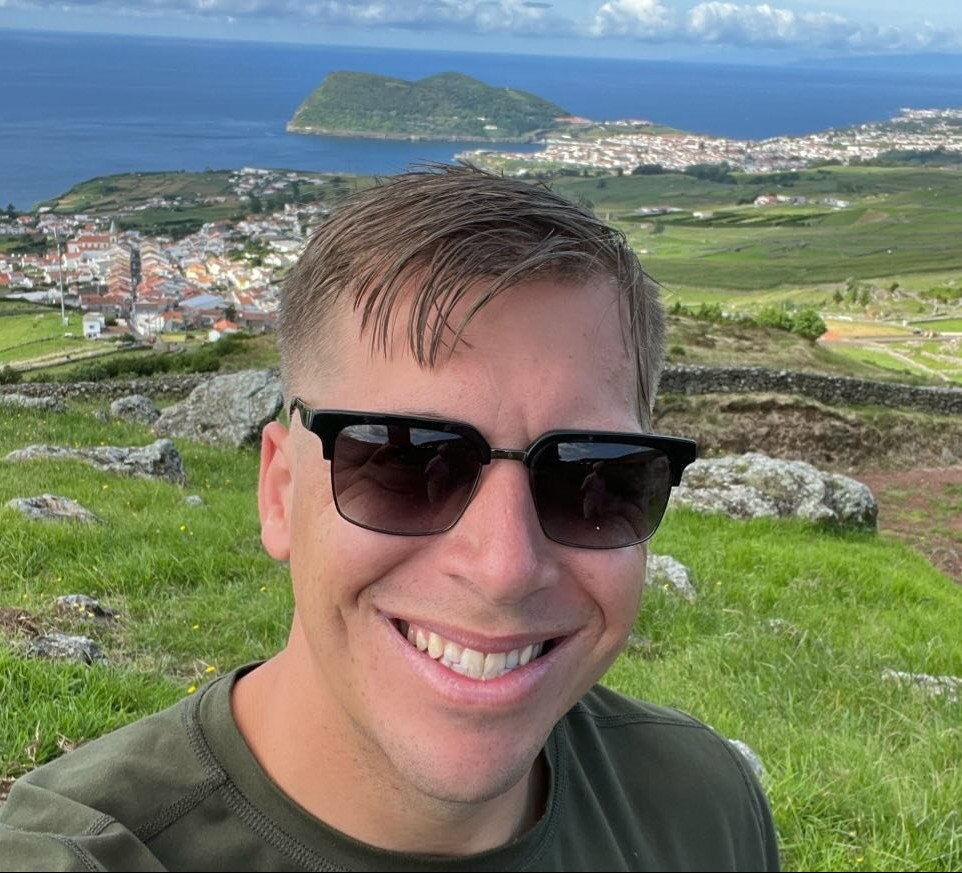
This oral history essay is based on an interview with Kevin Avila Cardoso, a first-generation Portuguese American whose life reflects the enduring ties between the Azores and California’s Central Valley. Born on January 27, 1994, in Tulare, California, Kevin has served in the United States Army for thirteen years. He is married and the father of two children, balancing military service with a deep commitment to family and cultural heritage. Even his name carries symbolic meaning: Avila from his mother and Cardoso from his father—an intentional merging of family lineages that mirrors his bicultural identity.
Kevin’s earliest memories are steeped in Azorean tradition. He recalls family gatherings centered on food, language, and festas—rituals that shaped his understanding of what it meant to grow up Portuguese American. These experiences were not peripheral to his childhood; they formed its emotional core. Today, Kevin continues this tradition by actively involving his wife and children in community events, ensuring that cultural continuity does not end with his generation. He has visited the Azores twice, experiences that profoundly shaped his sense of self and belonging.
Kevin’s family migration story is rooted in the broader Azorean diaspora of the late 1980s and early 1990s. His parents left Terceira Island during a period of economic hardship, seeking opportunity, stability, and mobility in the United States. Tulare became their destination largely because of social networks already in place—friends and acquaintances who helped ease the transition. Kevin’s father initially worked as a dairy milker before eventually starting his own landscaping business, embodying a familiar immigrant trajectory of labor, perseverance, and entrepreneurial ambition.
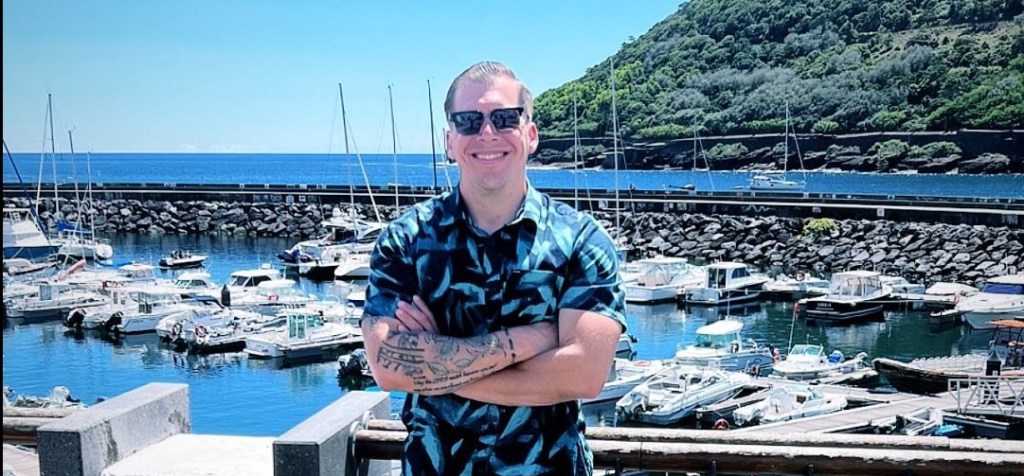
Both of Kevin’s parents emigrated from Terceira Island, and Portuguese was the first language spoken at home. His father arrived in the United States speaking only Portuguese, reinforcing the language’s central role in family life. Kevin became the first Portuguese American in his family to be born in the United States; his older brother was born in the Azores and later naturalized. Music plays a vital role in preserving their heritage: Kevin’s brother is an accomplished folkloric musician who performs throughout California and has even played in their parents’ home village in the Azores—a moment Kevin describes as deeply emotional. Inspired by this, Kevin himself has been learning to play the guitar and continues to engage in folkloric traditions, including performances and community events held annually in February.
Cultural preservation, for Kevin, is not symbolic—it is lived practice. As a student, he participated in folkloric dance through his high school under the guidance of Professor Borges, an experience that further embedded cultural pride and community engagement. Being raised with a strong Portuguese background was especially important to his family, given his position as a first-generation Portuguese American. Speaking Portuguese remains meaningful to him, particularly because he maintains close ties with relatives in the Azores. Passing this heritage on to his children is a responsibility he takes seriously; he wants them to understand not only where they come from, but also the sacrifices that made their present opportunities possible.
Kevin’s first visit to the Azores occurred when he was a teenager, around thirteen or fifteen years old. Until then, he had never met his grandparents, uncles, or extended family. Seeing them for the first time was overwhelming and profoundly emotional. His second visit, as an adult, carried a different weight. His mother had not returned to the Azores in over thirty years, and witnessing her reunion with her brothers was one of the most powerful experiences Kevin recalls. Visiting as an adult allowed him to absorb the islands more fully—the architecture, the history, the rhythm of daily life, and the emotional gravity of place.
He describes Terceira Island as rich with visible history, from centuries-old churches to tightly woven urban spaces that feel deeply human in scale. Food stood out to him not only for its flavor but for its quality and freshness, contrasting sharply with American consumption habits. Speaking Portuguese daily, even imperfectly, forced him into a deeper engagement with the culture. Festas, bullfights, music, and beaches were not tourist attractions for Kevin; they were expressions of continuity and belonging.
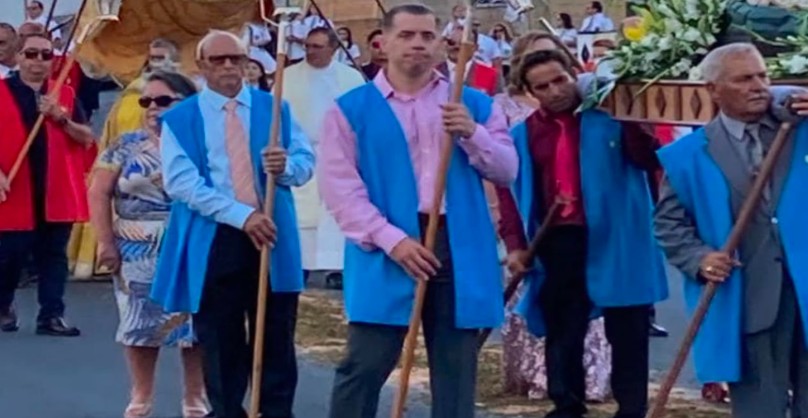
One of Kevin’s proudest moments within the Portuguese American community was witnessing his mother’s return to the Azores after decades away. He also takes immense pride in his brother’s musical achievements, particularly seeing him perform in their parents’ village—a full circle moment connecting migration, memory, and cultural survival.
Kevin credits his Portuguese upbringing with shaping both his personal and professional life. In the Army, he believes the values instilled by his family—discipline, resilience, and a strong work ethic—have been essential to his success. Personally, cultural belonging has grounded him, offering a sense of identity rooted in family, language, and shared history. He notes striking contrasts between life in the Azores and the United States, particularly in technology, transportation, and pace of life, differences that highlight how migration reshapes everyday experience.
Understanding where his family came from is central to how Kevin understands who he is today. He sees his present opportunities as inseparable from past sacrifice. This awareness fuels his commitment to memory and transmission—ensuring that his children grow up not detached from history, but conscious of it.
Reflecting on the Portuguese American community today, Kevin recognizes change. While the community remains strong, technology has transformed how people connect. Social media, video calls, and digital platforms have made communication easier and more immediate, allowing families and organizations to share events, promote festas, and maintain transnational ties. For Kevin, these tools represent opportunity rather than loss—provided people remain actively engaged. Tradition, he believes, survives not automatically, but through choice.
Ultimately, Kevin Avila Cardoso’s story is one of continuity across borders, generations, and time. It is a reminder that heritage is not static—it is carried, practiced, and renewed through lived experience.
These are student projects at California State University, Fresno. Novidades will publish these regularly. These oral history interviews are being archived at Fresno State.
Vision
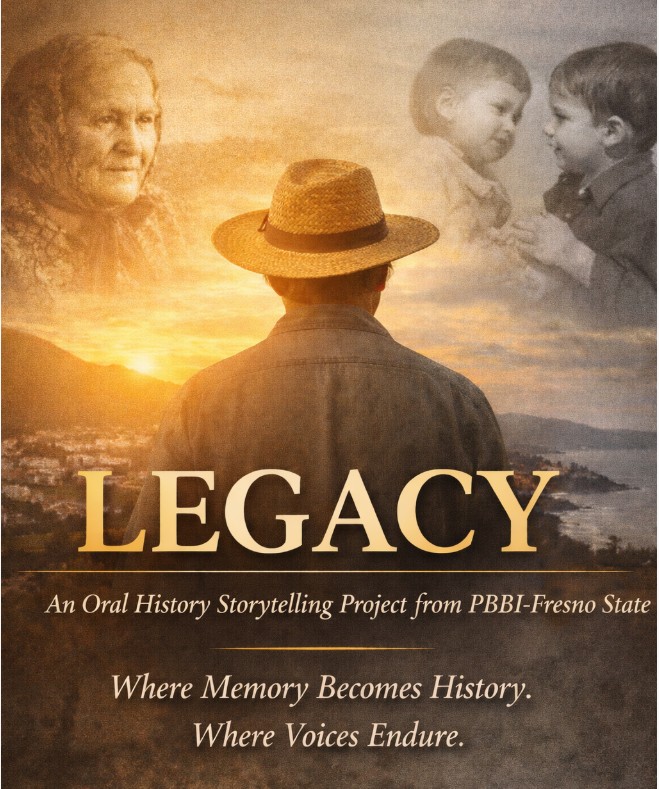
LEGACY envisions a future in which the lived experiences of diverse communities are preserved, honored, and made accessible as part of the shared historical record. Rooted at Fresno State, LEGACY seeks to ensure that personal narratives—often excluded from traditional archives—are recognized as essential to understanding our past, present, and future. Through memory, voice, and story, LEGACY affirms that history is not only written in documents, but carried in lives.
Mission
LEGACY is an oral history archive and storytelling project at the Portuguese Beyond Borders Institute (PBBI) @ Fresno State. Its mission is to collect, preserve, and publish oral histories that document migration, labor, culture, identity, resilience, and belonging across generations and communities.
By recording and sharing these stories, LEGACY transforms individual memory into public knowledge, strengthens connections between the university and the community, and contributes to a more inclusive and human-centered historical record. LEGACY publishes curated narratives drawn from oral histories collected by PBBI @ Fresno State, ensuring that voices too often unheard are not only preserved, but amplified.
 Novidades - The Islands and the Diaspora