

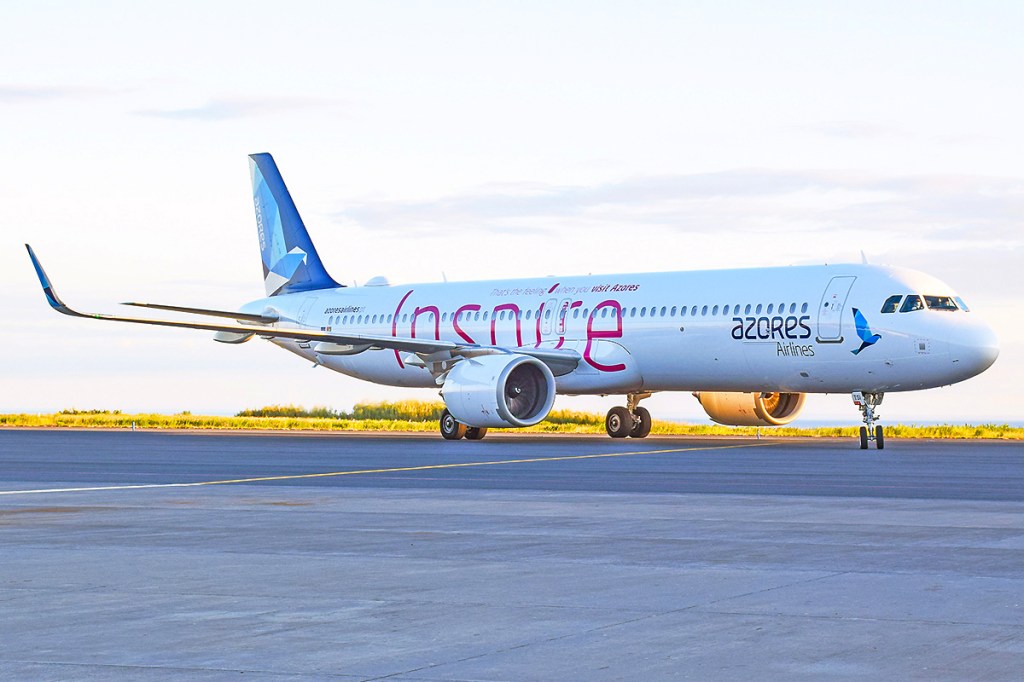
The debate over the future of Azores Airlines is often framed in narrow financial terms: balance sheets, deficits, and privatization bids accepted or rejected. But this discussion misses a far more consequential question—what happens to Azorean tourism, mobility, and long-term regional cohesion if the Azores effectively lose control of their air lifeline?
For an archipelago in the middle of the Atlantic, air connectivity is not a luxury. It is infrastructure. It determines whether tourism is resilient or fragile, whether the economy is diversified or seasonal, whether the islands remain connected to their people—or slowly drift away from them.
Tourism in the Azores was never meant to be mass tourism. It depends on reliable, regular connections from multiple markets, balanced seasonality, andcareful alignment between accessibility and sustainability. Azores Airlines has been central to that balance, sustaining routes that purely commercial carriers rarely maintain once margins tighten or incentives fade. Weakening—or dismantling—that role would not simply reshape aviation policy; it would reconfigure the tourism model itself.
But tourism is only part of the story.
There are nearly 1.5 million Americans and Canadians of Azorean ancestry, spread across California, Massachusetts, Rhode Island, Ontario, Quebec, and beyond. This diaspora is not a niche market; it is one of the largest island-origin communities in North America. And yet, it remains one of the most underdeveloped strategic assets in Azorean public policy.
For decades, the diaspora has been approached largely through the narrow lens of the mercado da saudade—nostalgia-driven travel, summer visits, religious festivals, emotional return. While that connection is real and valuable, it is insufficient. Diaspora travel today is generational, professional, cultural, academic, and increasingly hybrid. It involves second-, third-, and fourth-generation descendants seeking not only roots, but relevance.
Azores Airlines has never fully engaged this reality. Beyond a few seasonal routes and symbolic gestures, the diaspora has not been strategically integrated into route planning, partnerships, pricing models, or long-term tourism development. That is not a reason to abandon the airline. It is a reason to rethink it.
Streamlining is not optional—it is essential. A smaller, more agile Azores Airlines, with a clearly defined public-service mission and a sharper understanding of diaspora mobility, could become a cornerstone of a modern Atlantic strategy. Diaspora travelers do not behave like conventional tourists. They travel off-season. They stay longer. They invest emotionally and economically. They return repeatedly. Properly engaged, they stabilize tourism rather than distort it.
Other small and peripheral regions have understood this. State-owned or state-anchored airlines—when properly governed—have proven capable of supporting tourism while reinforcing cultural and economic ties with their diasporas. These airlines are not protected relics; they are strategic instruments. They operate with discipline, but also with purpose.
The alternative is familiar and risky. Regions that relinquish control over air connectivity often find themselves dependent on short-term market logic: routes appear and disappear, prices spike unpredictably, off-season travel collapses, and tourism shifts toward volume over sustainability. Diaspora routes are usually the first casualties—too emotional for spreadsheets, too long-term for quarterly returns.
This is not an argument against reform. It is an argument against strategic amnesia.
Azores Airlines must change. It must become leaner, more transparent, more efficient, and more realistic about what it can—and cannot—do. But reform is not the same as abandonment. Privatization is not a strategy in itself. And losing an airline without a credible alternative is not modernization; it is abdication.
It is also important to be clear about perspective.
I write this because I am a firm believer in SATA and in the role a regional airline can and should play in Azorean tourism and in the relationship with the Azorean diaspora. That belief is not blind. It is grounded in the conviction that islands require tools equal to their geography—and that mobility, when aligned with public interest, can be a force for cohesion rather than dependency.
Airlines, for island regions, are not just companies. They are bridges—between islands, between generations, between those who stayed and those who left. Bridges can and should be reinforced. Once dismantled, they are far harder—and far more expensive—to rebuild.
The choice facing the Azores is not whether to save an airline at all costs. It is about preserving the capacity to shape its own tourism future—and to reconnect, intelligently and sustainably, with a diaspora that has never stopped being part of the Azorean story.
 Novidades - The Islands and the Diaspora