

Oral History Project
António Laurénio Alves
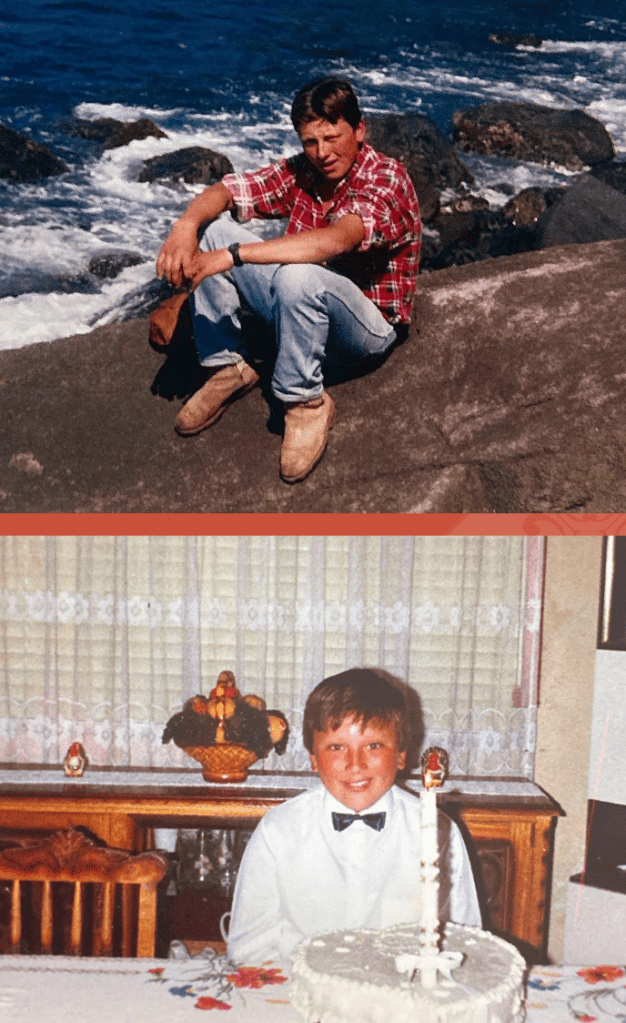
António Laurénio Alves was born on October 31, 1979, in the concelho of Calheta on the island of São Jorge, in the Azores, Portugal. He is the eldest of six children born to Agnelo and Maria de Lourdes Alves. His given names reflect both familial lineage and collective memory: António in honor of his grandfather, and Laurénio in remembrance of a close friend of his father who died during the war in Angola. He was raised in the freguesia of Santo Antão, where he attended local schools and participated from an early age in the family’s farming activities alongside his father and grandfather.
Alves’s recollections of childhood in São Jorge emphasize the social cohesion characteristic of small island communities. He describes a life structured around family, shared labor, and mutual familiarity, where social bonds were reinforced through everyday interaction. His early years were marked by informal play with peers, agricultural responsibilities, and seasonal stays at the Fajã—a rural coastal settlement traditionally used during winter months. These experiences contributed to a strong sense of place and continuity between land, labor, and family life.
Religious practice played a central role in his upbringing. Alves’s family was actively involved in the Festas do Divino Espírito Santo, a cornerstone of Azorean Catholic culture that combines religious devotion, communal solidarity, and ritual hospitality. His grandmother was particularly influential in preparing traditional foods associated with these celebrations, including sopas, espécie, and rosquilhas. Through these practices, Alves internalized values of faith, collective responsibility, and cultural transmission that would later shape his engagement within diaspora communities.
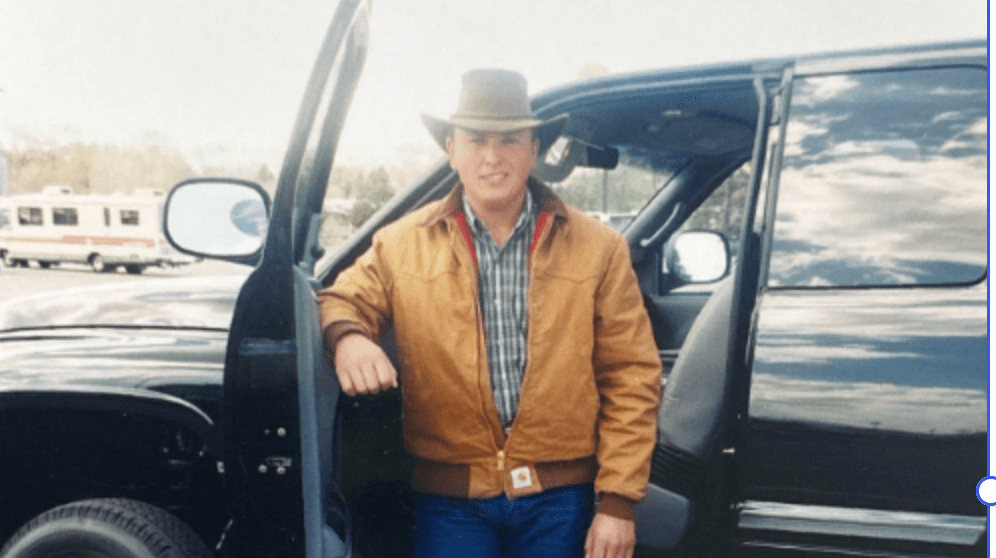
Alves’s initial contact with the United States occurred in 1998, when he visited California with his sister and stayed with extended family members. During this visit, he became aware of the economic opportunities and social mobility available to immigrants. After returning to Portugal to complete his mandatory military service, he immigrated permanently to the United States in September 1999, at the age of nineteen. His migration was facilitated by family connections, particularly an aunt and uncle who had previously visited São Jorge during one of his grandfather’s Holy Ghost festas and later offered him employment on their dairy farm in Los Banos, California.
The transition from island life to the American Central Valley posed significant challenges. Alves distinguishes clearly between the experience of visiting the United States and that of permanent settlement. While his initial visit had been marked by optimism and novelty, long-term migration required adaptation to linguistic, cultural, and social differences. He recalls the emotional difficulty of leaving behind a closely knit community and adjusting to the faster pace and greater anonymity of life in the United States. Nevertheless, he remained motivated by the prospect of economic stability and long-term opportunity.
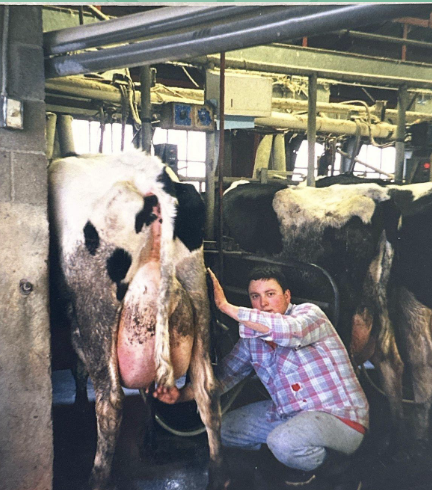
After two years in Los Banos, Alves relocated to Escalon, California, a move that marked an important turning point in his personal and professional life. There, he met his future wife, Sonia Alves (Moreira), and together they established a family. He founded a hoof-trimming business that services dairies throughout the region, integrating his agricultural background with the economic structures of California’s dairy industry. Alves identifies the work ethic instilled during his upbringing in the Azores as fundamental to his professional success, viewing it as a cultural inheritance transmitted across generations.
Cultural preservation remains central to Alves’s identity. His daughters have participated as queens and side maids in Festas do Espírito Santo across California and are active members of the Luso-American Fraternal Society, an organization dedicated to maintaining Portuguese language and cultural practices among diaspora populations. Alves currently serves as vice president of the Modesto Portuguese Pentecost Association (M.P.P.A.), where he plays a key role in organizing religious and cultural events that draw large segments of the Portuguese-American community.
Alves articulates his Portuguese identity through daily practices that include language use, food preparation, music, and religious observance. He emphasizes the importance of intergenerational transmission and of sharing cultural traditions beyond the Portuguese-American community. Reflecting on his experience, he notes that it was only after emigrating that he fully recognized the distinctiveness of his cultural formation. As a child in São Jorge, he did not perceive himself as belonging to a “Portuguese community” but rather as simply living within his native cultural context. Migration rendered that context visible, transforming familiarity into conscious identity.
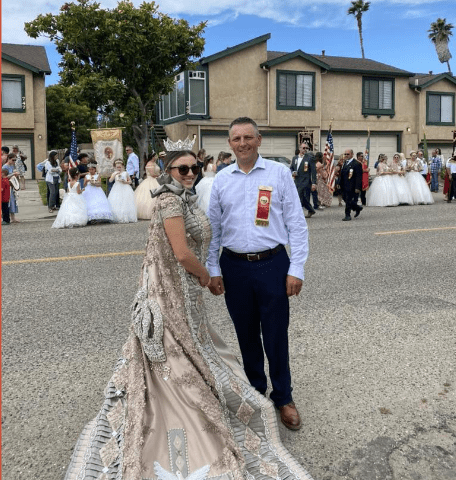
He expresses particular pride in his family’s integration into Portuguese-American communal life, viewing his daughters’ active participation as evidence of cultural continuity. For Alves, this continuity represents a significant personal achievement and a counterpoint to narratives of cultural loss often associated with migration. He attributes much of his sense of belonging in the United States to the strength of Portuguese-American networks in California’s Central Valley, which have provided social support, religious community, and economic opportunity.
Alves’s oral history reflects broader patterns within immigrant experience, particularly the negotiation between adaptation and cultural preservation. While acknowledging the sacrifices inherent in migration—language barriers, cultural dislocation, and the challenges of starting anew—he consistently frames his cultural background as a source of resilience rather than constraint. His narrative illustrates how immigrant identity is not static but evolves through lived experience, community engagement, and intergenerational transmission.
Today, Alves functions as a cultural intermediary between Portugal and the United States. Fluent in both Portuguese and English, he assists others within his community and maintains a household where American and Portuguese traditions coexist. His story underscores the enduring relevance of oral history as a means of documenting how individual lives embody larger processes of migration, cultural continuity, and transformation. Through family, labor, and communal service, António Laurénio Alves has contributed to sustaining an Azorean cultural presence within the Portuguese-American landscape of California.
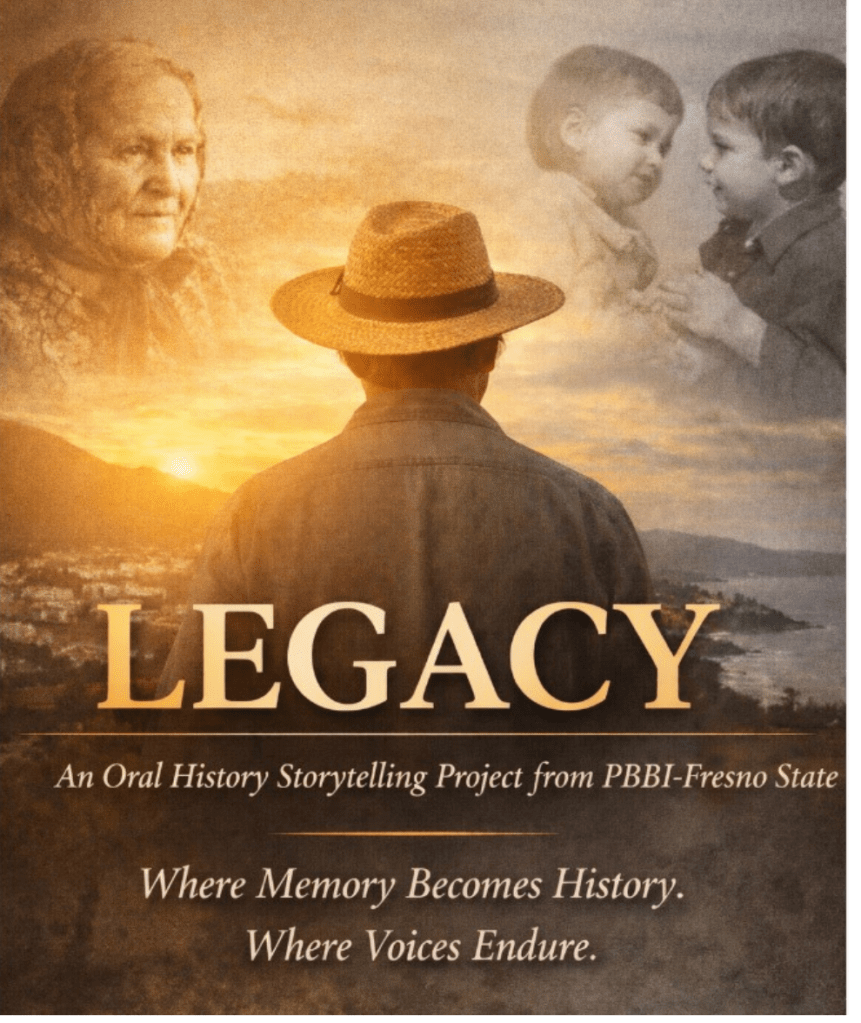
Vision
LEGACY envisions a future in which the lived experiences of diverse communities are preserved, honored, and made accessible as part of the shared historical record. Rooted at Fresno State, LEGACY seeks to ensure that personal narratives—often excluded from traditional archives—are recognized as essential to understanding our past, present, and future. Through memory, voice, and story, LEGACY affirms that history is not only written in documents, but carried in lives.
Mission
LEGACY is an oral history archive and storytelling project at the Portuguese Beyond Borders Institute (PBBI) @ Fresno State. Its mission is to collect, preserve, and publish oral histories that document migration, labor, culture, identity, resilience, and belonging across generations and communities.
By recording and sharing these stories, LEGACY transforms individual memory into public knowledge, strengthens connections between the university and the community, and contributes to a more inclusive and human-centered historical record. LEGACY publishes curated narratives drawn from oral histories collected by PBBI @ Fresno State, ensuring that voices too often unheard are not only preserved, but amplified.
 Novidades - The Islands and the Diaspora