

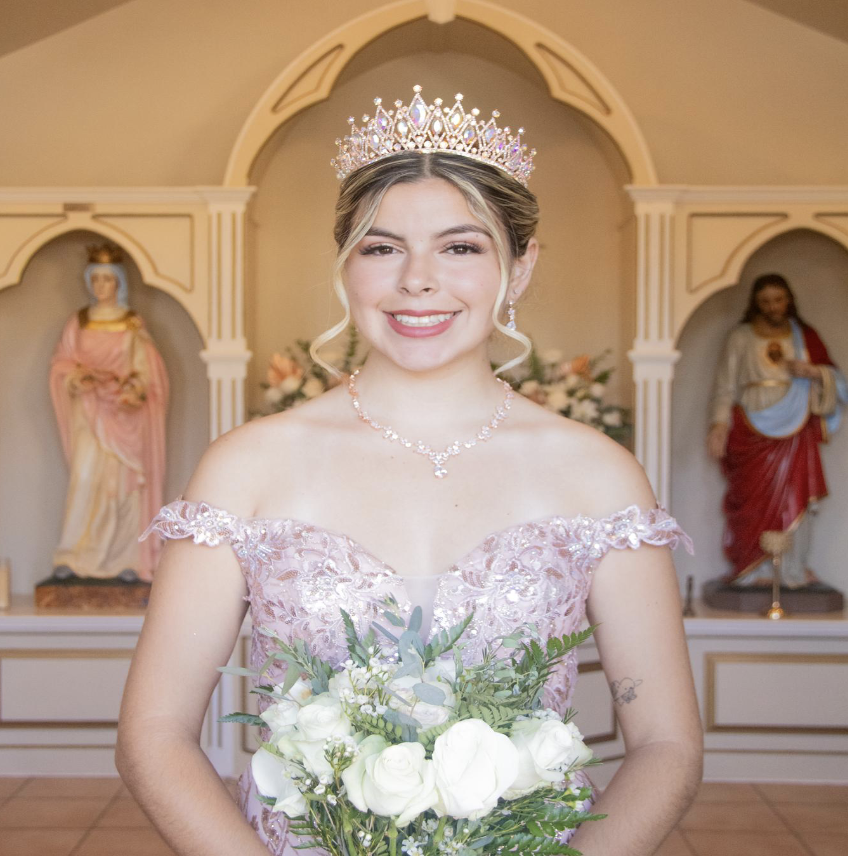
Oral History – Pearl Reece Agosto Vindiola
Pearl Reece Agosto Vindiola was born on March 16, 2006, in San José, California. She is a second-generation Portuguese American whose maternal family traces its origins to the Azorean islands of Faial and São Jorge. Her maternal grandmother emigrated from Faial to California, while her maternal grandfather migrated from São Jorge. Pearl’s connection to Portuguese culture emerged primarily through her grandparents, as her mother did not actively engage with cultural traditions. Through her grandparents, however, Pearl developed a strong interest in Portuguese heritage, which became a means of maintaining ties with family members both in the United States and in Portugal.
Language played an important role in shaping Pearl’s cultural awareness, particularly through church and community spaces where Portuguese was spoken. Although she does not consider herself fluent in the language, this has never prevented her from communicating with her grandparents or participating meaningfully in festas and community gatherings. For Pearl, cultural belonging is not defined solely by linguistic fluency but by participation, presence, and shared ritual. She expresses her Portuguese identity through involvement in Holy Ghost celebrations, large communal gatherings, and religious observances, including her experience of being crowned queen—an honor that deepened both her spiritual life and her sense of cultural continuity.
Pearl also maintains her cultural connection through food and domestic traditions. She takes particular pride in working in the kitchen and preparing Portuguese dishes, viewing cooking as a form of cultural transmission and personal remembrance. These practices are especially meaningful to her because of her grandmother’s deep religiosity. Pearl describes her participation in cultural and religious traditions as a way of strengthening her bond with her grandmother and honoring her legacy.
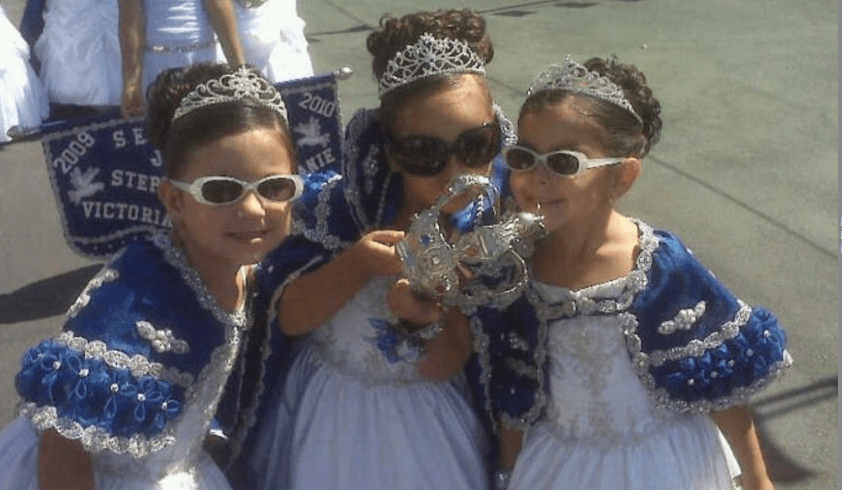
From an early age, Pearl was actively involved in the Portuguese-American community. She joined the Luso-American Organization at the age of two and served as a side maiden beginning at age three. Her enthusiasm for cultural participation extended to dance, leading her to join a Portuguese folklore group. Pearl recalls her love for dancing as so strong that she declined opportunities to travel to Portugal in order to remain involved with the group. Through folklore, parades, and public celebrations, she became a visible presence within Portuguese-American life in California’s Central Valley.
Her experiences include marching in parades as a side maid or flag holder and participating in candlelight processions in communities such as Gustine and Thornton, California. These ritual events reinforced her sense of belonging and continuity, connecting religious devotion with public cultural expression. Pearl regularly attends festivals throughout the Central Valley, viewing consistent participation as essential to sustaining tradition.
Pearl’s family migration history adds depth to her understanding of cultural resilience. Her maternal grandmother emigrated to the United States in 1971 following the death of her father. After this loss, Pearl’s great-grandmother arranged for her daughter to reunite with siblings already living in the United States. In contrast, Pearl’s maternal grandfather migrated in 1976 under far more precarious circumstances, having been displaced by the Angolan Civil War. Faced with the choice of remaining in Angola amid escalating conflict or fleeing, he left for the United States as a refugee, bringing only the clothes he was wearing. Pearl recounts that he lived in constant fear during his journey, hiding to avoid capture.
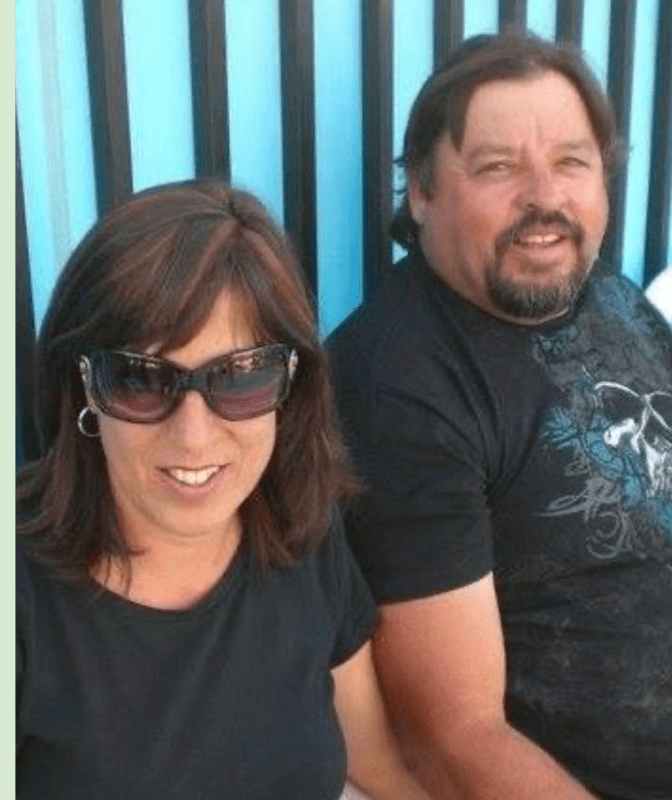
Upon arrival in California, her grandfather worked long hours in the dairy industry—six days a week, often fourteen hours a day—under difficult conditions and for limited pay. Pearl reflects with empathy on the hardship he endured, particularly the emotional toll of losing everything and having to rebuild his life from nothing. Eventually, her grandfather left dairy work and established his own gardening business, a transition Pearl views as a testament to perseverance and adaptability.
Despite not being fluent in Portuguese, Pearl has always maintained strong connections with her family and community. She speaks with particular pride about her involvement in the Luso-American Organization, which she describes as a second family and a second home. Through this organization, she formed lasting relationships with individuals from across California and other states, united by shared heritage and collective participation. She emphasizes that the organization fosters inclusivity, offering opportunities for people of all ages to contribute through dance, cooking, volunteering, and cultural leadership.
Pearl identifies her Portuguese-American identity as central to her personal development. She credits her cultural upbringing with shaping her values, particularly her commitment to community service and giving back. Volunteering at halls and community centers reflects the mindset instilled in her from a young age—one rooted in mutual aid, responsibility, and faith. In her interview, Pearl states unequivocally that being Portuguese American “means the world” to her, as it has shaped who she is and how she navigates life.
At the same time, Pearl expresses concern about the future of Portuguese-American communities. She observes a growing generational divide, noting that while older generations remain deeply committed to preserving tradition, younger Portuguese Americans appear less engaged. She attributes this decline to shifting cultural interests, suggesting that involvement in Portuguese-American organizations is sometimes perceived as “not the trend anymore.” Pearl worries that without renewed participation from younger generations, these communities risk gradual decline.
She believes that many young people fail to recognize the “bigger picture”—the historical sacrifices, cultural resilience, and collective memory embedded in Portuguese-American traditions. Through her own continued involvement, Pearl positions herself as part of a generation that still understands the value of cultural stewardship. Her oral history illustrates how second-generation identity is actively constructed through participation, memory, and choice, rather than inherited automatically. In this way, Pearl Reece Agosto Vindiola’s story underscores both the fragility and the enduring potential of cultural continuity within immigrant communities.
Vision
LEGACY envisions a future in which the lived experiences of diverse communities are preserved, honored, and made accessible as part of the shared historical record. Rooted at Fresno State, LEGACY seeks to ensure that personal narratives—often excluded from traditional archives—are recognized as essential to understanding our past, present, and future. Through memory, voice, and story, LEGACY affirms that history is not only written in documents, but carried in lives.
Mission
LEGACY is an oral history archive and storytelling project at the Portuguese Beyond Borders Institute (PBBI) @ Fresno State. Its mission is to collect, preserve, and publish oral histories that document migration, labor, culture, identity, resilience, and belonging across generations and communities.
By recording and sharing these stories, LEGACY transforms individual memory into public knowledge, strengthens connections between the university and the community, and contributes to a more inclusive and human-centered historical record. LEGACY publishes curated narratives drawn from oral histories collected by PBBI @ Fresno State, ensuring that voices too often unheard are not only preserved, but amplified.
 Novidades - The Islands and the Diaspora