

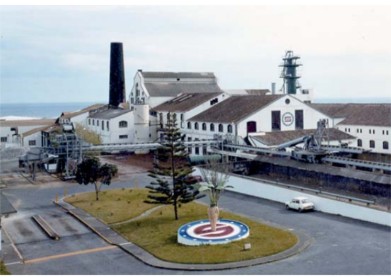
The Azores Regional Government will move ahead “in the coming months” with the preparatory work needed to launch an innovative competitive bidding process for the intervention and redevelopment of the former Sugar Factory in Ponta Delgada. The announcement follows the public presentation of the guiding proposal held Thursday at Teatro Micaelense, led by the Regional Secretariat for Finance, Planning and Public Administration in partnership with the Azores Section of the Order of Architects.
During the session, Regional Secretary Duarte Freitas stressed that “the scale of SINAGA and the Sugar Factory goes far beyond the physical dimension of its built heritage,” describing the complex as “a historic and identity-defining landmark of the Azores.” He also highlighted the participatory nature of the process, which involved the local community, a working commission, researchers, and specialists.
Freitas said the goal is to transform “more than five hectares located in the heart of the city of Ponta Delgada” into “renewed spaces, living spaces, useful spaces, and true engines of development” for the municipality, São Miguel Island, and the Region as a whole.
According to the Guiding Proposal Report, the proposed program of uses for the complex includes small local retail and food services; small-scale food production with on-site consumption; private offices or shared workspaces (coworking) housed in rehabilitated buildings; community services such as a daycare center and a senior day center; and facilities for regional and local public administration.
The plan also предусматри intergenerational housing in rehabilitated buildings—for seniors, students, and young people—along with multipurpose spaces for associations, a multipurpose pavilion, a visitor center for the Gruta do Carvão lava tube, and residential units with an affordable housing component. In addition, two “industrial heritage memory” areas are to be preserved and enhanced.
The proposal further includes outdoor spaces. For the public green area, the report estimates a minimum requirement of 5,100 square meters, in accordance with Ordinance No. 75/2024, while noting that the current Municipal Master Plan (PDM) calls for 8,600 square meters. The PDM is currently under revision.
As for parking, the estimate based on the same ordinance points to 615 spaces, while the current PDM reference suggests 560 spaces—also subject to change as part of the plan’s revision.
In terms of implementation, the commission proposes a three-phase approach: Phase I (Central Core), focusing on urgent intervention and safeguarding existing buildings; Phase II (Old Core), involving less immediate recovery; and Phase III (New Construction), which would include, among other uses, intergenerational housing and affordable residential units, following the prioritization of rehabilitating existing heritage.
Regarding execution, the report identifies “Solution 3” as the main recommendation: a concession model encompassing financing, design, project development, construction or rehabilitation, maintenance, and operation. This approach would allow for the evaluation of architectural and urban quality during the bidding phase and ensure a coherent intervention across the entire site. The report nonetheless allows for alternative models, including the creation of an Execution Unit or potential subdivision into parcels, should the decision be made not to maintain unified ownership of the property.
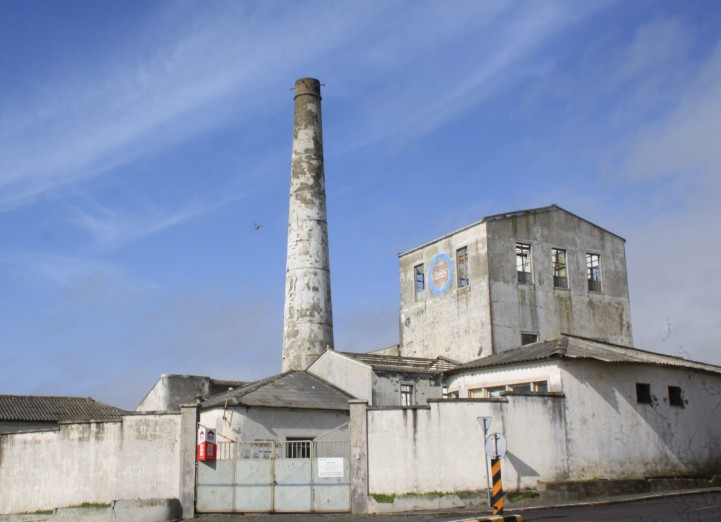
Sugar Factory Proposal Opens “New Cycle” for Ponta Delgada, Says Mayor
Ponta Delgada Mayor Pedro Nascimento Cabral said the Guiding Proposal Report for the Intervention and Redevelopment of the Sugar Factory marks “a new cycle” for the city, by outlining a future for more than 50 hectares of the former Santa Clara industrial complex, land owned by the Azores Regional Government.
“This meeting we are holding today has profound historical significance: as of today, we are opening a new cycle for that prime area of Ponta Delgada,” the mayor said. He argued that the project should integrate “social, economic, and cultural components” capable of becoming a reference point for future generations.
Pedro Nascimento Cabral also praised the contributions of the Azores Section of the Order of Architects and the Regional Secretariat for Finance, Planning and Public Administration, reiterating the municipality’s willingness to collaborate in giving “new life” to the former complex of the Azores Sugar Industries Company (SINAGA).
In Diário dos Açores-Paulo Vivieiros, director
Translated into English as a community outreach program by the Portuguese Beyond Borders Institute (PBBI) and the Modern and Classical Languages and Literatures Department (MCLL), in collaboration with Bruma Publication and ADMA (Azores-Diaspora Media Alliance) at California State University, Fresno. PBBI thanks Luso Financial for sponsoring NOVIDADES.

 Novidades - The Islands and the Diaspora