

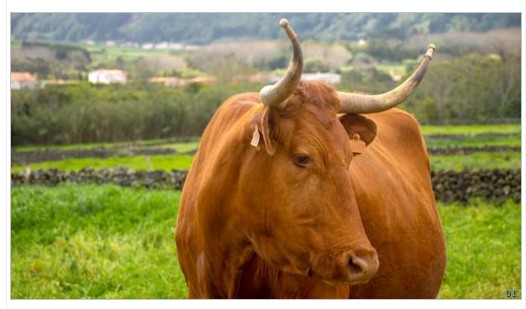
The regional secretary for agriculture argued that the fall in milk prices in Terceira and Graciosa cannot be justified solely by market forces and accepted the Agricultural Federation’s proposal to open applications for conversion to meat production.
“The Azores Agricultural Federation has already requested a period for applications for the conversion of dairy farms to beef cattle farms. We are preparing the legislation,” said António Ventura, Regional Secretary for Agriculture and Food, in a statement yesterday.
On January 31, the Unicol cooperative informed milk producers on the islands of Terceira and Graciosa by text message that the base price of milk paid to producers would drop by three cents per liter starting February 1, “due to adverse economic conditions.”
In response, the Azores Agricultural Federation announced that it would propose to the Regional Government “the conversion of a further 3,000 suckler cow rights from milk to meat,” a measure that is expected to cover around 50 producers.
For the head of the Agriculture portfolio in the Azores, the three-cent-per-liter drop in milk prices to producers “is not justified solely by market conditions.”
“It results from a pattern of dominance and a strategy that identifies Terceira in the production of low market value dairy products, such as powdered milk, which has prevented the existence of a fair price for milk production,” he pointed out.
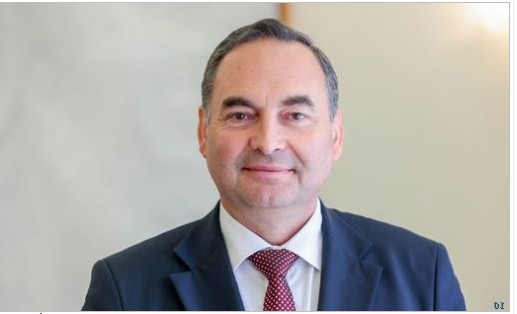
António Ventura pointed out that, in 2024, the Azores produced 627,000 tons of milk, of which 20,300 tons were processed into powdered milk, while on the mainland, with a production of 1,251,664 tons of milk, only 12,900 tons of powdered milk were accounted for.
“This is where the great devaluation of our raw material lies,” he warned.
The government official said that Lactogal, which owns 51% of Pronicol, the only large factory on Terceira, “has taken advantage of its unique presence on Terceira and Graciosa.”
“The intrinsic nutritional content of cow’s milk in the Azores improved in 2025 compared to 2024. Milk is richer in protein and fat, essential parameters for human consumption and for processing into dairy products, such as cheese,” he pointed out.
In the case of Terceira Island alone, according to the Secretary of Agriculture, “the average fat content rose from 3.79% in 2024 to 3.85% in 2025, and the protein content rose from 3.25% to 3.28%.”
“This means that milk producers have made a qualitative effort that is not recognized by the dairy industry,” he stressed.
Reaction from the other political parties
PSD deputies, who met yesterday with the Association of Young Farmers of Terceira (AJAT), said they had no doubt that the Regional Government would support farmers, but warned that the Regional Government “cannot replace the industry.”
“We were stunned once again, because a year and a half ago we were in this same place demanding the same thing. The industry has again lowered the price paid to producers by three cents, in this abrupt manner and by text message. I think it’s even humiliating to milk producers,” accused Social Democrat deputy Paulo Rui Chaves.
“The government is trying to do what it can, in close coordination with the Azores Agricultural Federation, and then the industry on Terceira and Graciosa islands has this kind of attitude, which we in the PSD/Azores parliamentary group find regrettable,” he added.
In a statement, Chega deputy Francisco Lima said that the monopoly and oligopoly regime in place “is unsustainable.”
“One of the main pillars of the region’s economy cannot continue to be held hostage by industries and their willingness to pay farmers fairly. Azorean milk producers cannot continue to be impoverished and robbed when they are among the lowest paid in Europe,“ he said.
”Producers on Terceira and Graciosa—two islands where the price of milk at production is the lowest in the Azores—cannot continue in the instability of seeing their income affected from one day to the next,” he added.
The parliamentary leader of the PS, Berto Messias, criticized the silence of the president of the Regional Government after he had “boasted” in the past about the increase in the price of milk.
For the socialist deputy, “it is not enough to say that we accept the conversion of dairy farms to beef farms without a clear and well-defined strategy and without taking into account the volatility of economic cycles or the fact that new milk processing industries are entering the market.”
“It was this government that announced it would create a guarantee fund to support farmers when the price of milk paid to producers fell. Where is that fund?” he asked.
In Diário Insular-José Lourenço-director
Translated into English as a community outreach program by the Portuguese Beyond Borders Institute (PBBI) and the Modern and Classical Languages and Literatures Department (MCLL), in collaboration with Bruma Publication and ADMA (Azores-Diaspora Media Alliance) at California State University, Fresno. PBBI thanks Luso Financial for sponsoring NOVIDADES.

 Novidades - The Islands and the Diaspora