

Portugal Chooses Stability in a Defining Presidential Vote
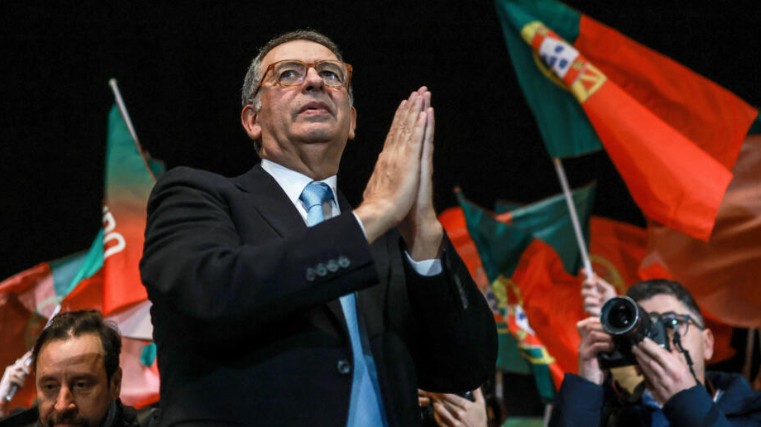
As polls closed across Portugal on Sunday night, the result of the country’s presidential runoff election came into sharp focus: voters delivered a decisive victory to António José Seguro, the centre-left Socialist candidate, over far-right populist André Ventura.
Exit polls released by Portugal’s main broadcasters indicated a landslide outcome, with Seguro securing close to 70 percent of the vote, compared with roughly 30 percent for Ventura. Official results were expected later in the evening, but the scale of the projected margin left little doubt about the direction of the electorate’s choice.
The election was widely viewed as a test of Portugal’s political climate at a moment of prolonged instability. In the past three years alone, the country has held three general elections, reflecting fractured parliamentary dynamics and voter fatigue. Although the presidency is largely ceremonial, the office carries significant constitutional authority and moral influence—particularly in times of uncertainty.
Portugal’s president serves as a guardian of democratic institutions, with the power to veto legislation and, in extreme cases, dissolve parliament and call early elections. In political jargon, this authority is often referred to as the presidency’s “atomic bomb.” The role is designed to stabilize, mediate, and protect the constitutional order rather than govern directly.
Seguro, a veteran Socialist politician, ran on a platform of moderation and institutional cooperation. Throughout the campaign, he positioned himself as a unifying figure committed to working with Portugal’s centre-right minority government and lowering the temperature of public debate. His candidacy attracted backing from mainstream political forces on both the left and right, united by concern over the growing influence of populist rhetoric.
Ventura’s presence in the runoff nevertheless marked a significant moment. As leader of Chega (“Enough”), he has reshaped Portugal’s political landscape in less than a decade. Chega emerged as the second-largest party in parliament following the May 2025 legislative elections, fueled by Ventura’s confrontational style and hardline positions, particularly on immigration and law and order.
During the campaign, Ventura rejected compromise and embraced a combative message, framing the election as a struggle over national ownership. His slogans and campaign imagery—some of which targeted immigrants directly—sparked controversy and drew criticism from across the political spectrum.
Sunday’s vote suggests that, for now, a clear majority of Portuguese voters opted for continuity and restraint over rupture. While Ventura’s rise has recalibrated political debate and exposed new fault lines in Portuguese society, the runoff result indicates limits to how far that momentum extends at the presidential level.
In March, Seguro will succeed outgoing centre-right President Marcelo Rebelo de Sousa, who is completing the constitutional maximum of two five-year terms. The transition comes at a time when expectations for the presidency are unusually high—not for bold initiatives, but for steadiness, credibility, and respect for democratic norms.
As Portugal enters the next chapter of its political life, the message from the ballot box appears unambiguous: in a moment shaped by uncertainty and polarization elsewhere, voters chose a president identified with moderation, dialogue, and institutional balance.
What that choice will mean in practice will unfold in the years ahead. For now, Portugal has signaled its preference for stability—at least in the office tasked with safeguarding the republic itself.
From multiple news sources
 Novidades - The Islands and the Diaspora