

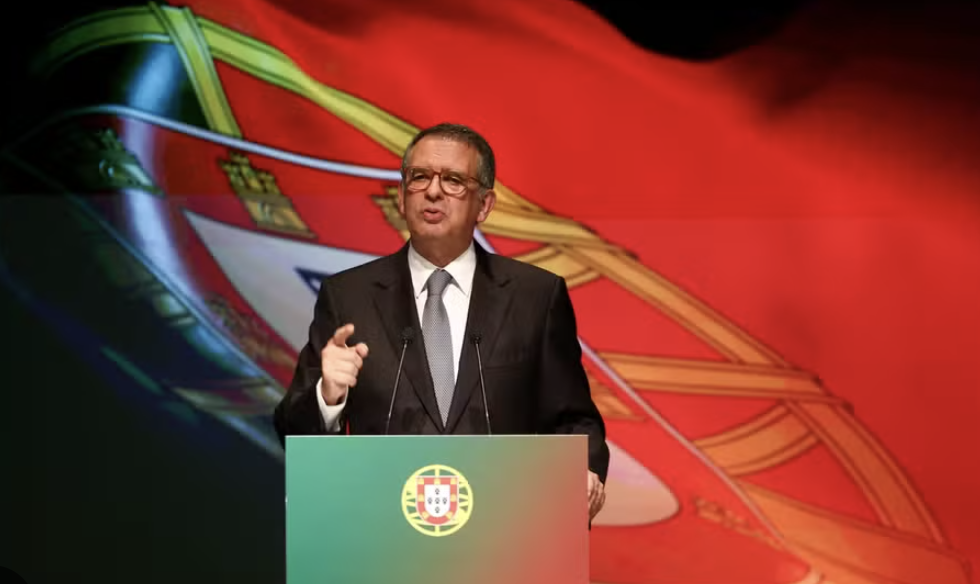
The second round of Portugal’s presidential election was held last Sunday, with António José Seguro securing a decisive victory, winning 66.82 percent of the vote (3,482,481 votes). His opponent, André Ventura, received 33.18 percent (1,729,371 votes).
Blank ballots accounted for 3.17 percent (173,806), while null votes totaled 1.78 percent (97,714). Voting has yet to take place in some locations due to severe weather conditions affecting parts of the country, with results still pending in 20 parishes. As of now, voter turnout stands at 50.11 percent of the 10,942,173 registered voters.
The former Socialist Party member of Parliament surpassed Mário Soares by achieving the highest number of votes ever recorded in a democratic election in Portugal.

Azores Deliver a Clean Sweep
In the Autonomous Region of the Azores, António José Seguro won in every municipality.
In Vila do Porto, on the island of Santa Maria, Seguro secured 73.30 percent of the vote (1,485), while André Ventura received 26.7 percent (541).
On São Miguel, Seguro prevailed in all six municipalities. He received 64.69 percent (17,010) in Ponta Delgada, 59.48 percent (3,180) in Lagoa, 53.99 percent (2,001) in Vila Franca do Campo, 57.87 percent (1,280) in Povoação, 63.64 percent (1,232) in Nordeste, and 56.72 percent (5,671) in Ribeira Grande.
Ventura’s results on São Miguel ranged from 35.31 percent (9,283) in Ponta Delgada to 46.01 percent (1,705) in Vila Franca do Campo.
In the Central Group, António José Seguro again emerged victorious. On Terceira Island, he won both municipalities, earning 69.16 percent (5,336) in Praia da Vitória and 72.85 percent (10,514) in Angra do Heroísmo. Ventura received 27.15 percent (3,918) in Angra do Heroísmo and 30.84 percent (2,380) in Praia da Vitória.
On Graciosa, in the municipality of Santa Cruz, Seguro captured 77.1 percent (1,061), while Ventura received 22.89 percent (315). In Horta, on Faial, Seguro won with 75.45 percent (4,321), compared to Ventura’s 24.55 percent (1,406).
Seguro also prevailed in both municipalities on São Jorge, earning 69.19 percent (1,433) in Velas and 73.71 percent (1,043) in Calheta. Ventura recorded 30.81 percent (638) and 26.29 percent (372), respectively.
On Pico Island, Seguro won in all three municipalities: 75.86 percent (1,414) in Lajes do Pico, 70.36 percent (1,790) in Madalena, and 69.94 percent (1,005) in São Roque do Pico. Ventura received between 24.14 percent (450) and 30.06 percent (432) across the island.
In the Western Group, results followed the same pattern. On Corvo, Seguro won with 77.59 percent (135), while Ventura received 22.41 percent (39). On Flores, Seguro prevailed in both municipalities, securing 73.18 percent (412) in Lajes das Flores and 70.45 percent (577) in Santa Cruz das Flores.
Azores Government President Calls for Respect for Autonomy
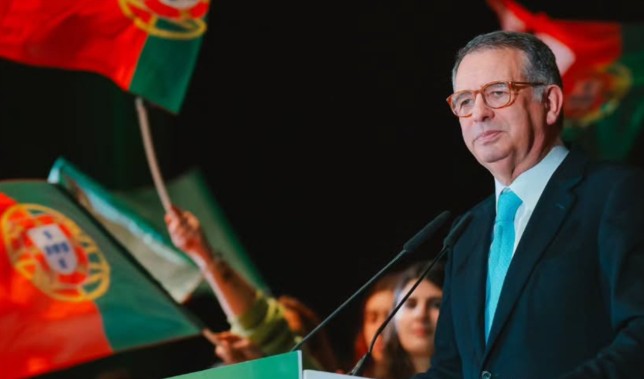
Speaking to Antena 1, the President of the Azores Regional Government, José Manuel Bolieiro, welcomed the election of António José Seguro, expressing his hope for “a successful mandate for a president of all Portuguese citizens and the entire country.”
Bolieiro emphasized the importance of recognizing “the relevance of the political autonomy of the two autonomous regions and the political and strategic value of the Azores for Portugal through its Atlantic projection.”
He also pledged full institutional support: “The new President of the Republic will have the full commitment of the Azores Government to ensure the success of his mandate, both in matters of national sovereignty and in the defense of the Azores’ political autonomy.”
“I am convinced that António José Seguro understands the value of the Azores’ political autonomy for the country,” Bolieiro concluded.
Azorean Parliament President Offers Congratulations
The President of the Legislative Assembly of the Autonomous Region of the Azores (ALRAA), Luís Garcia, also congratulated António José Seguro on his election, highlighting strong democratic participation and the clear expression of the will of the Portuguese people.
In a statement to the press, Garcia said that “the election of António José Seguro represents a significant moment in our democratic life and reflects citizens’ confidence in institutions.”
He underscored the president-elect’s commitment to national cohesion, independence in office, and the defense of the public interest, noting that these principles are essential “to strengthening democracy and deepening institutional dialogue between the sovereign bodies of the State and the Autonomous Regions.”
“The role of the President of the Republic is decisive in promoting national unity and respecting the political and administrative autonomy of the Azores, as constitutionally enshrined,” Garcia said, expressing his expectation of a cooperative, loyal, and mutually respectful institutional relationship.

PS/Azores Leader Hails Victory of Democracy and Stability
Francisco César, President of the Socialist Party in the Azores, also reacted to the second-round results of the 2026 presidential election, praising civic participation and António José Seguro’s election as President of the Republic.
In a statement to the press, César congratulated Seguro on his decisive victory, emphasizing that the president-elect “was chosen by a large majority of the Portuguese people, including Azoreans,” having won “in every municipality of the Azores, with a very expressive majority.”
For César, the outcome represents a victory for moderation, freedoms, the rule of law, constitutional guarantees, and the Constitution itself. He added that it reflects a vision oriented toward national unity, “building the collective future not through division, but by bringing all Portuguese together.”
He described the result as “a victory for everyone—the young and the old, the middle class, workers, businesses, institutions, IPSS organizations, and associations,” stressing that the election ensures “full conditions for political stability” at both national and regional levels.
“We now have the conditions to deliver,” César said, arguing that the coming years must focus on addressing the country’s and the Region’s main challenges, particularly economic development, employment, housing, and social policy. “There are no excuses for inaction,” he added.
César reaffirmed the Socialist Party of the Azores’ openness to institutional and political dialogue, pledging responsible opposition where necessary. “We will not refrain from criticizing what is wrong, nor from helping build solutions where action is needed,” he said.
He concluded by affirming that PS/Azores will continue working to build “a full and increasingly necessary alternative for the future of the Region.”
Diogo Simões Pires is a reporter for Correio dos Açores, Natalino Viveiros-director.
Translated into English as a community outreach program by the Portuguese Beyond Borders Institute (PBBI) and the Modern and Classical Languages and Literatures Department (MCLL), in collaboration with Bruma Publication and ADMA (Azores-Diaspora Media Alliance) at California State University, Fresno. PBBI thanks Luso Financial for sponsoring NOVIDADES.

 Novidades - The Islands and the Diaspora