

Origins and Functions of the Casas do Povo Before April 25
The origins of institutions devoted to social intervention in Portugal have always emerged from the convergence of multiple forces. One of the earliest examples is the Catholic Church, particularly through the rise and development of the Misericórdias in the fifteenth century, driven by Queen Leonor, who founded the first Misericórdia in the country—Lisbon’s—in 1498. Another force was the State itself, which often relied directly on organized groups of citizens to carry out policies and social functions that, in principle, belonged to the State. This was the case with the Casas do Povo and remains true today, not only with Casas do Povo but also with IPSS institutions and the broader network of social solidarity organizations.
Returning to the genesis of these institutions of social intervention, others were founded by groups of citizens themselves, such as Masonic Homes. Several institutions with this origin still exist in the Azores today, particularly on the islands of São Miguel, Terceira, and Faial.
Formally, the Casas do Povo were established in Portugal in 1933, during the Estado Novo, as instruments of the corporatist policy promoted by the then “Head of Government” in rural areas. Their mission and objectives were clearly defined in Decree-Law No. 23,051 of September 23, 1933, which also authorized all rural parishes to create Casas do Povo and to carry out functions related to assistance and social welfare for rural workers. These functions included the provision of healthcare at a time marked by severe shortages, widespread illiteracy, and deep poverty.
In this context, it is hardly surprising that Casas do Povo experienced remarkable growth in Portugal. By the 1960s, approximately 600 Casas do Povo were operating nationwide, with nearly 90 percent providing their own medical services.
Casas do Povo After April 25
With the April 25, 1974 Revolution in Portugal, both the purpose and the functions of the Casas do Povo changed significantly. Even though rural workers had gained some benefits during the so-called Marcelist Spring—the period under Marcelo Caetano that followed Salazar—including integration into the Social Security Fund and access to pensions and limited social support, it was truly after April 25 that rural workers were placed on equal footing with other workers. They gained access to all rights enshrined in the Constitution of the Portuguese Republic.
In addition, the creation of the National Health Service, along with the Regional Health Services in the Autonomous Regions of the Azores and Madeira, marked an important step toward consolidating and equalizing rights in rural communities. Access to maternity and death benefits further reinforced this process.
Following the democratic transformation initiated on April 25, Casas do Povo were forced to reinvent their role within their communities. They expanded their scope of action to provide new services, responding to contemporary needs and serving new target populations, including children, seniors, immigrants, patients, and the most vulnerable. Their activities came to include childcare, education, cultural programming, elderly care and well-being, support for disadvantaged populations, partnerships with other institutions, the sharing and use of facilities, residential care, community events, and even initiatives as simple as soup festivals—while maintaining certain traditional functions, such as healthcare provision.
Given the sweeping social changes that followed April 25, one might have assumed that Casas do Povo would no longer be necessary. It is true that their number declined nationally. Yet both in mainland Portugal and in the Autonomous Regions, they continue to provide relevant services to local populations. Democratic political authorities recognized this continued relevance, acknowledging that Casas do Povo remain a useful and organized means through which citizens can support their communities.
As a result, legislation was introduced to regulate their formation, organization, functions, and services, establishing a minimum requirement of fifty members for their creation and operation. Decree-Law No. 178/98 of June 25 allowed Casas do Povo to be equated with IPSS institutions, provided they pursued the same objectives. This legal framework opened new horizons, particularly in fiscal matters, access to benefits, agreements with public and private entities, and the signing of cooperation protocols with governments and municipalities to support the various services Casas do Povo provide.
The Relevance of Casas do Povo in the Autonomous Regions
To illustrate their importance in the Autonomous Regions, Rita Andrade, former Regional Secretary for Social Inclusion and Citizenship, stated during the 25th anniversary of the Casa do Povo of Caniço in 2022 that the Autonomous Region of Madeira had 43 Casas do Povo, reaching more than 50,000 people. This figure is striking: it represents roughly 20 percent of Madeira’s population (250,769 residents according to the 2021 Census), with Casas do Povo present in 79.6 percent of the region’s parishes, including all ten parishes of Funchal.
In the Azores, according to information received and data from the Social Security Institute, there are 79 Casas do Povo, 59 of which have Cooperation Agreements with Social Security. Together, they serve 4,170 users across a wide range of social responses involving children, adults, the elderly, and people with disabilities. Many of these Casas do Povo stand out as genuine case studies for their strong community presence and high-quality services.
Naturally, the number of users in the Azores cannot be directly compared to the 50,000 figure cited for Madeira. Still, the reach is significant. Casas do Povo are present in 51 percent of Azorean parishes (155 in total), including those in the region’s cities. It is also worth noting that there are currently 234 IPSS institutions operating in the Azores—a substantial number.
Current Challenges Facing the Casas do Povo
The first major challenge is attracting citizens willing to take on leadership roles within Casas do Povo—often unpaid positions that require compliance with extensive legal and regulatory obligations to ensure institutional viability.
The second challenge lies in establishing permanent services and occasional activities that truly respond to the needs of users, while securing the necessary human, technical, and financial resources. This demands rigorous planning and partnerships that require patience and sustained effort.
Additional challenges include:
- Attracting the largest possible number of members and benefactors within the community to support the Casa do Povo’s mission.
- Remaining attentive to structural problems affecting communities, such as housing shortages and limited access to affordable housing for young couples, as well as the growing crisis of addiction, which is undermining and destroying segments of society. These challenges are compounded by rising homelessness and family instability.
- Questioning, without wavering, the future direction of Casas do Povo—particularly debates over whether they should transform into Misericórdias. Such decisions must be carefully weighed, considering the nature, objectives, technical requirements, financial implications, and even issues related to Canon Law.
- Strengthening associativism, recognizing that without strong representative institutions, the task of each Casa do Povo becomes more difficult.
- Maintaining continuous, transparent, loyal, and technically grounded dialogue with partners, namely governments and municipalities.
Finally, it is essential that the standard funding value (per user per month) established by government services reflect the real unit cost borne by Casas do Povo across their various services. This is especially critical for those institutions that depend almost entirely on transfers through Cooperation Agreements with regional or national governments. Failure to align funding with actual costs risks financial unsustainability, jeopardizing the future of these institutions and harming both members and users.
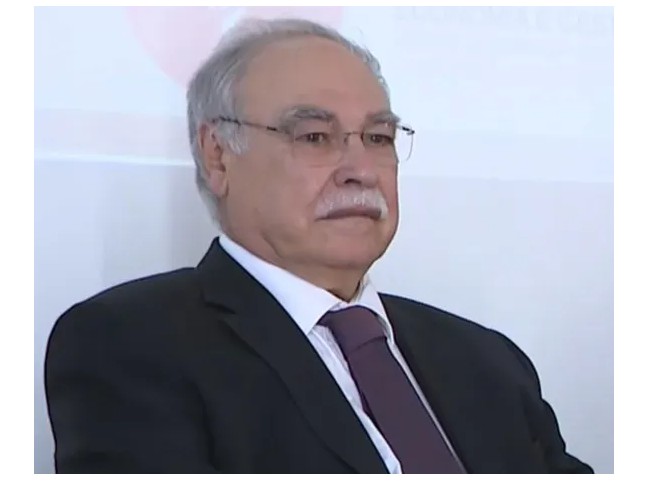
Guater Furtado, is an Advisory Member of the Order of Economists
 Novidades - The Islands and the Diaspora