


Pedro Castro, commercial aviation specialist
In an interview with Diário dos Açores, Pedro Castro outlines a demanding and risky scenario for anyone considering investment in the Azores: low traffic at several aerodromes, heavy dependence on SATA Air Açores and Azores Airlines, and a limited presence of other carriers—often seasonal. Castro concedes that the privatization process may fail to attract any bidders and argues that, as an alternative, airports with only one operator should adopt self-handling. He also warns of the risks posed by long-term contracts and rising fees, which would ultimately affect businesses and passengers.
Before discussing the privatization of SATA Handling, can you explain what ground handling is and how important it really is to air transport?
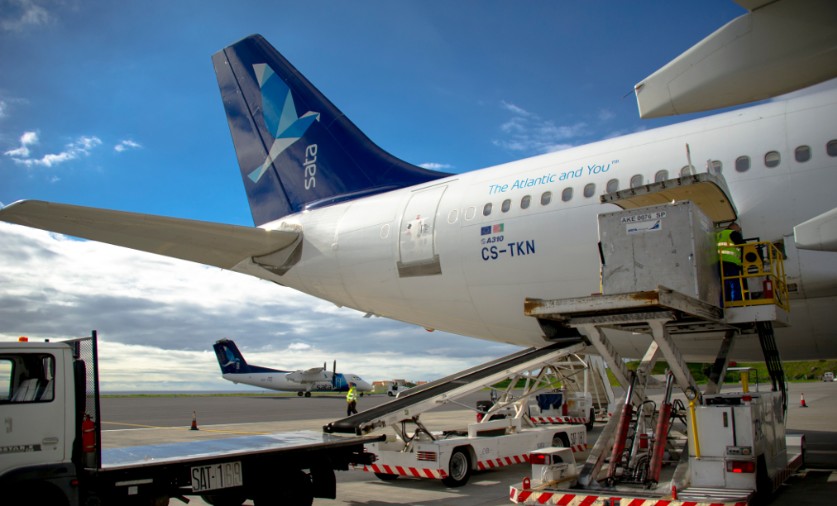
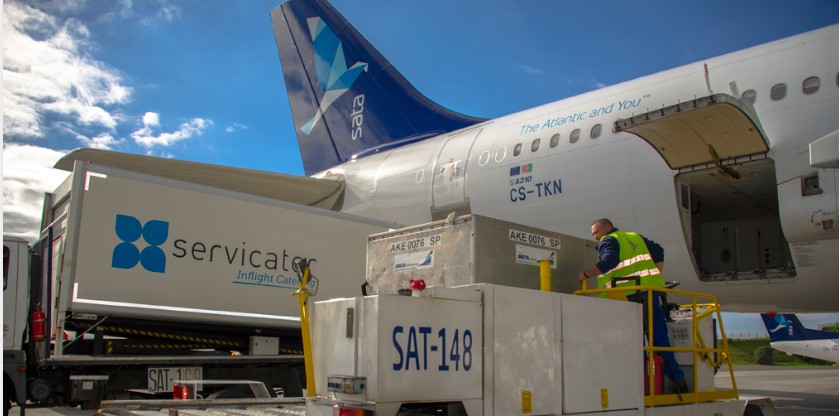
What is being privatized is the SATA Group company responsible for ground handling—the services that support all airlines operating in the Azores, including those in the most restricted categories. This is an absolutely essential service for aviation. It is not enough to have runways and terminals; everything else must function reliably, from passenger check-in to baggage delivery—ideally without lost or stolen luggage.
Ground handling belongs to a sector with a complicated history. For decades, in many countries, it produced monopolies, abuses of dominant position, discrimination, and distorted pricing structures. This situation still exists today in many African airports, for example. Fortunately, Portugal is part of the European Union, and since the late twentieth century there has been a European directive designed to balance this sector.
On the one hand, airlines cannot be prevented from providing their own ground handling—as Ryanair does in Portugal. On the other, European airports handling more than two million passengers per year and/or more than fifty thousand tons of cargo are required to have at least two competing operators in restricted categories. The goal of the directive is straightforward: to introduce competition without ignoring the economic reality of the sector.
The investment required in equipment and human resources is enormous. There is always a minimum level of technical capacity and staffing that must be maintained, regardless of the number of flights, passengers, or cargo handled. In many contexts, that investment may never be recovered within a reasonable economic timeframe, and this reality must be acknowledged whenever changes are made in this sector.
Could SATA Handling and Azores Airlines have been privatized at the same time?
No. It was not viable to privatize SATA Handling simultaneously with Azores Airlines for a very simple reason: at the time, the necessary legal and decision-making framework did not exist, and the privatization of Azores Airlines could not wait. That framework has only now been completed, allowing the SATA Handling process to move forward.
But there is an even more structural reason: these are fundamentally different businesses. With very few exceptions—usually at their main hub—airlines do not want to provide ground handling services, let alone sell them to third parties. Ground handling is a completely different business, even if it is related to air transport.
European Directive 96/67 effectively ended the old model in which airlines owned large monopolistic handling companies to serve themselves and sell services to others. After that directive, airlines wishing to continue providing handling services were subject to strict obligations and limitations, particularly in accounting, precisely to prevent cross-subsidization and market distortion.
Do you believe this new privatization of another SATA Group company can succeed?
Frankly, this privatization is likely to go even worse than that of Azores Airlines. That outcome is the result of decades of attempting to maintain a regional agenda of absolute protection for all public aviation-sector companies—companies that were all loss-making and cost taxpayers millions, always justified by the exceptions granted to ultra-peripheral regions.
Ultra-peripherality, in truth, has often been used rhetorically by politicians as a kind of prison—allowing them to do whatever they want with the islands and to distribute power and influence among “friends.”
The factual reality is this: most Azorean aerodromes depend on a single airline, and in many cases there is barely more than one flight per day, using aircraft with 37 or 78 seats. Even at full capacity, this translates, in most situations, into guaranteed losses for any ground handling operator.
More than that: if SATA Air Açores decides to move forward with self-handling—that is, providing its own ground services by integrating current teams into its workforce—at Corvo, Flores, São Jorge, Graciosa, Terceira, Horta, Santa Maria, and Pico, there will be no need for a separate handling company at all. There are no other potential operators and no realistic prospects of future market growth.
In some cases, Azores Airlines and TAP will need to find their own solutions, or Portway will be called upon to open local units, without requiring licenses, since it is the airport operator’s handling company at concessioned airports.
Even so, the overwhelming dependence on SATA Air Açores and Azores Airlines, combined with the weak presence of other airlines—almost always seasonal—makes the business virtually unviable. Any investor who does enter the process will likely exclude smaller aerodromes, demand long-term contracts with SATA Air Açores and Azores Airlines, tie them up for years, charge high fees, and impose aggressive price increases—severely harming businesses and passengers alike.
What kind of investors might be interested in this privatization?
Today, ground handling is dominated by large international groups such as Aviapartner, Swissport, Menzies, Dnata, and Havas. None of these companies will be interested unless, perhaps, Ponta Delgada Airport is separated from the rest. Without that separation, the risk is too high and losses too certain.
In Portugal, SPdH (Sociedade Portuguesa de Handling) is in an uncertain ownership situation, with TAP seeking to sell its 49.9 percent stake. Portway, owned by ANA–Vinci, has not pursued an expansionist strategy. If any Azorean group steps forward, it will only do so because it has received very concrete guarantees from SATA Air Açores. In that case, we would be looking at yet another deal for the “friends,” one that would further isolate the Azores and shift high costs to the public purse—moneysorely needed for far more urgent priorities.
Given this scenario, is there any realistic alternative?
We have arrived at a near dead end as a direct consequence of disastrous public policies by successive regional governments: excessive centralization of air traffic in São Miguel (with negative consequences even for the island itself), monopolistic practices, and blind protectionism.
It is essential for people to understand one thing: difficult political decisions—often unpopular when taken at the right moment—must be made. Otherwise, the bill for that lack of courage always arrives later, inflated, twenty or thirty years down the line.
I therefore believe this privatization process will attract no bidders. Before that happens, I hope SATA Air Açores publicly commits to moving forward with self-handling at all aerodromes where it is the sole operator. That would finally put an end to part of this long and clumsy story.
Translated into English as a community outreach program by the Portuguese Beyond Borders Institute (PBBI) and the Modern and Classical Languages and Literatures Department (MCLL), in collaboration with Bruma Publication and ADMA (Azores-Diaspora Media Alliance) at California State University, Fresno. PBBI thanks Luso Financial for sponsoring NOVIDADES.

 Novidades - The Islands and the Diaspora