

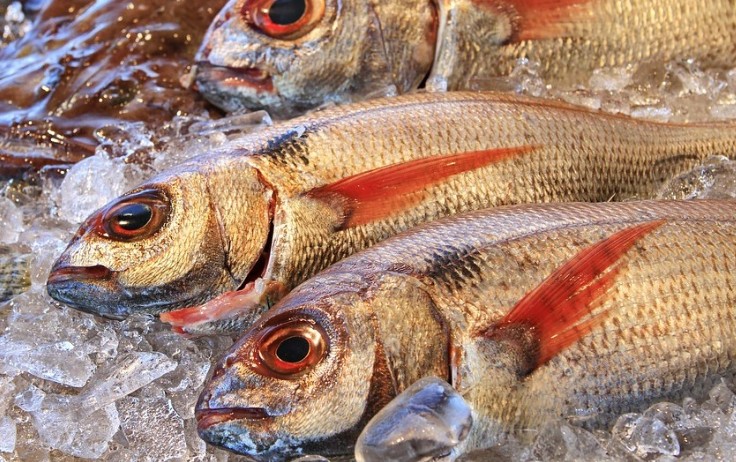
The Regional Secretariat for the Sea and Fisheries has published Ordinance No. 13/2026 in the Official Gazette of February 11, formally approving the regulatory framework that sets total allowable catches for red seabream (Pagellus bogaraveo) for 2026 and 2027. The measure also establishes the conditions under which vessels registered in ports of the Autonomous Region of the Azores (RAA) may operate.
At stake is not merely a fishing limit, but a regional management model. The ordinance frames the fishery as a matter of sustainability and shared responsibility, binding each island to “practices of sustainability and accountability” while ensuring a “fair and equitable” distribution of quota through mechanisms tailored to local dynamics.
Under Council Regulation (EU) No. 2026/249, adopted January 26, 2026, total fishing opportunities for red seabream in the Atlantic—specifically in EU and international waters of ICES Subzone 10—were set at 382 tons for 2026 and 426 tons for 2027. Of that amount, Portugal was allocated 376 tons for 2026 and 419 tons for 2027.
In a decision reflecting historical landing data and the longstanding weight of Azorean fleets in this fishery, Portugal’s entire national quota has been made available to the Autonomous Region of the Azores.
The ordinance includes a first annex introducing the possibility of “interannual flexibility,” allowing adjustments between the two years in order to stabilize catches at up to 398 tons per year, in accordance with EU regulations. The mechanism offers a measure of predictability for fishermen navigating volatile markets and shifting stock conditions.
A second annex details the distribution of the quota by island. São Miguel receives the largest share at 30 percent, followed by Terceira with 23 percent and Graciosa with 12.5 percent. The regulation further provides that catch volumes per vessel may be defined by administrative order, with allocations distributed individually on a quarterly or semiannual basis. Vessels not included in the official order are prohibited from harvesting red seabream.
Oversight and enforcement are central to the framework. The Azores Auction Services (Lotaçor, S.A.) is required to publish weekly statistical data on quota execution by island and by vessel, ensuring transparency and close monitoring of landings.
Once quota limits are reached, Lotaçor will cease admitting red seabream for first sale, and both capture and commercialization of the species will be prohibited.
The new framework underscores the strategic importance of red seabream to the Azorean fishing economy, while aligning regional practice with European conservation standards. In an archipelago where the sea remains both livelihood and identity, the balance between opportunity and restraint continues to define policy—and survival.
In Diário dos Açores-Paulo Viveiros, director.
Translated into English as a community outreach program by the Portuguese Beyond Borders Institute (PBBI) and the Modern and Classical Languages and Literatures Department (MCLL), in collaboration with Bruma Publication and ADMA (Azores-Diaspora Media Alliance) at California State University, Fresno. PBBI thanks Luso Financial for sponsoring NOVIDADES.

 Novidades - The Islands and the Diaspora