

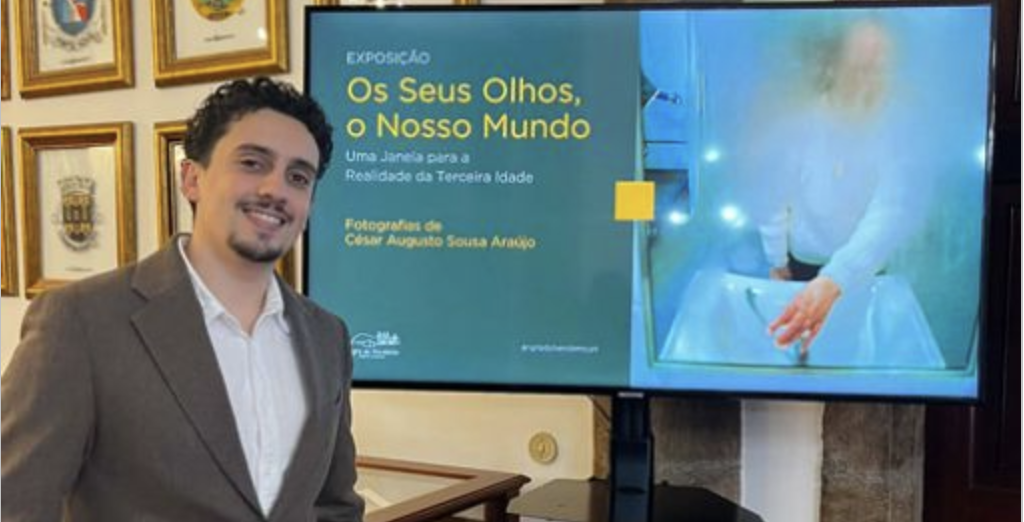
How does this project challenge the social invisibility of older adults?
By placing the public in the first person—that is, in the position of the resident—this project seeks to prevent the gaze from becoming distant or merely observational. The intention is not to view the elderly person as the “object” of an image, but rather to place those who visit the exhibition within their daily lives: within their repeated routines, their periods of waiting, and their prolonged silences. The project focuses on sharing the everyday lives of residents in nursing homes, revealing moments of comfort as well as solitude and absence. Many of these situations go unnoticed precisely because they are part of the routine—both for those who work in these settings and for society at large. By making them visible through photography, the project seeks to create empathy and awareness, drawing attention to a reality that exists every day but is rarely truly observed.
What did you discover during the process?
I discovered something deeply personal and, at the same time, profoundly professional. Over nearly ten years of practice in gerontology, I began to realize that one of my greatest fears had been quietly taking hold: the gradual loss of time and availability for listening and for human connection, largely as a consequence of intense routines and the overload caused by inadequate staffing ratios. This project functioned almost as a moment of pause and reflection. Photographing compelled me to be present, to observe without haste, and to once again make space for the human dimension of care. It was an important process of remembering why I continue to work in this field and of reaffirming the importance of seeing the person beyond tasks and procedures.
Is this a project that also emerges from your professional experience?
Yes, entirely. My practice as a nurse is the foundation of this work. Listening, care, attentiveness to the other, and respect for each person’s time are fundamental principles of nursing and are directly present in this photographic project. It is not simply about photographing people, but about respecting their condition, their pace, and their daily lived experience. Photography here becomes an extension of care—a different way of being present and of giving attention to realities that are often hidden behind institutional routine.
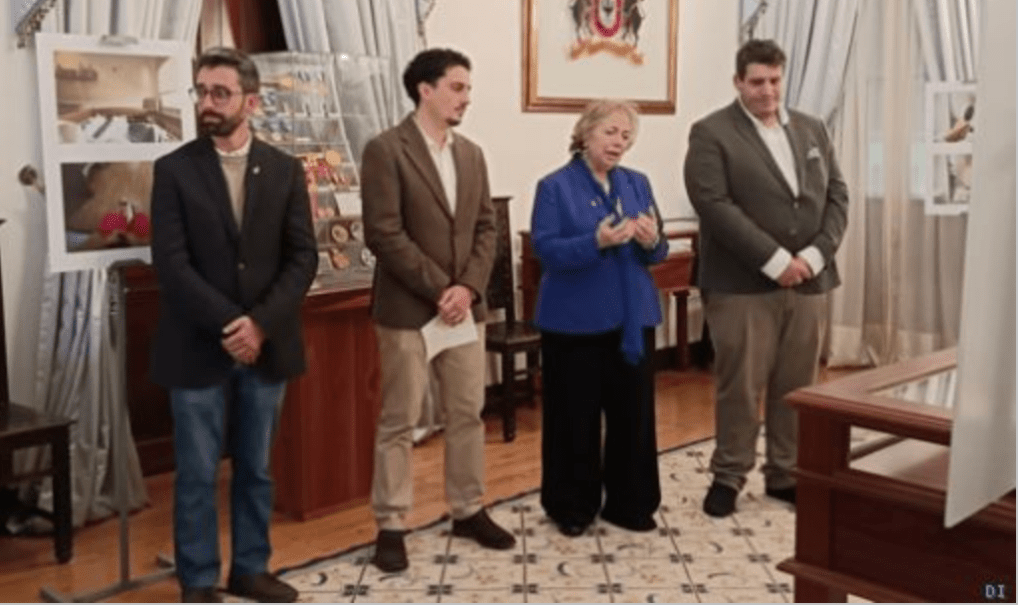
How does the initiative aim to influence public policy or institutional practices related to care, social participation, and the well-being of the senior population?
This project does not seek to offer solutions or prescriptions, but rather to contribute to reflection. By giving visibility to the routines and daily challenges of institutional settings, it may help rethink the organization of care, the time available for each person, and the importance of human accompaniment. Current legislation regarding staffing ratios is often inadequate to guarantee truly person-centered care, and wage disparities compared to the public sector result in significant difficulties in hiring and retaining staff. By presenting these realities in a sensitive and close manner, the initiative can serve as a starting point for dialogue among professionals, institutions, and policymakers, reinforcing the need for policies that value comprehensive care and the dignity of older adults.
What impact do you hope to generate in the community?
I hope this project generates reflection and empathy. The reality portrayed is one that may one day be ours or that of someone close to us. Today’s elderly population laid the foundation for the society in which we live, and they deserve to be regarded with respect, time, and attention. With this exhibition, I sought to call attention to the importance of small gestures and presence. For someone who spends much of the day in a bed, looking at a window, a wall, or a corridor, a few minutes of companionship can have a profound impact. If the project succeeds in changing even one gaze, one attitude, or one way of being, it will have fulfilled its purpose.
What message runs through the exhibition?
The exhibition invites reflection on aging, care, and presence. Above all, it reminds us that looking with time, listening, and being available remain fundamental human needs—regardless of age.
From Diário Insular, José Lourenço-director
 Novidades - The Islands and the Diaspora