

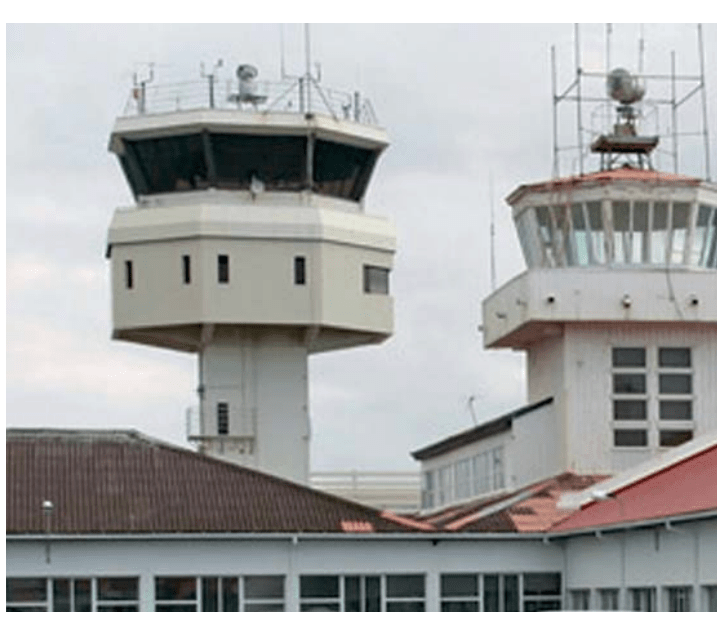
Oceanic air traffic control operated from Santa Maria is described as a critical link in the corridor connecting Europe and North America across the North Atlantic—an airspace that technical documentation from the International Civil Aviation Organization (ICAO) classifies as the world’s busiest oceanic regionOceanic air traffic control operated from Santa Maria is described as a critical link in the corridor connecting Europe and North America across the North Atlantic—an airspace that technical documentation from the International Civil Aviation Organization (ICAO) classifies as the busiest oceanic region in the world.
In 2019 alone, more than 600,000 flights crossed this stretch of sky. Along the most heavily traveled tracks, traffic can exceed 100 aircraft per hour during peak periods.
The operational framework governing this complex system is laid out in two documents updated in 2026: the North Atlantic Air Traffic Management Operational Contingency Plan (NAT Doc 006, Part I, 2nd Edition, Amendment 3, January 2026) and the North Atlantic Operations and Airspace Manual (NAT Doc 007, Version 2026-1, effective March 19, 2026).
The latter underscores the distinctive nature of the North Atlantic. Across much of the region, there is no radar coverage and no direct Very High Frequency (VHF) radio communication between controllers and pilots. Instead, operations rely on alternative communication and surveillance systems—satellite links, position reports, and strict procedural discipline. It is a system built not on line-of-sight technology but on coordination, precision, and trust.
Within that framework, the Santa Maria oceanic control area is identified as part of the North Atlantic High Level Airspace, spanning flight levels FL285 to FL420—precisely the band where the majority of commercial transatlantic crossings occur.
The contingency plan details what happens when service from Santa Maria is disrupted. In cases of limited service, any restrictions must be communicated through a Notice to Airmen (NOTAM), typically with up to 12 hours’ advance notice whenever possible.
During such periods, Santa Maria is expected to maintain contact with aircraft using available resources, including alternative satellite channels, while coordinating closely with adjacent control centers to absorb temporary constraints.
The most serious scenario is a total loss of service. In that case, responsibilities are immediately redistributed to ensure that the North Atlantic does not go “dark.”
Lisbon assumes traffic monitoring within the limits of its radio coverage. Other key oceanic centers—Shanwick (covering Scotland and Ireland), Gander (Newfoundland, Canada), and New York (United States)—take on expanded monitoring and communications management across their respective sectors of the North Atlantic.
The plan also outlines risk mitigation measures designed to reduce congestion and maintain safety. Following notification of a loss of service at Santa Maria, certain control centers may suspend authorizations for aircraft entering the Santa Maria Oceanic Flight Information Region (FIR). Among those identified are Madrid, Piarco, Dakar, and Sal.
The Azores themselves take on a direct operational role in contingency scenarios. Ponta Delgada and Horta are tasked with monitoring traffic within their coverage areas and assisting with emergencies in airspace adjacent to the archipelago. Lajes Air Base carries similar responsibilities within its range of coverage and is designated as available 24 hours a day for emergency landings—without the need for prior military authorization.
To ensure the uninterrupted flow of aircraft even during service disruptions, the contingency plan establishes predefined rerouting structures for the Santa Maria Oceanic FIR. These include alternative tracks based on time of day and specific lower-altitude connections linking Santa Maria’s radar area with the Lisbon and New York regions.
Taken together, the two manuals paint a clear picture: Santa Maria operates within one of the most demanding air corridors on the planet. And when disruptions occur, a meticulously designed “Plan B” activates—complete with advance notices, shared responsibilities among international centers, and alternative routes—to ensure that the crossing of the North Atlantic continues safely and without interruption.
In Correio dos Açores, Paulo Viveiros, director
Translated into English as a community outreach program by the Portuguese Beyond Borders Institute (PBBI) and the Modern and Classical Languages and Literatures Department (MCLL), in collaboration with Bruma Publication and ADMA (Azores-Diaspora Media Alliance) at California State University, Fresno. PBBI thanks Luso Financial for sponsoring NOVIDADES.

 Novidades - The Islands and the Diaspora