

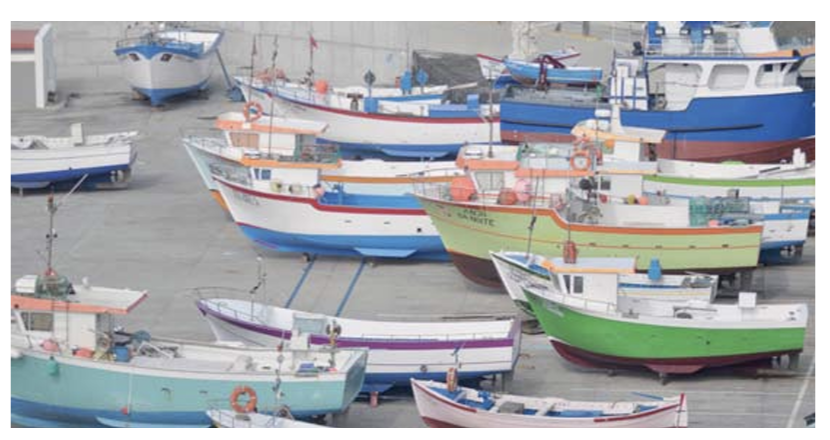
Fish landings at auction in the ports of the Azores totaled 167.73 metric tons in January 2026, generating €1,385,640.04 in revenue, according to statistics released by the Azores Regional Statistics Service (SREA), based on data from Lotaçor – the Azores Fish Auction Service.
The regional average price stood at €8.26 per kilogram in a month when overall volume was largely sustained by pelagic species, but revenue was decisively concentrated in demersal (bottom-dwelling) species and mollusks.
By category, demersal species accounted for 75.67 tons — 45.1 percent of total volume — yet generated €930,591.91, representing 67.2 percent of the total value. Their average price reached €12.30 per kilogram. Pelagic species, including widely consumed schooling fish, totaled 63.22 tons (37.7 percent of volume) but generated only €149,794.66 (10.8 percent of value), reflecting a significantly lower average price of €2.37 per kilogram.
Mollusks posted 28.76 tons (17.1 percent of total volume), generating €305,182.47 (22 percent of value), with an average price of €10.61 per kilogram. Crustacean landings were negligible, amounting to just 71 kilograms, valued at €71.
Island-by-island figures underscore the dominant role of São Miguel, which accounted for 117.19 tons — 69.9 percent of total landings — and €807,783.35, or 58.3 percent of total revenue. Terceira ranked second with 26.02 tons (15.5 percent of volume) but generated €324,501.24 (23.4 percent of value), reflecting stronger average pricing. Pico recorded 9.61 tons in landings, corresponding to €73,630.79 in revenue.
By species, Atlantic horse mackerel (chicharro) led in volume with 29.79 tons, followed closely by squid at 28.46 tons and mackerel at 21.26 tons. In terms of revenue, however, squid topped the list, generating €300,371.36, followed by red seabream (goraz) at €235,177.51 and wreckfish (imperador) at €111,381.81.
Wreckfish posted one of the highest average prices of the month, approaching €47.26 per kilogram, while red seabream averaged €33.76 per kilogram — figures that sharply contrast with high-volume pelagic species commanding far lower market prices.
The data do not include rejected fish, mixed fish for stew (caldeirada), or seaweed not intended for human consumption.
January’s figures illustrate a familiar dynamic in the Azorean fisheries sector: while pelagic species sustain volume, it is the high-value bottom fish and mollusks that ultimately drive revenue across the region’s maritime economy.
In Diário dos Açores, Paulo Vivieiros-director
Translated into English as a community outreach program by the Portuguese Beyond Borders Institute (PBBI) and the Modern and Classical Languages and Literatures Department (MCLL), in collaboration with Bruma Publication and ADMA (Azores-Diaspora Media Alliance) at California State University, Fresno. PBBI thanks Luso Financial for sponsoring NOVIDADES.

 Novidades - The Islands and the Diaspora