

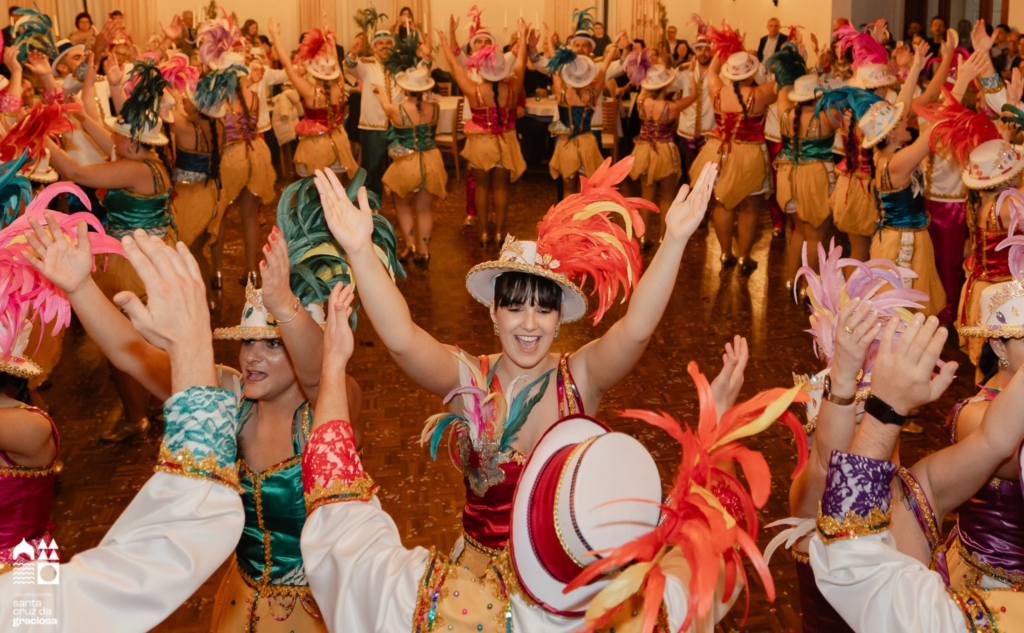
On the Island of Graciosa—white-walled, wind-brushed, and ringed by the patient Atlantic—Carnival does not arrive with bombast. It gathers. It hums behind closed doors. It rehearses in parish halls and kitchens, in whispered rhymes and well-tuned violas. And then, suddenly, it blossoms.
Like the other islands of the Azores, Graciosa keeps alive the tradition of the bailinhos—small theatrical performances that blend satire, music, social commentary, and communal laughter. Groups from different parishes take to improvised stages, often in the Sociedade Filarmónica halls, offering verses that tease politics, poke at local habits, and retell the year’s events with irreverence and affection. Nothing is sacred—except the sense of belonging.
In Santa Cruz da Graciosa, the island’s main town, evenings stretch long during Carnival week. Families move from hall to hall. Children sit wide-eyed as masked performers whirl past. Elders nod knowingly at jokes rooted in decades of shared memory. Costumes range from handmade brilliance to playful simplicity, but the true spectacle lies in the words—clever quadras delivered in chorus, sharp yet generous.
Carnival on Graciosa is not spectacle for tourists; it is theatre for neighbors. It is an island laughing at itself in order to endure. In the middle of winter, when the sea is restless and the fields lie quiet, Carnival reminds the island that joy, too, is a form of resilience.
On Graciosa, the mask does not hide the face. It reveals the community.
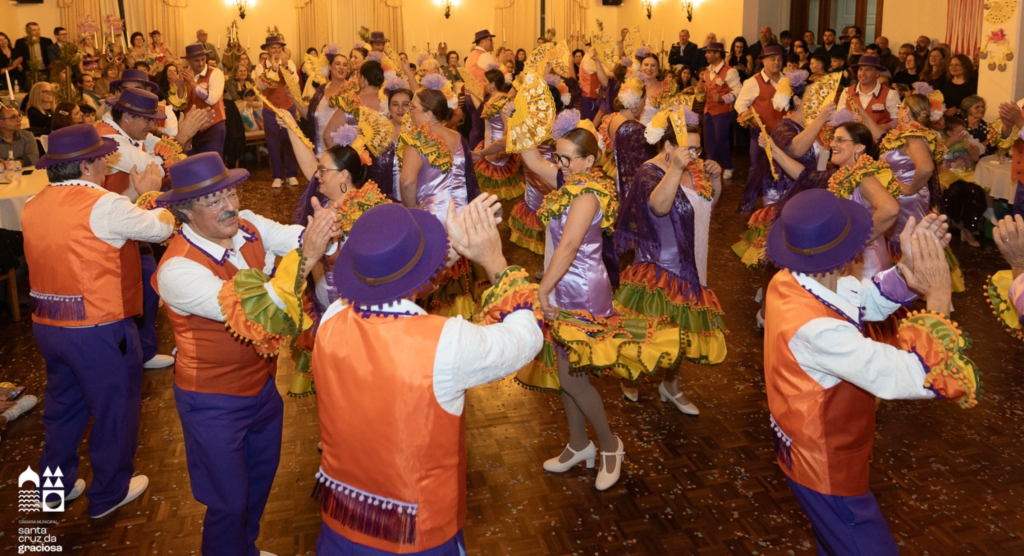
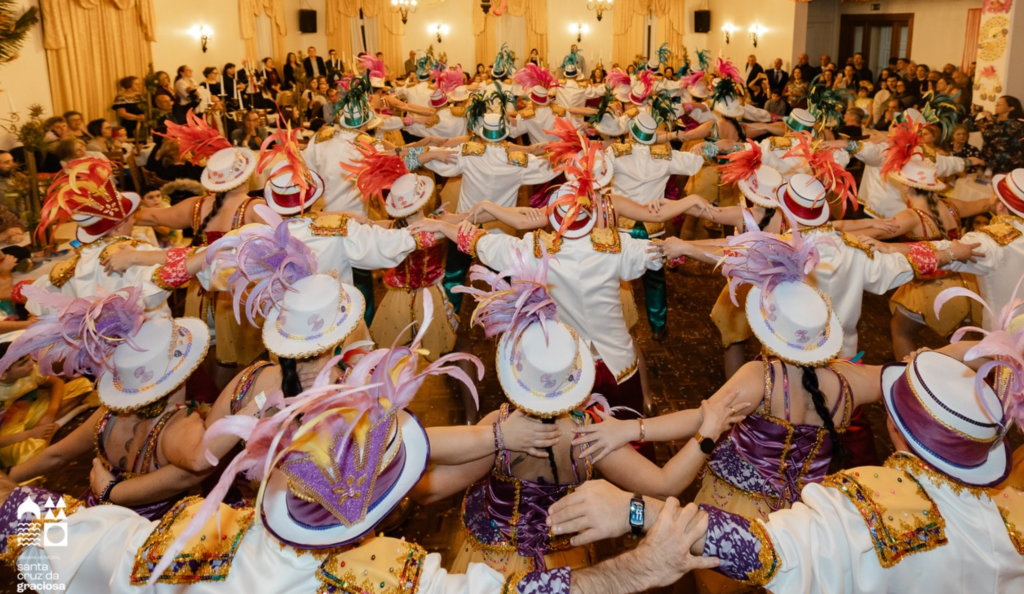
Photos from the Municipalotu of Santa Cruz, Graciosa

 Novidades - The Islands and the Diaspora