

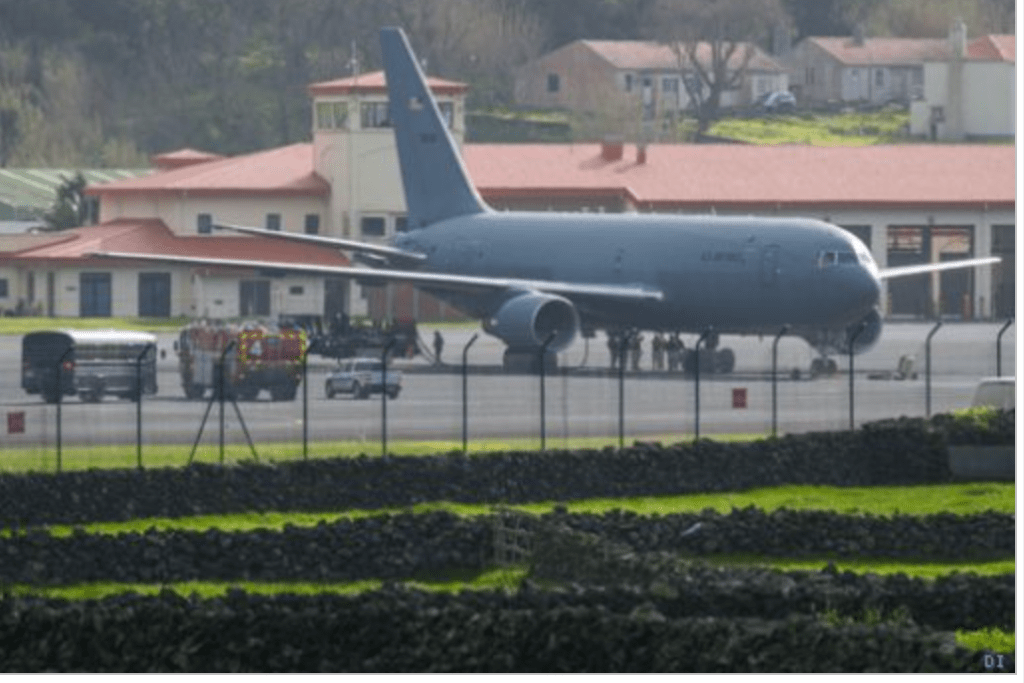
Lisbon authorities insist that the recent uptick in U.S. military activity at Base das Lajes is proceeding within normal parameters and in full accordance with the Portugal–United States Defense Cooperation Agreement, commonly known as the Lajes Agreement.
Official sources have emphasized that any operational use of the base requires prior communication and authorization, seeking to dispel suggestions that Portugal is being drawn directly into external military actions. The message from Lisbon has been measured and procedural: the mechanisms are in place, the protocols are being followed, sovereignty remains intact.
From Washington, however, the tone has been more restrained. The Pentagon has declined to provide detailed explanations, limiting its remarks to describing the activity as “routine transits” of aircraft and personnel through allied facilities in Europe. That lack of specificity has done little to quiet speculation, instead fueling political questions at home.
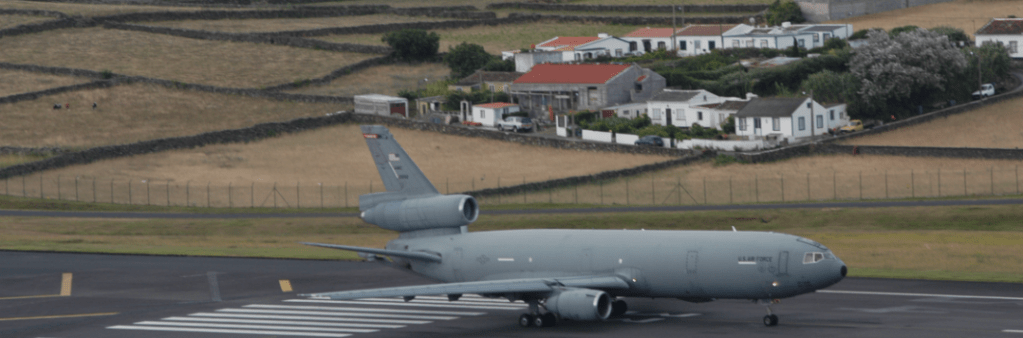
Media attention intensified after several U.S. military aircraft were observed on Terceira Island, including KC-46 Pegasus refueling tankers, F-16 Viper and F-35 fighter jets, and C-17 Globemaster III cargo planes. The simultaneous presence of such assets—particularly aerial refueling aircraft, essential to long-range operations—points to a significant logistical mobilization.
In Portugal, the movements triggered swift political reactions. Lawmakers and commentators called for clarification on the scope and purpose of the base’s use, warning of the risk that Lajes could serve as a support platform for military operations in the Middle East or other conflict zones. The debate has also revived longstanding concerns about the strategic role of the Azorean archipelago in moments of global tension.
A Long Strategic Memory
The Lajes base carries a deep historical legacy. Since World War II, its mid-Atlantic location has conferred singular geostrategic value, serving as a crucial staging point for transatlantic air operations. During the Cold War and other international crises, the installation again assumed prominence, functioning as a logistical platform for deployments and refueling missions—supporting both NATO operations and U.S.-led initiatives.
Its geography has never been incidental. The Azores sit not merely as islands in the ocean, but as connective tissue between continents—a hinge between North America and Europe, and a gateway to operational theaters in Africa and the Middle East.
A Changing Geopolitical Landscape
Analysts suggest the current reinforcement may be tied to broader geopolitical instability, particularly in the Middle East, as well as rising tensions among global powers and the expanded U.S. military footprint across multiple regions. From Lajes, aircraft can move quickly between North America, Europe, and distant operational zones, underscoring the base’s enduring logistical relevance.
Among the potential consequences now under discussion are heightened domestic political scrutiny and renewed anxiety that the Azores could be perceived as a strategic chess piece in international rivalries.
For the islands, the moment carries a familiar paradox. The same Atlantic that has long sustained trade, migration, and cultural exchange also confers strategic weight. And in times of global uncertainty, that geography—so often celebrated for its beauty and isolation—once again becomes a matter of quiet, consequential calculation.
From Diário Insular-José Lourenço-director
Translated into English as a community outreach program by the Portuguese Beyond Borders Institute (PBBI) and the Modern and Classical Languages and Literatures Department (MCLL), in collaboration with Bruma Publication and ADMA (Azores-Diaspora Media Alliance) at California State University, Fresno. PBBI thanks Luso Financial for sponsoring NOVIDADES.

 Novidades - The Islands and the Diaspora