

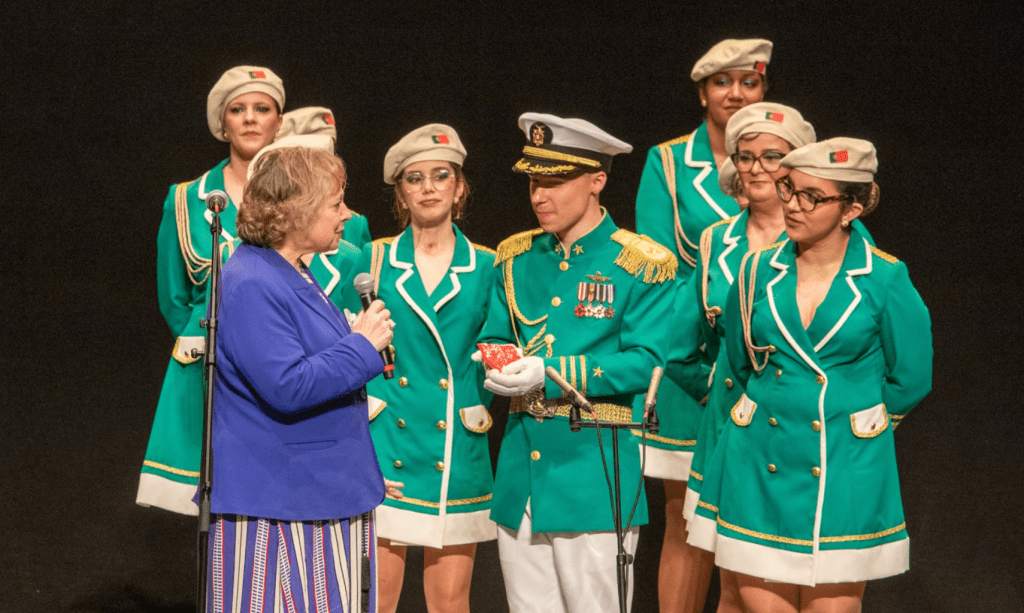
The Teatro Angrense welcomed 47 performing groups during Carnival 2026—bailinhos, traditional dances, comedies, and monologues—reaffirming its role as both guardian and amplifier of one of the Azores’ most enduring cultural traditions.
From February 14 to 17, the historic stage in Angra do Heroísmo once again became the beating heart of Terceira’s Carnival season. In a statement, the City Council noted that the theater “asserted itself, once more, as a privileged venue for presenting the work developed by the groups, offering technical and staging conditions that dignify this popular tradition.”
Carnival on Terceira Island is no mere festival—it is a living civic ritual. According to the municipality, the Teatro Angrense plays a decisive role in safeguarding a cultural expression “deeply rooted in the identity of Terceira, marked by creativity, social critique, and strong intergenerational participation.” On this stage, satire and song, memory and improvisation, share the same spotlight. Elders and youth perform side by side, keeping alive a form that is at once theatrical and communal, playful and pointed.
City officials also underscored Carnival’s broader impact beyond the theater walls. Across the island’s parishes, the season generates opportunities for investment in local recreational societies and community halls—spaces that serve as cultural anchors throughout the year. These modest yet vital venues are where rehearsals stretch late into the night, where costumes are stitched and scripts revised, where neighbors become castmates and critics alike.
To support this ecosystem, the municipality of Angra provided a range of assistance, from the purchase of equipment to the financing of renovation and improvement projects. Financial aid was also granted to the halls and recreational societies that hosted participating groups, reinforcing the idea that Carnival is sustained not only by performers, but by the communities that house and nurture them.
For four February nights, the curtain rose on more than performances—it rose on continuity. At the Teatro Angrense, the island did what it has long done best: it turned celebration into testimony, laughter into commentary, and tradition into a living, breathing art.
From Press Release
Translated into English as a community outreach program by the Portuguese Beyond Borders Institute (PBBI) and the Modern and Classical Languages and Literatures Department (MCLL), in collaboration with Bruma Publication and ADMA (Azores-Diaspora Media Alliance) at California State University, Fresno. PBBI thanks Luso Financial for sponsoring NOVIDADES.

 Novidades - The Islands and the Diaspora