

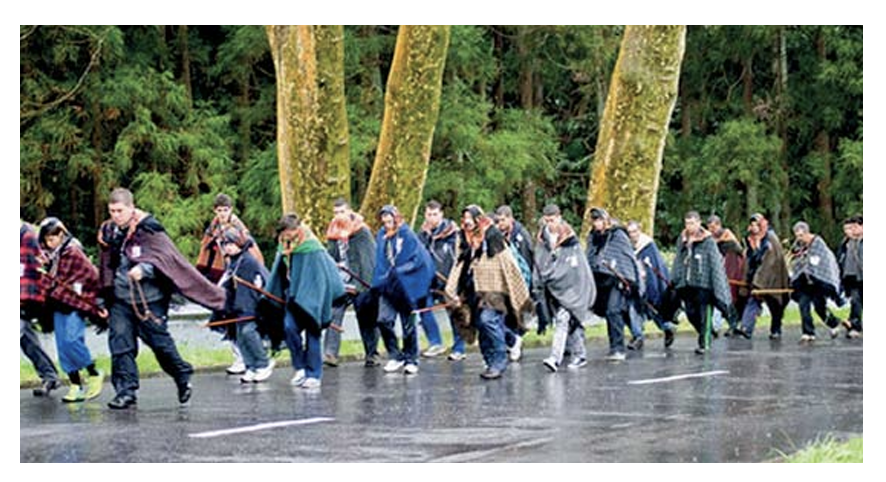
Starting today, Saturday, the roads and narrow footpaths of São Miguel will once again fill with prayer and song as the island’s centuries-old Lenten pilgrimages begin anew.
This year, 53 ranchos — groups of male pilgrims — will set out across the island. The number is slightly lower than usual, described by organizers as “weaker” than in past years. Still, it speaks to the enduring vitality of a tradition that has shaped Azorean identity for nearly five centuries, according to the Church’s regional news outlet, Igreja Açores.
Eleven groups depart this first Saturday: Cabouco, São Pedro of Ponta Delgada, Candelária, Várzea, Santa Bárbara, São Roque, Ribeirinha, Ribeira Quente/Furnas, Milagres, Calhetas, and even a group from Toronto, which begins and ends its walk at the Sanctuary of Senhor Santo Cristo. Beyond São Miguel, smaller pilgrimages also take place on São Jorge, Terceira, and Graciosa.
Under the theme “Baptized in Hope,” the 2026 pilgrimages officially begin today, February 21, marking the start of what church leaders describe as a season of conversion, prayer, and Christian commitment. Bishop Armando Esteves Domingues has challenged Azorean pilgrims to orient their spiritual journey around 14 prayer intentions — a framework that bridges the island’s devotional tradition with the wounds of the modern world.
The first intention calls for prayers “for the Holy Father, Pope Leo XIV, and all his intentions,” widening outward to include peace in the world and harmony among nations. But it is in the social dimension that the bishop’s message takes on particular urgency.
He calls for prayers for families — especially those in difficulty — for the elderly, the sick, and victims of storms; for young people struggling with drug use and other addictions; for victims of domestic violence; and for all who live with poverty, unemployment, or exclusion. There are also intentions for vocations, for priests and lay leaders serving their communities, and for pilgrims who themselves are ill or burdened by hardship. The list culminates in a single, unifying hope: that all Christians of the Diocese of Angra remain faithful to their baptism and to Christ, “our Hope.”
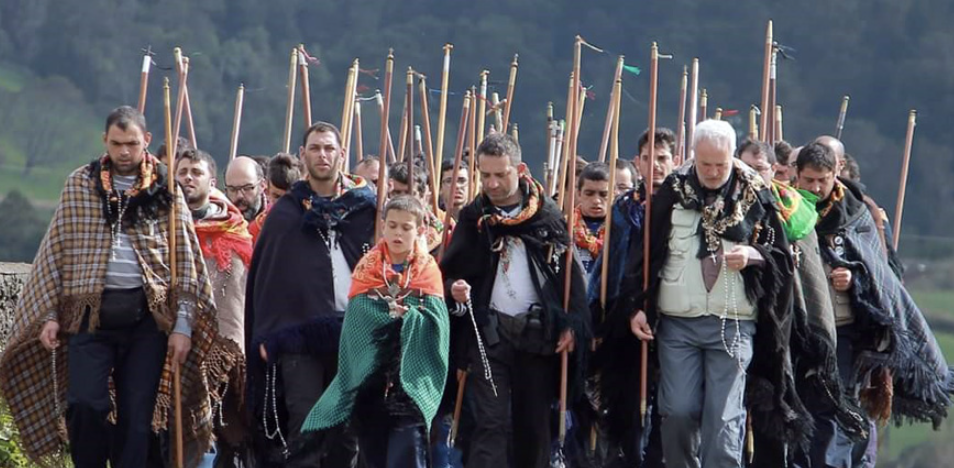
Organizers say this year’s message stands apart for its deeply social tone — one that directly addresses the challenges facing Azorean families today, from substance abuse to domestic violence and the quiet fragilities that can settle into a home.
Preparation has been underway for weeks. For more than three weeks, the groups have met regularly, tending to three essential dimensions of the pilgrimage: spiritual, practical, and physical.
Spiritually, a recent retreat in Nordeste offered formation that each irmão mestre — the leader of a group — adapts to his own rancho. Prayer, Bible study, and devotion to Our Lady continue to anchor the rhythm of preparation.
But there is also a civic dimension. Pilgrims sleep in parish halls and private homes, relying on hospitality that demands responsibility and respectful conduct.
“We want to continue doing what has always been done well,” says Rui Melo, president of the Administrative Commission organizing this year’s pilgrimages on behalf of the movement’s leadership. He emphasizes that the pilgrimage does not end with the walk itself.
“It begins at Easter and continues in daily life — in how we live in our families, in our work, in our communities,” Melo says. “The pilgrimage is a way of life.”
The walking leaves its mark. There are blisters, aching knees, the fatigue of long coastal roads. But the men who walk say the physical strain yields a spiritual sustenance that lasts all year. The movement does not seek perfect men, organizers insist, only those willing — day after day — to try to live the values of the Gospel.
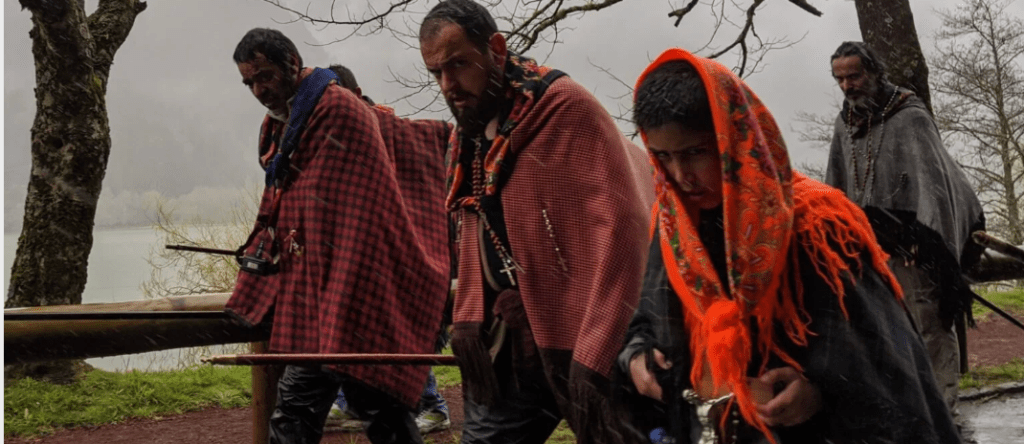
Last year’s pilgrimage was marked by heavy rains and temperatures that dipped to 39 degrees Fahrenheit in Nordeste. For 2026, pilgrims hope for milder weather, knowing that climate, too, shapes the spirit of the journey.
The Lenten pilgrimages of São Miguel date back to the 16th century and remain one of the Azores’ most powerful expressions of faith. During Lent, groups of men circle the island on foot for a week, moving clockwise with the sea always to their left. Along the way, they visit nearly 100 churches and chapels dedicated to the Virgin Mary, praying in penance and petition.
They walk wrapped in shawl and kerchief, rosary in hand, wooden staff in the other — a quiet procession of endurance against wind and salt air.
The tradition began in response to natural disasters — earthquakes and volcanic eruptions that once shook the islands — as communities sought divine protection. It continues each year from the first Saturday of Lent until Holy Thursday.
And so, once more, the island walks.
In a world of quick fixes and digital noise, São Miguel offers something older and slower: men moving step by step along the rim of the Atlantic, singing into the wind, carrying both the burdens of the present and the memory of centuries — praying not only for themselves, but for a fractured world that still needs hope.
In Diário dos Açores — Paulo Viveiros, director.
Translated into English as a community outreach program by the Portuguese Beyond Borders Institute (PBBI) and the Modern and Classical Languages and Literatures Department (MCLL), in collaboration with Bruma Publication and ADMA (Azores-Diaspora Media Alliance) at California State University, Fresno. PBBI thanks Luso Financial for sponsoring NOVIDADES.


 Novidades - The Islands and the Diaspora