

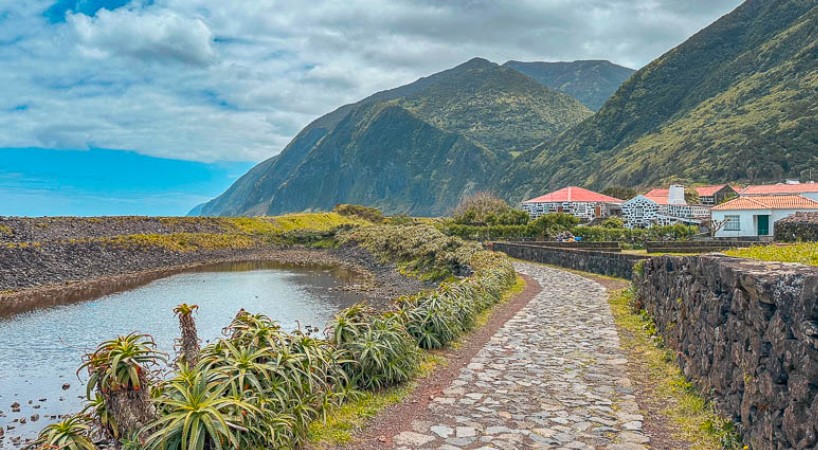
Luís Silveira, a regional lawmaker for the CDS/Açores, has formally requested urgent clarification from the Regional Government regarding the environmental and operational conditions at the Fajã da Caldeira de Santo Cristo, following a recent site visit to the landmark on the island of São Jorge.
Silveira noted that the Fajã stands as one of the island’s most iconic natural treasures, holding significant ecological, scientific, scenic, economic, and cultural value. The area is part of a UNESCO Biosphere Reserve, designated as a RAMSAR wetland of international importance, and included in the European Union’s Natura 2000 network — distinctions that impose strict obligations for protection and sustainable management by public authorities.
“We are talking about a unique natural heritage site with international recognition,” Silveira said. “It demands responsible action from the Regional Government, grounded in technical expertise and scientific evidence.”
At the heart of the concern is the coastal lagoon at the Fajã, a singular ecosystem within the Azores. It is the only location in the archipelago where clams are naturally produced and harvested — a traditional activity with notable socioeconomic and cultural significance for São Jorge.
In recent months, reports have surfaced of algae proliferation and a significant buildup of sludge and decomposing organic matter along the lagoon’s bottom and banks. These conditions could alter the lagoon’s physical and chemical balance, potentially threatening the sustainability of the ecosystem and the reproductive cycle of the clam population.
Silveira stressed the need to determine whether the lagoon’s ecological equilibrium remains intact — particularly with regard to adequate water exchange through the narrow channel connecting it to the sea, known locally as the “Paço.” The configuration and hydrodynamic function of this channel, he said, are critical to maintaining appropriate salinity, oxygen levels, and overall water quality.
The lawmaker is seeking information on whether recent technical studies have been conducted on the channel’s hydrodynamics and on how current environmental conditions may be affecting clam reproduction. He also asked whether the Regional Government believes the species’ normal reproductive cycle is at risk.
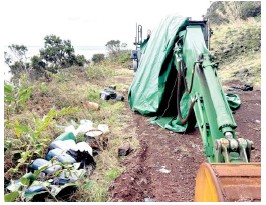
The request further addresses the condition of two heavy-duty excavators purchased by the Regional Government to support local interventions at the Fajã. One of the machines is reportedly in advanced deterioration due to prolonged exposure to the elements.
“It is unacceptable for public equipment, acquired with taxpayer funds, to be left exposed to the weather and allowed to deteriorate,” Silveira said. He questioned whether the government is aware of the situation, whether plans are in place to dismantle and permanently remove the degraded equipment, and when construction of a shelter for the newer excavator — previously included in the regional budget — is expected to move forward.
Silveira also raised concerns about the Furna do Poio, a natural site of recognized scenic interest that has seen growing tourist traffic. The cavern houses a lake of striking beauty but lacks structured safety conditions for visitors.
“Increased tourism brings increased responsibility,” he said. “Minimum safety standards must be ensured, in a way that is compatible with environmental preservation and the protection of those who visit the site.”
In his formal inquiry, Silveira is requesting specific information from the Regional Government, including: the current state of conservation of public equipment at the Fajã; interventions carried out over the past year to control and remove sludge and algae from the lagoon; the existence of updated technical studies; the number of active licenses for clam harvesting and any plans for issuing additional permits; and the measures planned to improve visitor access and safety at Furna do Poio.
The broader issue, Silveira argues, calls for rigorous planning and decisions anchored in up-to-date scientific analysis — before environmental degradation threatens one of São Jorge’s most treasured natural landscapes.
In Atlântico Expresso, Natalino Viveiros-director
Translated into English as a community outreach program by the Portuguese Beyond Borders Institute (PBBI) and the Modern and Classical Languages and Literatures Department (MCLL), in collaboration with Bruma Publication and ADMA (Azores-Diaspora Media Alliance) at California State University, Fresno. PBBI thanks Luso Financial for sponsoring NOVIDADES.

 Novidades - The Islands and the Diaspora