

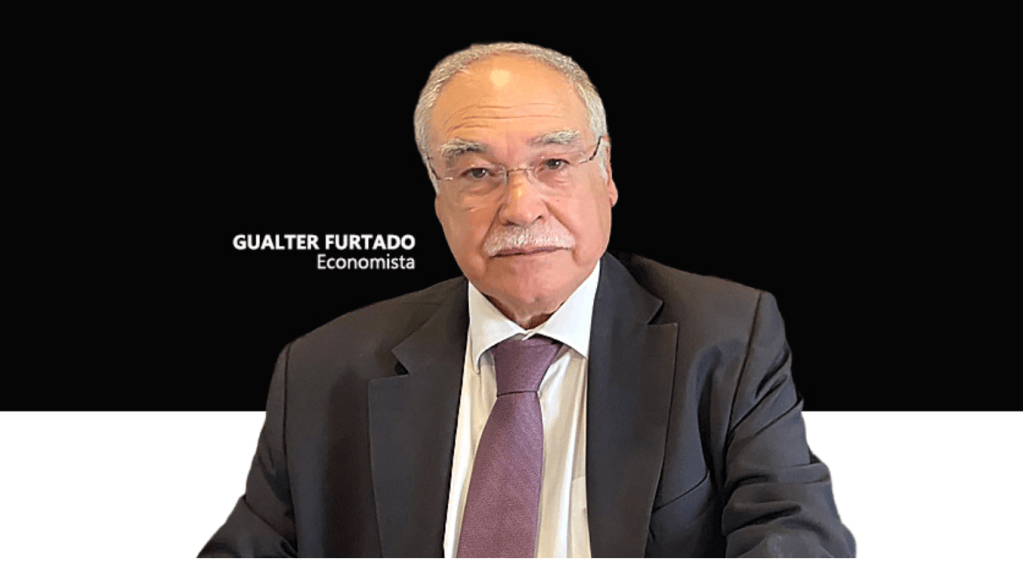
Not long ago, I took part in a national gathering of the Casas do Povo, much as I had earlier participated, in 2018, in a regional meeting of Parish Councils. The remarks I offered then were never published. I return to them now, as a gesture of tribute to what I consider—both in Portugal and in the Azores—to be the democratic institution that works closest to the everyday lives of citizens.
Parish Councils are not an administrative footnote, nor a relic of an older local order. They are an essential component of the architecture of the rule of law and of the democratic political and administrative organization of both the Portuguese state and the Autonomous Region of the Azores. Their legitimacy and centrality rest firmly on three pillars: the Constitution of the Portuguese Republic, the Political-Administrative Statute of the Autonomous Region of the Azores, and the Local Finance Law.
The Constitution explicitly recognizes that the autonomous regions are composed of municipalities and parishes. The Statute defines their powers and establishes the framework of regional oversight. The Local Finance Law clarifies the financial independence of local governments within the autonomous regions and outlines the mechanisms through which they access national funding. This legal tripod is not merely symbolic; it forms the institutional foundation upon which Azorean democratic autonomy stands.
Yet more important than legal architecture is lived reality. Parish Councils are, in practice, the first door people knock on. In moments of catastrophe, in times of social hardship, unemployment, or everyday need, it is the Parish Council that citizens turn to first. Often they do so even in matters that clearly extend beyond the council’s legal authority or financial capacity. This closeness is their greatest strength—but also their greatest challenge.
The first challenge, therefore, is to clarify responsibilities: distinguishing what properly belongs to the parish from what may be delegated, and ensuring that any delegation of duties is accompanied by adequate financial support. Decentralization without resources is merely an illusion of empowerment.
The second challenge concerns financial sustainability—the ability of parishes to strengthen their own revenue streams, even within a demanding legal framework.
The third relates to internal organization: the quality of services, administrative modernization, and a decisive commitment to digital governance, including transparency and the standardization of public reports and accounts.
There is also the challenge of cooperation. A parish does not exist in isolation. It interacts with local associations, parishes and religious institutions, sports and cultural groups, businesses, youth, and senior citizens. It should cooperate with neighboring parishes and municipalities—particularly in civil protection, economic development, cultural programming, and external promotion. Coordination creates scale, reduces costs, and amplifies impact.
Finally, there is the challenge of representation. The 156 Parish Councils of the Azores must strengthen their collective voice, ensuring that they are heard at municipal, regional, and national levels. Autonomy is not sustained by silence; it is built through active and organized participation.
This discussion becomes even more relevant at a moment when the Azores are experiencing a transition in their economic paradigm. Our history has been marked by dominant cycles—from woad to wheat, from oranges to industrial crops, from livestock and dairy production. Today, we are witnessing the emergence of a more diversified model, in which tourism, the modernization of fisheries, and new industries are playing an increasingly significant role.
In this evolving context, the competitive advantages of the Azores are unmistakable: the environment, the sea, culture, human capital, and a singular geostrategic position in the Atlantic. Parish Councils can—and should—play a leading role in shaping this sustainable development, provided that decentralization is pursued with intelligence and responsibility.
Indeed, we should not shy away from discussing the possibility that certain parishes with unique characteristics might benefit from special protective and developmental status. Places such as the Furnas Valley, the parish of Sete Cidades, or the historic vineyards of Biscoitos represent landscapes and cultural patrimonies that deserve thoughtful stewardship. Protecting natural and built heritage does not impede development—it elevates it and ensures its sustainability.
Decentralization, when undertaken responsibly and supported by adequate financing, is not something to fear. On the contrary, in a world where responsiveness and service quality increasingly define institutional effectiveness, the parish system can become one of the Azores’ greatest competitive advantages.
To honor the Parish Councils, therefore, is to recognize the enduring value of proximity, democratic responsibility, and public service. Every day, these institutions keep alive the vital thread that connects the citizen to the state. And within that thread lies one of the deepest strengths of Azorean autonomy.
In Açores9 – Paulo Melo, director
Translated into English as a community outreach program by the Portuguese Beyond Borders Institute (PBBI) and the Modern and Classical Languages and Literatures Department (MCLL), in collaboration with Bruma Publication and ADMA (Azores-Diaspora Media Alliance) at California State University, Fresno. PBBI thanks Luso Financial for sponsoring NOVIDADES.

 Novidades - The Islands and the Diaspora