

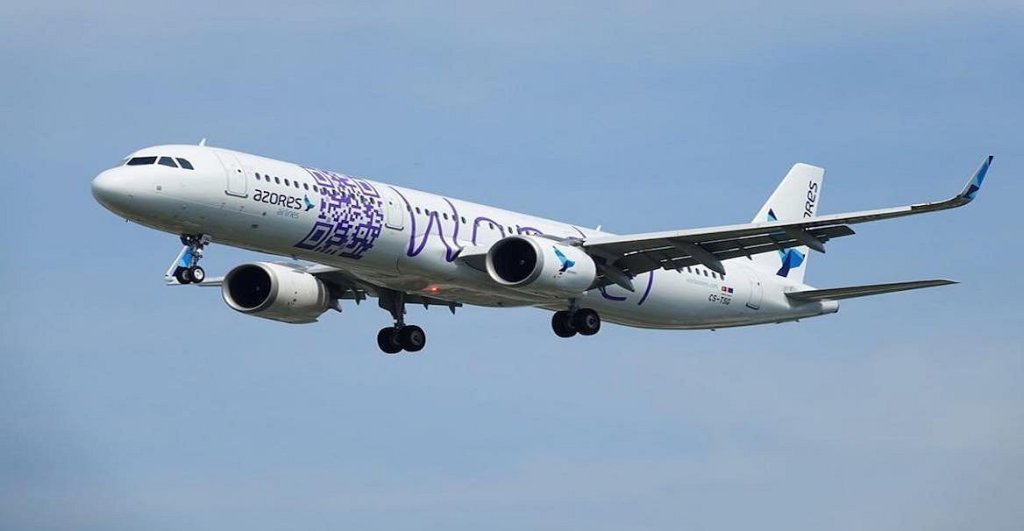
The Azorean Regional Government has effectively halted the privatization of Azores Airlines (SATA Internacional), closing the international tender without awarding the contract to the sole remaining bidder, the AtlanticConnectGroup, and opening the door to what is expected to become a significant legal battle.
In a statement released Wednesday following a meeting of the Council of Government, the regional executive announced that it had reviewed the Final Report prepared by the jury of International Public Tender No. SATA-01/2023, dated February 22, 2026. According to the report, the conditions for selecting the final proposal submitted by the consortium MS Aviation / New Tour (AtlanticConnectGroup) had not been met.
The government therefore decided not to oppose the jury’s recommendation, leaving the final decision to the Board of Directors of SATA Holding, S.A., as stipulated under the process. The statement emphasized the independence of both the jury and the airline’s governing board, noting that the regional government had respected that autonomy throughout the proceedings.
The decision, however, is already triggering sharp opposition from the consortium, which has announced its intention to challenge the outcome in both Portuguese and European courts.
Among the consortium’s most prominent figures is Carlos Tavares, the former CEO of Stellantis, who on Wednesday criticized the process in an interview with the Portuguese outlet ECO. Tavares argued that the privatization procedure conducted by SATA and the competition jury “did not respect the legal foundations of the rule of law.”
The AtlanticConnectGroup had proposed purchasing 85 percent of Azores Airlines for €17 million, presenting itself as a path toward restructuring the financially troubled carrier.
According to Tavares, the reasoning outlined in the jury’s preliminary report raised serious concerns.
“The jury claims it is not in the public interest to put an end to what it calls a waste of Portuguese taxpayers’ money,” he said. “As if the country had no other priorities than continuing to burn between €40 and €70 million every year.”
Tavares also questioned the evaluation of the consortium itself, particularly after its membership was strengthened. The group had been expanded to include Paulo Pereira, a businessman known for his tourism ventures and success in the wine trade, alongside Tavares himself.
“When the consortium was reinforced, the jury concluded that the subjective rating of the group’s credibility was actually lower than in the original proposal,” Tavares said. “How can anyone place confidence in a jury capable of making such an assessment?”
He also noted that agreements had been reached with labor representatives during the course of negotiations.
“If you truly want a buyer capable of managing the company responsibly, you must allow that buyer to start with a clean slate,” he said. “Because the company was never placed into bankruptcy—as it should have been—you cannot ask a private investor to inherit the burden of past political decisions and do so with a smile.”
For its part, the jury justified its recommendation of non-award, issued on January 28, by concluding that the consortium’s proposal did not adequately “safeguard the interests” of both SATA and the Autonomous Region of the Azores.
The report noted that SATA Holding would still be required to fully recapitalize Azores Airlines, while the consortium’s offer included no additional capital injection. As a result, the economic risk of the operation would remain largely on the regional airline group’s side.
Meanwhile, SATA President Tiago Santos has indicated that a new model for a direct sale of the airline is now in its final stages of definition, suggesting that the long and contentious search for a solution to Azores Airlines’ financial future is far from over.
In an archipelago where air links are not merely a convenience but a lifeline, the fate of Azores Airlines carries stakes far beyond corporate balance sheets. The decision to halt the privatization may have closed one chapter—but it is already opening another, likely to unfold not in boardrooms but in courtrooms on both sides of the Atlantic.
Translated into English as a community outreach program by the Portuguese Beyond Borders Institute (PBBI) and the Modern and Classical Languages and Literatures Department (MCLL), in collaboration with Bruma Publication and ADMA (Azores-Diaspora Media Alliance) at California State University, Fresno. PBBI thanks Luso Financial for sponsoring NOVIDADES.

 Novidades - The Islands and the Diaspora