

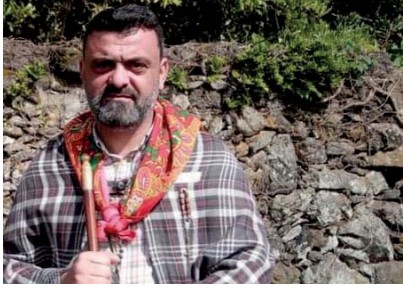
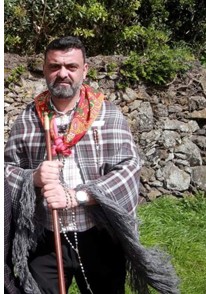
n this interview, Nuno Furtado shares his experience participating in the traditional pilgrimages that circle the island of São Miguel, a devotion he has embraced since 1999. His first motivation came from watching his father and friends from the parish of Covoada take part in the pilgrimage, a curiosity that gradually deepened over the years. Today, as he once again walks the island in pilgrimage, he describes the romaria as a singular experience marked by physical and psychological challenges, often intensified by harsh weather—rain, wind, and cold. Yet prayer, faith, and the group’s collective spirit help pilgrims endure these hardships.
For Furtado, the spirit of brotherhood among the romeiros is one of the most striking aspects of the journey, expressed through solidarity and the shared life of the road. Above all, the pilgrimage becomes a moment of encounter—with oneself and with God—allowing a rare distance from the rhythm and noise of everyday life. Even acknowledging that not all pilgrims practice their faith in the same way throughout the year, he believes the romaria remains an act of humility and spiritual seeking. At the end of the journey, returning home brings a mixture of joy and longing, renewing the desire to walk the island again.
Correio dos Açores: What first led you to join a pilgrimage around the island of São Miguel?
Nuno Furtado:
From a very early age I saw my father taking part in the pilgrimage of my parish, Covoada. As the years passed my curiosity grew stronger. In 1999, encouraged by friends who were already pilgrims, I decided to join the romaria that year.
How do you prepare yourself physically and spiritually for this walk of faith?
Nuno Furtado:
Physically, a few weeks before the pilgrimage I start walking regularly to prepare my body. Spiritually, for me it comes naturally. I am a practicing Catholic, and my faith and spirituality are nourished throughout the year.
What does it mean to you to spend eight days walking in pilgrimage around the island?
Nuno Furtado:
Whenever people ask me that, I give a very simple answer: there is no other week in the world quite like this one.
Since when have you participated in the romarias, and what do you remember from your first experience?
Nuno Furtado:
I have participated since 1999. What I remember most from that first time was the sense of overcoming the physical and psychological challenges we face along the way. Through prayer, faith, belief, and purpose—and through the spirit that forms among the brothers during that week—we find the strength to endure. It is something that only a romeiro can truly understand.
What have been the greatest challenges you have faced, such as cold, rain, or storms?
Nuno Furtado:
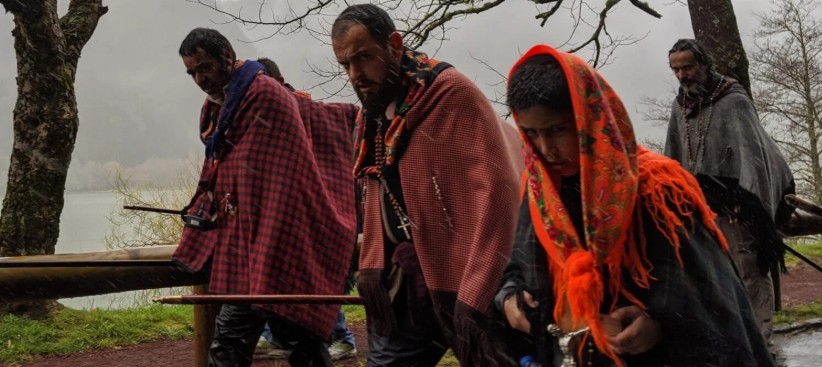
Every day brings new challenges, but the worst are certainly rain and cold. The walk itself is already demanding, and when you add rain and cold it becomes even harder.
How do you deal with sleep and physical exhaustion?
Nuno Furtado:
I try to sleep and rest as many hours as possible. When necessary, I also take supplements to help improve my performance.
How would you describe the relationship and spirit of brotherhood among the pilgrims in your group?
Nuno Furtado:
I am certain that we experience the true spirit of brotherhood. We cultivate sharing, empathy, solidarity, and camaraderie. We are there for one another.
Is there a particularly special or memorable moment you experienced during a pilgrimage?
Nuno Furtado:
One morning I woke up and saw my brothers sleeping on the floor because they had given me their bed so that I could have a good night’s rest. That was deeply moving.
What does the pilgrimage mean to you personally?
Nuno Furtado:
For me, the pilgrimage is clearly a moment of encounter with myself and with God. In today’s world, in the rhythm of everyday life, we rarely have the chance to disconnect completely from the noise around us. That noise often separates us from our inner life and from our relationship with God.
During the pilgrimage, after many hours of walking while praying and singing, we are able to dive deeply into who we truly are—into the questions that trouble us. We begin to understand that the essentials for living well are far fewer than what society tells us we need. In simple terms, the pilgrimage teaches us that a bath, a meal, prayer, and the companionship of our brothers are more than enough for a good life.
For me, the romaria has become a meeting with my own spirituality, which is reflected in the face of every brother who walks beside me.
Many people say that some pilgrims do not regularly practice their faith. Why do you think that is?
Nuno Furtado:
First we must ask what those people mean by “practicing faith.” Does it mean going to Mass? Following every tradition and rule? Being religious, or being truly Christian?
Of course, it would be better if pilgrims were always examples of Christ’s love. But even the apostles denied their master. We are humble sinners and we fail again and again. Pilgrims are no better and no worse than anyone else. In fact, they may be better in one sense: they have the humility to strip themselves of their professions, titles, and status and walk as equals, recognizing they are sinners asking for God’s mercy.
For that reason, it may be better to be a pilgrim for one week than someone who performs all the rituals yet never truly experiences or embodies the love of Christ.
Do pilgrims ever grow tired of praying or singing the Ave Marias?
Nuno Furtado:
A pilgrim never tires of praying, because prayer itself nourishes and motivates us. The Ave Maria is the most beautiful chant our ancestors left us. It is a heartfelt cry from a people asking heaven to protect the earth and earth to receive heaven’s mercy.
Even outside the pilgrimage season, pilgrims call each other “brother.” The friendship and bond remain throughout the year, creating a lasting connection among us all.
Why does that happen?
Nuno Furtado:
Because when the physical journey ends, the true pilgrimage begins—the pilgrimage of life. I do not have a perfect explanation. Perhaps it is simply the natural continuation of the romaria in our daily lives.
In the past, these pilgrimages were mostly made by farmers or fishermen. Today people from many professions and social backgrounds participate. Why?
Nuno Furtado:
In earlier times, the groups of pilgrims were largely composed of farmers, fishermen, and people from more modest backgrounds. Many of them, though less formally educated, were deeply receptive to the traditions of faith passed down through families.
Often people joined as acts of penance or in fulfillment of promises, especially in times when natural disasters and harsh weather threatened their livelihoods. Walking around the island in prayer was a way of asking God—through the intercession of Mary—for protection and mercy.
Today the romaria is still a centuries-old religious tradition, but it has also become a cultural and historical institution. People from all walks of life now take part. Some come because the tradition has become more organized and widely recognized; others come out of curiosity, or a desire to experience a new form of spirituality.
What does it feel like to return home at the end?
Nuno Furtado:
It is a mixture of emotions that is hard to explain. It marks the end of a long journey where sadness and joy come together. What remains most strongly is the longing to return.
What advice would you give someone who wants to participate in a pilgrimage for the first time?
Nuno Furtado:
I would advise them to turn their desire to participate into a true purpose or intention. Go with an open mind and open spirit, ready to follow the guidance of the leaders of the group. Prepare both practically and spiritually, so that you understand what it truly means to take part in a romaria.
Interview by António Pedro Costa for Correios dos Açores
Translated into English as a community outreach program by the Portuguese Beyond Borders Institute (PBBI) and the Modern and Classical Languages and Literatures Department (MCLL), in collaboration with Bruma Publication and ADMA (Azores-Diaspora Media Alliance) at California State University, Fresno. PBBI thanks Luso Financial for sponsoring NOVIDADES.


 Novidades - The Islands and the Diaspora