

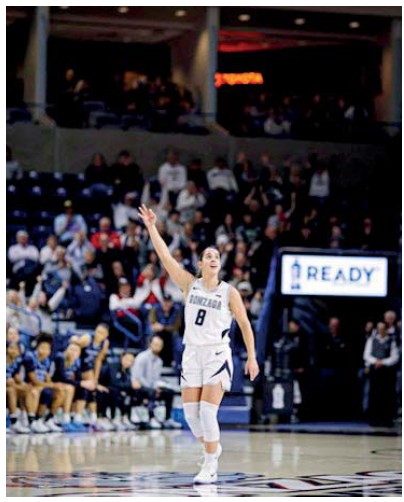
“Basketball came into my life through my brother”
Atlântico Expresso: Can you talk a little about your journey? When did basketball enter your life?
Inês Bettencourt:
When I was younger I played a lot of different sports because I loved staying active and trying new things. But basketball truly came into my life through my brother. At the time he played for Clube União Sportiva, and I used to go watch some of his practices and games. My curiosity eventually made me want to try it myself.
Growing up an athlete on an island
Atlântico Expresso: What were the biggest challenges of growing up and developing a career in an island region?
Inês Bettencourt:
Growing up in an archipelago comes with very specific challenges. The Azores are made up of nine islands, so the population—and naturally the number of athletes—is spread out.
Even though São Miguel is the most populated island, there were very few women’s teams. At the time there were only two. That meant the competitive level wasn’t always very high. Still, that doesn’t mean that if you work hard you can’t reach your dreams.
More than a sport
Atlântico Expresso: What is your main goal with basketball?
Inês Bettencourt:
My main goal is to reach the highest level I can as a player and to explore all the potential I have on the court. But basketball is also much more than a sport for me.
The skills I’ve learned—discipline, teamwork, resilience, leadership, and the ability to deal with pressure—are things I want to carry into my professional life and every other area of my life. In that sense, basketball has become not only a passion but also a tool for my personal and professional growth.
The roots at Sportiva
Atlântico Expresso: How did Clube União Sportiva shape your path?
Inês Bettencourt:
Sportiva shaped my journey in a profound way, both as an athlete and as a person. It will always be part of who I am because it’s where I took my first steps in the sport.
That’s also where I met some of my best friends, people I’m still close to today. The friendships, the practices, the games, and the whole environment made that period of my life very special.
I played there until I was 17, when I moved to the United States. But the roots and everything I learned at Sportiva are still part of my story.

Carrying the Azores with her
Atlântico Expresso: Do you feel the responsibility of representing the Azores while playing in the United States?
Inês Bettencourt:
Yes, I feel that very strongly, and it’s something that makes me proud. Since I arrived in the United States, about half the people I meet have heard about the Azores, which makes me extremely happy.
It’s rewarding to see that our islands are recognized even thousands of miles away. More than representing Portugal, being able to say that I’m from the Azores means a lot to me. I come from an island reality with its own challenges, and every achievement is also a way of giving visibility to my home and to the people who supported me from the very beginning.
A dream moment at UConn
Atlântico Expresso: Was there a particular moment in your journey that stands out?
Inês Bettencourt:
There are many memorable games, but one will always stay with me: when I started against the University of Maryland while I was at UConn.
Just representing UConn is already a huge responsibility. The level of demand is extremely high, the competition never stops, and every practice feels like a game. I never imagined I could start for a team with so much history and tradition in college basketball.
It was one of those moments when I realized I was living something I had always dreamed about.
Adjusting to the American game
Atlântico Expresso: What differences did you feel between regional basketball and the American system?
Inês Bettencourt:
The difference was huge. The game is much faster, more physical, and played with constant intensity from start to finish.
Another major difference is the focus on individual skills. In the United States, players are extremely strong in one-on-one situations, physically powerful, and they work intensely on individual details.
Learning from Paige Bueckers
Atlântico Expresso: What was it like sharing a locker room with Paige Bueckers?
Inês Bettencourt:
It was an incredible and inspiring experience. Besides her enormous talent, Paige is one of the most humble people I’ve ever met. She genuinely cares about others and treats everyone the same way.
Having the opportunity to train with someone of her quality had a big impact on me. Her work ethic and constant dedication motivated me to raise my own level and to be more consistent in every practice and every game.
A versatile game
Atlântico Expresso: How would you describe your playing style?
Inês Bettencourt:
I would say versatile. I can do a bit of everything—shoot, attack the basket, and defend.
Over the years I’ve learned to understand my strengths and how to use them in different situations. One area where I’ve grown a lot is defense. I’ve learned that defense can win games by itself. Becoming more aggressive, improving my positioning, and reading the game better defensively helped me become a more complete and reliable player for my team.

Role models
Atlântico Expresso: Who are your biggest references in the sport?
Inês Bettencourt:
My biggest inspirations are the players who came through Sportiva during my development years. Watching them train and compete at a high level had a huge impact on me.
Players like Jhasmin Player, Joana Soeiro, Josephine Filipe, Simone Costa, and Inês Viana were major influences. Inês Viana didn’t play for Sportiva, but she has always been a reference for me because of the way she plays and her consistency on the court.
Opportunities for Azorean athletes
Atlântico Expresso: Do you feel Azorean athletes lack opportunities nationally and internationally?
Inês Bettencourt:
Yes, mostly because of the limited number of teams and competitions in the Azores. That reduces exposure and the chance to compete regularly against high-level opponents.
On top of that, geographic distance and travel costs make it even harder to participate in tournaments and programs outside the islands.
Portuguese pioneers in the American game
Atlântico Expresso: Has the success of Portuguese players like Ticha Penicheiro and Neemias Queta made it easier for young Portuguese players to reach the American stage?
Inês Bettencourt:
Their success definitely opens doors. It increases the visibility of Portuguese basketball and inspires young athletes to believe in their abilities and invest more seriously in their development.
It also creates role models, which is incredibly important for anyone trying to follow a similar path.
Looking beyond the WNBA
Atlântico Expresso: Should we expect to see you in the WNBA draft?
Inês Bettencourt:
Right now that’s not in my plans. That dream faded a little over time because I realized there’s much more basketball beyond the WNBA.
Only a very small percentage of players reach that league—it’s extremely demanding and selective. But there are many other opportunities in Europe and other competitive leagues around the world.
Looking ahead
Atlântico Expresso: What are your plans for the future?
Inês Bettencourt:
I want to play professionally around the world, embrace new cultures and experiences, and compete in leagues that push me to keep evolving as an athlete and as a person.
At the same time, one of my greatest goals is to keep representing Portugal whenever I have the opportunity. Wearing the national team jersey is an enormous honor and a responsibility I take very seriously.
A message to the community
Atlântico Expresso: What message would you like to leave for young players?
Inês Bettencourt:
Keep your passion and dedication alive. Basketball is more than just a game—it’s an opportunity to learn about teamwork, discipline, and overcoming challenges.
Enjoy every practice, respect your teammates and coaches, and never stop believing in your potential. Progress may be slow, but every effort matters.
And above all—have fun and play with your heart.
Interview by Diogo Simões Pires, a journalist for Correio dos Açores, Natalino Viveiros-director

 Novidades - The Islands and the Diaspora