

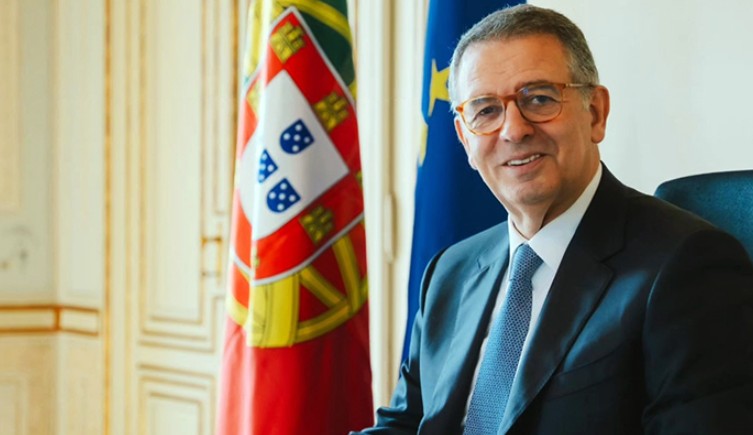
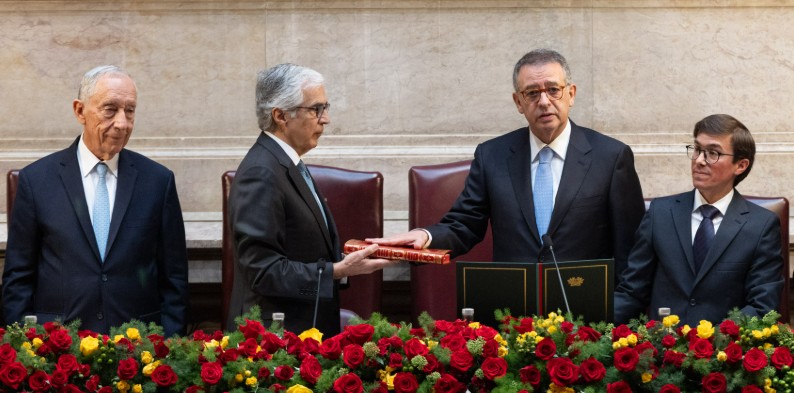
António José Seguro was sworn in today as the 21st President of the Republic of Portugal, using his inaugural address to call for political stability, dialogue among parties, and lasting agreements to confront the country’s most pressing challenges. Speaking before the Assembly of the Republic, the new head of state argued that Portugal should take advantage of what he described as a new political cycle—one without national elections—to pursue long-needed structural reforms.
In his inaugural speech, Seguro pledged to serve as a president “for all of Portugal and all Portuguese,” including those living in the diaspora, while emphasizing his independence in office. “I am free. My freedom is the guarantee of my independence as President of the Republic,” he said, promising to treat all political parties equally and to exercise his mandate with “balance, dialogue, and loyal and constructive cooperation with the Government.”
A central theme of the speech was the need for political stability following several years marked by repeated elections. Seguro noted that the country now enters “a three-year cycle without national elections” and argued that the period should be used to forge lasting political agreements. Warning of the harmful effects of short political cycles, he said he would do everything possible to avoid new political crises.
In that spirit, the president reiterated his position that the rejection of a state budget should not automatically trigger the dissolution of Parliament and early elections. “I reaffirm my understanding that the rejection of the State Budget proposal does not automatically imply the dissolution of the Assembly of the Republic,” he said. “Legislatures are meant to be completed, and we must all assume that responsibility—government and opposition alike.”
Domestic priorities: health care, housing, justice, and wages
Turning to domestic policy, Seguro devoted a substantial portion of his speech to identifying the structural challenges facing Portugal, arguing that many have persisted for far too long and require consistent, long-term solutions.
“Portugal faces structural challenges that have dragged on for too long,” he said, listing issues such as insufficient economic growth, an economy based on low wages, persistent inequality, entrenched poverty, demographic aging, slow-moving courts, bureaucratic obstacles, and difficulties accessing health care and housing.
Seguro stressed that these problems demand structural reforms and cannot be addressed through short-term measures or decisions shaped by electoral calendars.
Among the most urgent priorities, he highlighted access to health care and announced his intention to promote a broad political understanding to ensure the system’s sustainability. The president said he would soon invite political parties to work toward an inter-party agreement to guarantee long-term solutions in the sector. “In the near future, I will invite political parties to begin work so the country can establish an inter-party commitment to guarantee access to health care,” he said.
Defense of democracy amid global uncertainty
A significant portion of the address was also devoted to the international context and the risks that, in Seguro’s view, are placing new pressures on democracies and the global order built over the past decades.
“War has returned to Europe. Economic supply chains have revealed their fragility. Geopolitical competition is intensifying. Peace today is more fragile than yesterday,” he said.
In this environment, the new president pledged that defending democracy would be one of the central priorities of his mandate. “Caring for democracy has become, in these new times, an urgent task to which the President of the Republic will devote himself both by duty and conviction,” he said.
Commitment to Europe and multilateralism
On foreign policy, Seguro reaffirmed Portugal’s European commitment and called for deeper integration within the European Union.
For the new president, the EU remains a vital pillar for the country’s prosperity and security. “Portugal needs a better Europe. The world needs more Europe,” he declared.
Seguro advocated for a European Union with stronger political integration, faster decision-making, greater strategic autonomy in defense and energy, and deeper social convergence.
At the same time, he highlighted Portugal’s role within international organizations such as the United Nations, NATO, and the Community of Portuguese-Speaking Countries (CPLP).
At the beginning of his address, Seguro also thanked the outgoing president, Marcelo Rebelo de Sousa, praising his dedication to the country over the past decade. “No one can deny his love for Portugal,” he said.
The new head of state also announced that he has decided to award Rebelo de Sousa the Grand Collar of the Order of Liberty.
Party reactions
Political stability was one of the most frequently cited themes in the reactions from Portugal’s political parties following Seguro’s inaugural address.
From the Socialist Party (PS) to the Social Democratic Party (PSD), as well as CDS, the Liberal Initiative (IL), Livre, and PAN, several party leaders emphasized the importance of ensuring a stable political cycle capable of supporting governance and enabling structural reforms.
The PS said that “political stability is essential,” while warning that it must be accompanied by responses to the “needs of the Portuguese people.” The PSD noted that the new president delivered to Parliament “a message largely aligned with the government and the party.”
Chega said it was prepared to ensure “the minimum stability possible,” though it stressed that the party “disagrees with almost everything—or much of what—the President defended.”
On the left, the Communist Party (PCP) and the Left Bloc (Bloco de Esquerda) were more critical, arguing that stability will only make sense if it translates into concrete responses to social problems, with the Bloco challenging Seguro to block a proposed labor reform package.
Livre praised the president’s defense of the “red lines of democratic values” and stressed that stability must be accompanied by responsibility, while PAN highlighted the importance of “a cycle of stability” that allows the country to recover and progress, pointing in particular to issues such as combating the climate crisis and defending women’s rights.
In Diário dos Açores-Paulo Viveiros, director
Translated into English as a community outreach program by the Portuguese Beyond Borders Institute (PBBI) and the Modern and Classical Languages and Literatures Department (MCLL), in collaboration with Bruma Publication and ADMA (Azores-Diaspora Media Alliance) at California State University, Fresno. PBBI thanks Luso Financial for sponsoring NOVIDADES.

 Novidades - The Islands and the Diaspora