

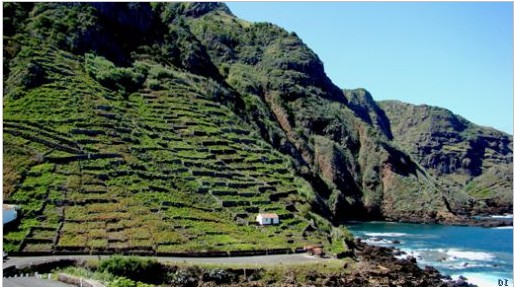
The Portuguese Air Force plans to establish a space base on the island of Santa Maria in the Azores, a project tied to the New Space Portugal Agenda under the country’s Recovery and Resilience Plan (PRR). According to reporting by Açoriano Oriental, the initiative envisions a national infrastructure providing access to space—a spaceport designed for dual use, serving both commercial ventures and national defense.
A source within the Portuguese Air Force told the newspaper that the facility is being developed to operate independently while remaining compatible with a wide range of operators, both military and civilian. “The Portuguese Air Force Space Base is being designed to function autonomously, adaptable to multiple operational environments and operators,” the source explained. “It will focus on interoperability and flexibility, while meeting the requirements of the European launch vehicles currently under development through the European Space Agency’s European Launcher Challenge. The infrastructure is being built specifically with those European launchers in mind.”
One of the project’s central goals is to secure strategic launch autonomy for Portugal and for Europe—an increasingly important objective in the global space race and in the continent’s broader technological sovereignty.
The Portuguese Air Force also noted that the new infrastructure will support technological and industrial development, allowing coordination with existing initiatives on the island, including the Malbusca launch site and the broader Santa Maria SpaceHub. Among the initiatives associated with the site is the SpaceRider program of the European Space Agency.
Santa Maria already holds the country’s first national license for operating a launch center at Malbusca, focused primarily on launching microsatellites. However, according to the Air Force, that facility does not meet the technical requirements needed for the new generation of European launch vehicles under development within the European Launcher Challenge. As a result, officials stress that the new Air Force project should not be seen as a competing initiative.
“In this context, the objective is not to create competition,” the military emphasized, “but rather to foster complementarity and support the development of a national capability for access to space.” The investment is expected to attract new capital, create highly skilled employment, and encourage the establishment of technology companies in the Azores. Potential jobs would span fields such as software engineering, aerospace technology, and data processing.
According to the Portuguese Air Force, these areas are also critical for national defense operations—particularly in search-and-rescue missions and in monitoring the vast Atlantic region under Portuguese responsibility.
Meanwhile, Portugal’s communications regulator, ANACOM, has issued Europe’s first license for the controlled reentry of a commercial spacecraft returning from low Earth orbit—another step in strengthening the role of the Azores as an emerging Atlantic space hub.
The license was granted for the PHOENIX 2.1 mission, led by the company ATMOS Space Cargo, scheduled for later this year. The mission will use Santa Maria both as its launch point and as the site for spacecraft recovery, further positioning the island at the forefront of Europe’s developing space infrastructure.
From Diário Insular, José Lourenço, director
Translated into English as a community outreach program by the Portuguese Beyond Borders Institute (PBBI) and the Modern and Classical Languages and Literatures Department (MCLL), in collaboration with Bruma Publication and ADMA (Azores-Diaspora Media Alliance) at California State University, Fresno. PBBI thanks Luso Financial for sponsoring NOVIDADES.

 Novidades - The Islands and the Diaspora