

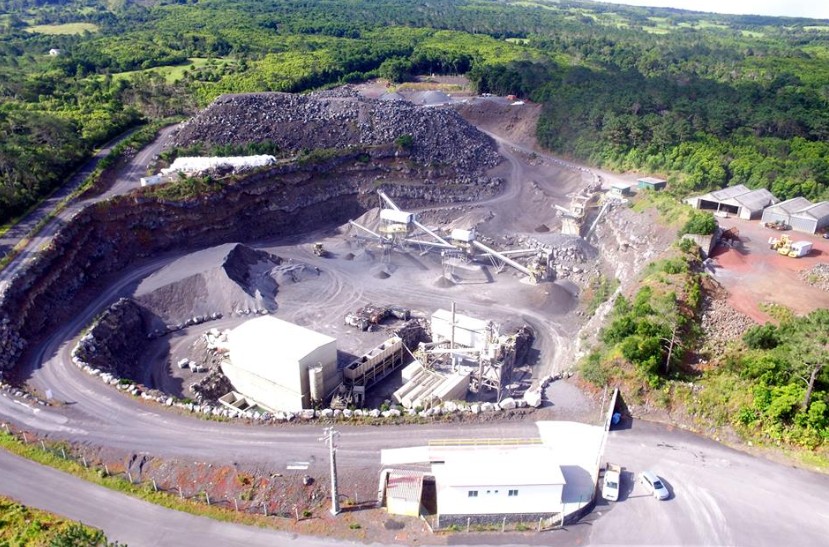
The Associação de Municípios da Ilha do Pico has begun the process of renewing the environmental license for the island’s intermunicipal landfill, a key facility for waste management on Pico Island that is expected to remain operational for roughly seven more years.
According to technical documents submitted to the Direção Regional do Ambiente e Ação Climática, the landfill—located in the parish of São Caetano, in the municipality of Madalena—still has sufficient capacity to operate until about 2032 or early 2033. The facility serves the island’s three municipalities: Madalena, São Roque do Pico, and Lajes do Pico.
Opened in 2001, the landfill occupies about 48,000 square meters in a forested coastal area away from residential zones. It includes a single impermeable disposal cell with a total capacity of more than 182,000 tons of waste, along with operational infrastructure such as a weighing station, vehicle washing unit, support buildings, and a treatment plant for leachate—the liquid produced by the decomposition of waste.
Since 2015, when the Pico Waste Processing Center began operations, the landfill has primarily received residual materials from sorting and treatment processes, along with organic byproducts from the island’s agri-food industry.
Data from 2024 show that the site received about 3,754 tons of municipal solid waste and 1,663 tons of animal byproducts, as well as more than 2,000 tons of cover material used to stabilize waste layers.
Environmental safeguards include the monitoring and treatment of leachate, groundwater testing, and the regular covering of deposited waste to control odors and gas emissions. Estimates suggest the landfill releases about 1,364 tons of biogas annually, including methane and carbon dioxide.
Recent improvements include the replacement of the leachate pumping system in December 2025, an upgrade aimed at improving drainage and treatment efficiency.
Once the landfill reaches its capacity, it will be sealed and rehabilitated through a process that includes final coverage, installation of gas and drainage systems, and landscaping of the site, potentially transforming the area into green space.
Officials emphasize that the facility remains essential for managing waste that cannot be recycled or otherwise processed on Pico Island.
In Diário dos Açores-Paulo Viveiros, director

 Novidades - The Islands and the Diaspora