

Ignorance is the mother of all evils.
Learning, by contrast, is a permanent good. I often find myself contradicting the old proverb that claims, “Knowledge takes up no space.” I prefer to say: knowledge occupies the space of ignorance. The more expansive a person’s understanding becomes, the broader their grasp of the mysteries that shape our existence.
The philosopher George Santayana wrote in 1906, in The Life of Reason: “Those who cannot remember the past are condemned to repeat it.” It is a reminder that historical memory is essential if humanity hopes to avoid repeating its mistakes.
And yet, despite the many lessons history has offered with patient clarity, there remain those who deliberately ignore the heavy and unavoidable weight of past experience.
In the Portuguese parliament—among the 230 members who supposedly represent the nation—we continue to be infected by a stubborn bacterium of ignorance about the most basic realities of our time: the responsibility to understand the place where the citizens of the country live, the very citizens whose taxes ultimately pay the salaries of their representatives.
If the election of each member of parliament depended solely on individual merit and intellectual preparation, the vast majority would never be elected.
One need only begin with the leader of the government’s parliamentary caucus, Hugo Soares, whose regrettable intervention during the debate over the social mobility subsidy left much to be desired—and raised serious questions about his understanding of the issue. Either he intentionally sought to provoke the Autonomous Regions of Madeira and the Azores—which would already constitute a grave mistake—or he simply knows nothing of the insular realities that make Portugal the largest steward of the Atlantic Ocean, with all the immense privileges that accompany that fact.
Faced with such ignorance, I do not know whether to forgive it—or to assume that what we witnessed was merely an ill-timed outburst in the middle of digesting lunch.
After more than fifty years of democracy in Portugal—and another fifty years of regional autonomy—it is troubling to hear members of the party founded by Francisco Sá Carneiro, himself a champion of autonomous governance, utter such foolishness in speeches that are not only intellectually poor but potentially harmful to the national unity that every party claims to defend.
And yet, perhaps this ignorance should not surprise us. It has, after all, deep historical roots.
In the first issue of the newspaper Autonomia dos Açores, published on March 5, 1893, one finds words that still resonate with unsettling clarity:
“In the direction of public affairs, we have not had a government of the nation; we have had a government of the capital—a government of bureaucrats, of politicians without political sense, without moral sense, and without common sense. Bureaucracy, in its ignorant fury for regulation, entangles the natural expansion of the nation’s living forces in sterile formalities. Politicians have come to believe that the tournaments of parliamentary rhetoric, the juggling of budgetary figures, and the intrigues of party politics are the foundations of our prosperity… corruption spreads from top to bottom… the government’s duty should be simply to guarantee order by guaranteeing liberty; that is its true function within the life of the nation.”
And that fragile page—yellowed by time and history—tells us much more besides.
It has been 133 years since those words were written.
And yet, in some corners of our public life, it sometimes feels as though centuries have passed without the lesson ever truly being learned.
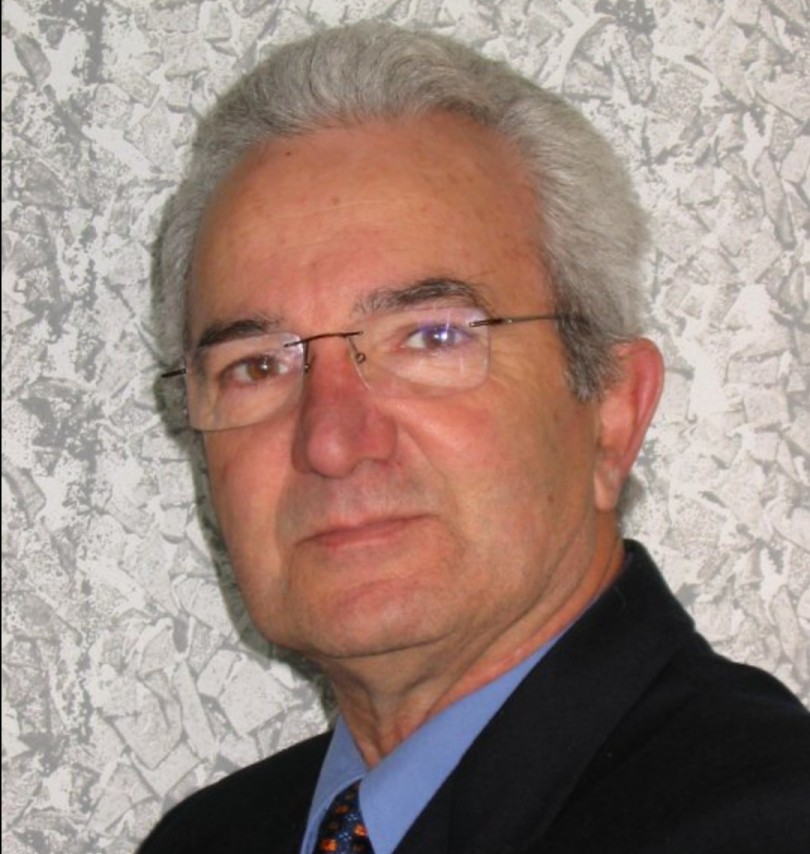
Fish from My Backyard is the regular column that José Soares writes for Azorean newspapers and the title of his most recent book.
NOVIDADES will feature occasional opinion pieces from leading thinkers and writers in the Azores, providing the diaspora and those interested in the current state of the Azores with a sense of the significant perspectives on some of the archipelago’s issues.
Translated to English as a community outreach program from the Portuguese Beyond Borders Institute (PBBI) and the Modern and Classical Languages and Literatures Department (MCLL).
 Novidades - The Islands and the Diaspora