

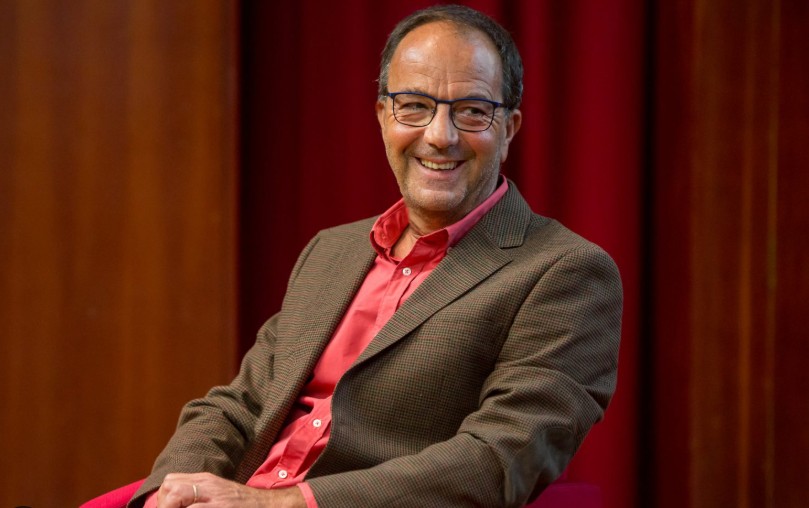
The presidential decade of Marcelo Rebelo de Sousa has come to an end with the kind of ambiguity history often reserves for figures who shape an era more through style than through rupture. For years, the Portuguese grew accustomed to seeing him as the president of embraces—the man of spontaneous hugs and kisses at fairs, pilgrimages, beaches, and village squares. A former television commentator turned head of state, he seemed to know every corner of the country and every quiet anxiety of its people. After the cold and somewhat stale institutional tone of Aníbal Cavaco Silva, Marcelo’s arrival at Belém Palace felt, for many Portuguese, like a gust of fresh air.
Marcelo brought with him a presidency built on constant presence. He appeared everywhere: at sites of tragedy, at celebrations, in schools and universities, in forgotten neighborhoods and remote villages. The politics of affection became his signature. For many citizens, that closeness restored a sense of humanity to the presidential office. For others, it resembled a continuous performance of communication—a politics of visibility that risked masking a deeper inability to transform the lived realities of most Portuguese.
At the beginning of his mandate, President Marcelo Rebelo de Sousa set out an ambitious moral goal: to mitigate poverty in Portugal and confront the growing tragedy of homelessness. In a country proud of its democratic achievements, he said, no one should be condemned to social invisibility. The struggle against exclusion would have to become not merely a matter of public policy but a shared ethical responsibility.
Ten years have now passed. The reality visible today in the streets of Lisbon and Porto—and increasingly in other urban centers—demands a more sober assessment. Poverty remains perhaps the most persistent social wound in contemporary Portugal. The number of people living in conditions of vulnerability remains high, while the housing crisis has opened a new and painful fracture in the social fabric. More and more Portuguese citizens now find themselves employed yet unable to pay the rent. Others have reached a harsher threshold: they can no longer afford a home at all.
On cold nights, beneath the arches of train stations or in the quiet corners of broad avenues, stories of suspended lives multiply. People who lost their jobs. Families unable to keep pace with the relentless rise of housing costs. Individuals pushed to the margins of a system in which dignity itself seems to have become too expensive. A decade after the call for moral mobilization, the country still confronts the unsettling sight of men and women sleeping in the streets.
It would be unfair to deny that Marcelo’s presidency carried a sincere effort to bring political power closer to the everyday life of citizens. His presence, tireless and immediate, offered moments of comfort and recognition. Yet it is also legitimate to ask whether affection alone can reshape the deeper structures of inequality.
As he leaves Belém, Marcelo Rebelo de Sousa leaves behind an unmistakable personal imprint. He changed the tone of the presidency, humanized the office, and approached citizens with an energy that often seemed inexhaustible. But history tends to be more demanding than memory in the moment. One day it may ask whether the politics of affection managed to transform the material conditions of those who continue to live on the margins.
For the true measure of a presidency is not found only in the embraces offered along the way, but in the fate of those whom the country leaves behind. And on that point, the decade now closing still leaves too many questions unanswered.
Henrique Levy is a poet, novelist, and essayist. He resides on São Miguel island, Azores.
NOVIDADES will feature occasional opinion pieces from leading thinkers and writers in the Azores, providing the diaspora and those interested in the current state of the Azores with a sense of the significant perspectives on some of the archipelago’s issues.
Translated to English as a community outreach program from the Portuguese Beyond Borders Institute (PBBI) and the Modern and Classical Languages and Literatures Department (MCLL).
 Novidades - The Islands and the Diaspora